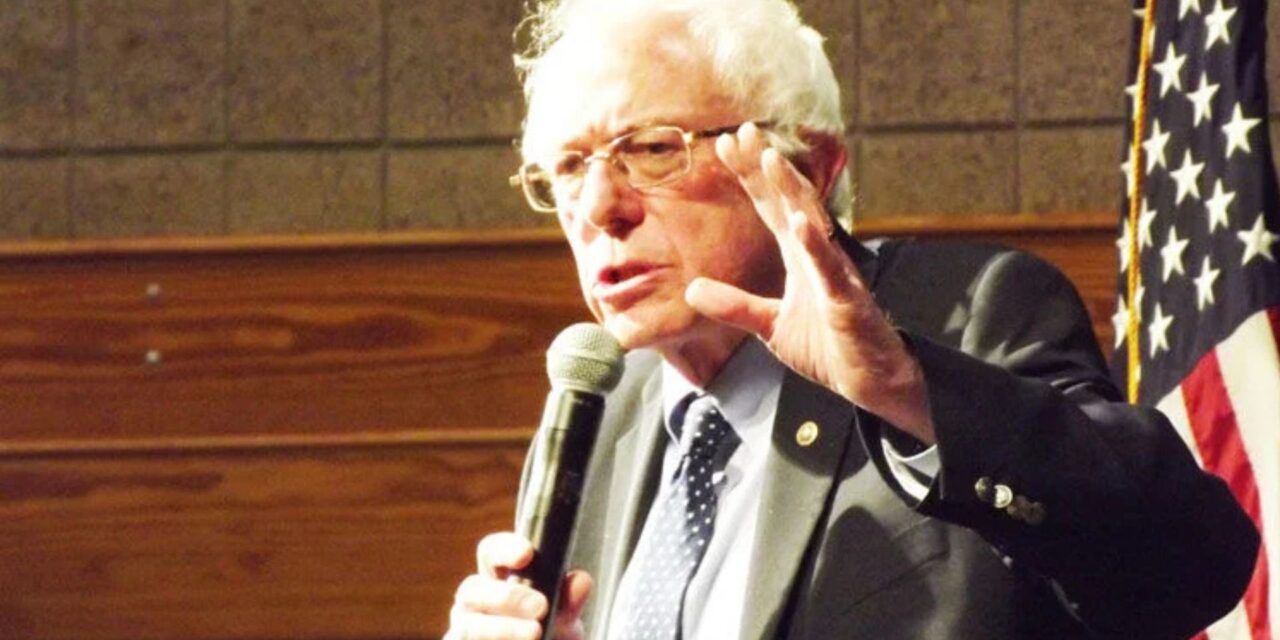
While the gymnasium at Patrick Henry High School was packed with hundreds – most who came to hear from Democratic presidential candidate Sen. Bernie Sanders – it became clear that not everyone was “feeling the Bern.”
Sanders was in town on Feb. 12 for a scheduled Democratic event later that evening but accepted an invitation from Neighborhoods Organizing for Change (NOC) to participate in its forum on Black America. While hundreds braved a long line in single digit temperatures to hear from the senator from Vermont, not all were ready to blindly endorse the candidate; even though he is seen as the most progressive when it comes to issues concerning African-Americans. Sanders’ opponent, Democratic frontrunner Hillary Clinton, was also in town but declined the invitation from NOC. As it turns out, that might have been a wise decision.
For the most part Sanders played well to the audience, which was noticeably diverse – especially considering the forum was supposed to be specific to Black issues. In many ways the event looked like a Sanders campaign rally – right down to the access badges that were stamped with the Sanders campaign logo. Introduced by Rep. Keith Ellison, who has endorsed him, Sanders immediately took aim at education reform and tied it to the criminal justice system, saying if elected president he would “invest in jobs and education, not jails and incarceration.”
“The criminal justice system is broken,” said Sanders pointedly. “We will not continue to tolerate a system where unarmed African-Americans can be shot down by police. We need to put an end to the militarization of local police and we’ve got to make police departments look like the diversity of the community they are serving and end the over-policing of the Black community.”
That line and others like it garnered thunderous applause, but the lovefest was short lived.
Following his opening remarks Sanders took part in a discussion with several panelists invited by NOC. The questions ranged from policing of communities of color to prison reform to small business investment to food justice and urban pollution. Sanders seemed to be in accord with most of the audience, providing answers that were not the typical campaign rhetoric heard every four years. But the self-described Socialist hit a sour note – not by what he said, but by what he refused to say.
Mica Grimm, a vocal leader of the Black Lives Matter movement, and who was not on the panel shouted out several questions to the candidate regarding reparations. Sanders engaged in uncomfortable dialogue with Grimm but that dialogue became even more uncomfortable when panelist Felicia Perry pressed the candidate.
“I know you won’t say, ‘Black’ and you won’t say, ‘reparations’ and you keep lumping us in with other people, but today can we talk specifically about Black people,” questioned Perry.
Sanders still refused to utter the word reparations, but in a bit of an angry retort (when someone else from the crowd echoed Perry’s sentiment) the candidate said, “I’ve said Black 50 times I have no problem saying Black. There, I’ve said it 51 times.”
Later, activist Clyde Bellecourt was handed a microphone and began speaking about Native-American issues and refused to return the microphone. While Bellecourt was speaking, Sanders walked as if he was leaving the stage but remained for a brief period and then interrupted Bellecourt, thanked the crowd and exited, abruptly bringing an end to the event.
The abrupt end did not seem to dampen the spirits of Anthony Newby, executive director of NOC who also made it clear that NOC was not endorsing Sanders or any other candidate.
“What we were able to do here was advance the conversation,” said Newby. “When before has a presidential candidate come to north Minneapolis to address our concerns? What he heard hear can help shape how he plans to deliver on his promises. What we heard and said here is it’s not enough to just have aspirations without a specific plan in place.”
“Every time he (Sanders) said Black people he also said low income. That’s what he thinks when he thinks about Black people. We’re more than that. We’re middle class … we’re business owners. I appreciate him coming here but if he wants to be ‘radical’ as he says, he would say reparations,” said Perry.
Panelist DeVon Nolen said the concerns of Perry and others are valid, but she was willing to cut Sanders some slack.
“I feel he has a better grip (on issues of Black Americans) than others,” said Nolan. “The fact that he’s willing to come here and talk about our concerns says a lot. Now when you talk about reparations, that’s a loaded word, but there’s a way to get reparations without saying reparations.”