A decade ago, the iPad was yet to hit the market, Instagram and Snapchat didn’t exist and the nation was being guided at the capable hands of its first Black president, Barack Obama.
At the same time – and in a bit of foreshadowing – our nation’s current president, Donald Trump was telling impeached and disgraced former Illinois Gov. Rod Blagojevich “You’re fired” on the reality television show “Celebrity Apprentice.” My, how things have changed within the past 10 years.
Here are some of the many happenings – in no chronological order – of the past decade.
Black man, White House
While not working in chronological order, it’s hard not to first look back to 2010 for one of the most seminal events of the past decade; passage of the landmark healthcare legislation – the Affordable Care Act, more affectionately known as Obamacare. Fought bitterly by Republicans in Congress – and in fact blamed for Democrats losing control of both the House and the Senate – Obamacare became the law of the land in March of 2010, thus covering some 20 million Americans according to the Center on Budget and Policy Priorities, ensuring insurance companies cannot discriminate against those with preexisting conditions and allowing children to remain on a parent’s policy until 26 years of age. Though considered unpopular at the time by Republicans, recent polls have shown the Affordable Care Act is wildly popular among party voters (even if some love it; except when it’s referred to as Obamacare).
Political power
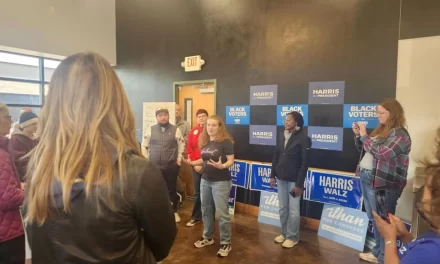
America not only got used to a Black man in the White House, it got used to Blacks serving throughout government. Currently there are 56 Black representatives in the House and three U.S. senators. Among those serving in the House is Minnesota’s Rep. Ilhan Omar.
Omar, who represents Minnesota’s 5th Congressional District, made history in 2018 when she became the first Somali-American to be elected to national office. A member of the “Squad” – Omar and her fellow freshmen Squad members have been influential in shaping the Democratic agenda while serving as a focal point for Trump and the radical right. Infamously in a racist Twitter rant, Trump called on Omar and the other members of the Squad – Rep. Alexandria Ocasio-Cortez (D-NY), Rep. Ayanna Pressley (D-MA) and Rep. Rashida Tlaib (D-MI) – to “go back” to the “crime infested places they originally come from.” With the exception of Omar, who escaped war-torn Somalia as a young child, all other members of the Squad are from America.
Another first was the 2017 election of St. Paul Mayor Melvin Carter. Carter was overwhelmingly elected to lead Minnesota’s capital city. Along with Brooklyn Center’s Mike Elliot, the two are a part of a group of at least 35 first-time Blacks (or first-time Black women) elected mayor throughout the nation within the decade; some in the most unlikely of places such as Knoxville, Tenn., Little Rock, Ark., Jacksonville, Fla. Montgomery, Ala. and Meridian, Miss.
Omar’s first was made possible by another first. Keith Ellison vacated his Congressional seat to run for Minnesota Attorney general in 2018. Already a political pioneer – Ellison was the first Muslim elected to Congress – he again made history becoming the state’s first Black attorney general and first Black person to hold statewide elected office. Though Minnesota has elected two African-Americans to serve (after being first appointed) on the state Supreme Court, they do not serve in a legislative/policymaking capacity.
Black Lives Matter
Another less celebratory trend was being noticed across the nation this past decade … the barrage of police (or pseudo police) killing Black people.
On Feb. 25, 2012 Trayvon Martin was another 17-year-old boy doing what 17-year-olds do. On Feb. 26, 2012 he became the birth of a movement … the Black Lives Matter movement.
Martin was walking to his Sanford, Fla. home on an early Sunday evening, having just purchased Skittles and an Arizona Iced Tea, when he was profiled, accosted and shot and killed by self-appointed neighborhood watchman George Zimmerman. Zimmerman, armed with a 9 mm handgun, profiled Martin for being in a hoodie, approached him and within seconds of making contact, Martin was dead. And while Zimmerman was acquitted using the now infamous “Stand Your Ground” defense, out of the killing emerged the first major movement since the 1960s, the Black Lives Matter movement. Black Lives Matter is mobilized in cities throughout the nation and has been an prominent player in fighting for justice following the killings of the likes of Mike Brown (Ferguson, Mo.), Freddie Gray (Baltimore), Sandra Bland (Waller County, Texas) and in the Twin Cities with the killings of Jamar Clark and Philando Castile.
On Nov. 15, 2015 Minneapolis Police officers Mark Ringgenberg and Dustin Schwarze killed an unarmed Clark responding to a disturbance call. Following the killing, hundreds of citizens took to the streets and began an 18-day occupation of the Minneapolis Fourth Precinct headquarters. It was during the occupation that a now-convicted white supremacist shot five protesters. The next day the protesters – including some of the wounded – were joined by hundreds more in a march from North Minneapolis to the Minneapolis City Hall shutting down traffic for miles. In March of 2016, despite video evidence showing Clark was pulled down from behind by one of the officers, Hennepin County Attorney Mike Freemen announced he would not bring charges against the officers. On the converse, Freeman saw that there was sufficient evidence to bring murder charges against Mohamed Noor for the July 2017 killing of Justine Ruszczyk. Unlike the Clark killing, the offending officer was Black and the victim white. Also, in a civil matter the family of Ruszczyk was awarded $20 million by the city of Minneapolis.
In between the killings of Clark and Ruszczyk there was the killing of Philando Castile.
A motorist in Falcon Heights, on July 6, 2016 Castile was driving with his girlfriend, Diamond Reynolds and her 4-year-old daughter when they were stopped by St. Anthony police officer Jeronimo Yanez for a supposed broken taillight. During the stop Castile alerted Yanez that he was legally armed and while trying to retrieve his identification Yanez shot seven times into the car striking and killing Castile. Within seconds of the shooting Reynolds livestreamed the events to Facebook capturing the dying moments of Castile. Following the killing protesters gathered at the Governor’s Mansion in several days’ worth of peaceful protest and at one point took to Interstate-94 shutting down traffic in both directions. Although Ramsey County Attorney John Choi filed manslaughter charges against Yanez, Yanez was acquitted at trial in 2017 sparking another round of protest. That same day it was announced that Yanez was fired by the St. Anthony police department. In a direct correlation to the killing and subsequent protests, the formerly all-white city councils of St. Anthony and Falcon Heights are now diversified with each city electing a Black person to serve on their four-person councils.
Prince
Unfortunately, the Twin Cities suffered additional losses throughout the decade, but perhaps none reverberated around the globe like the loss suffered on April 21, 2016. That was the day the music died.
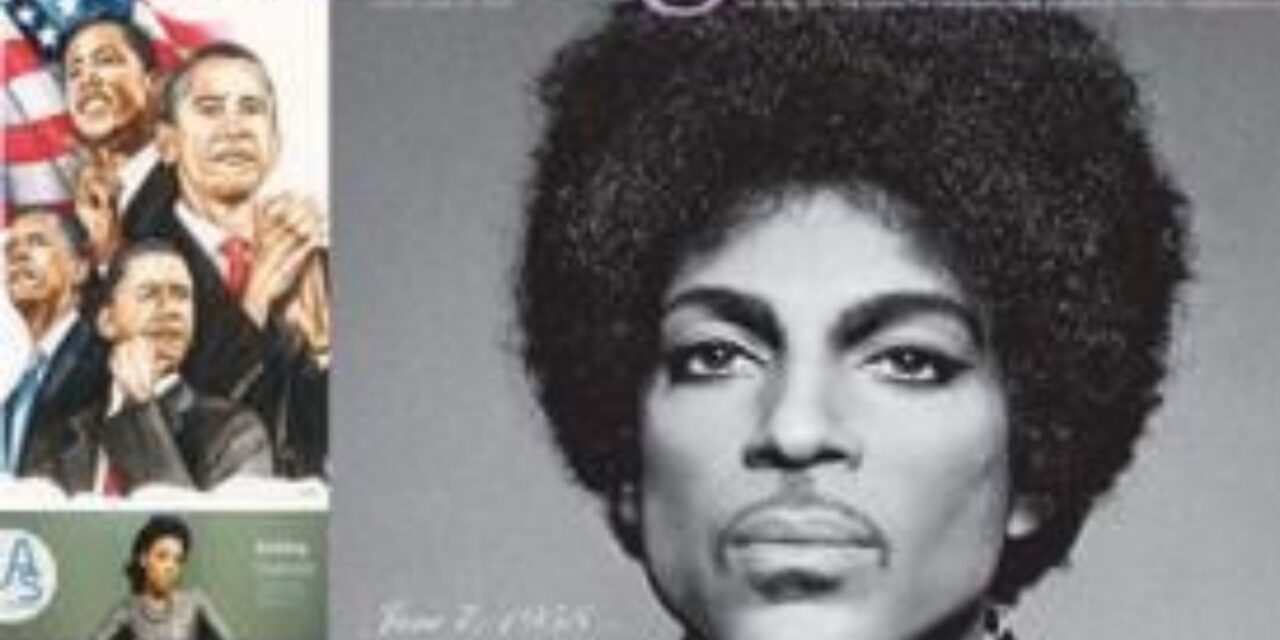
On a rainy Thursday morning, Minnesota’s favorite son, Prince Rogers Nelson died of an accidental fentanyl overdose at his Paisley Park complex. The musician’s death sent shockwaves throughout the world, as mourners from as far away as Australia made the pilgrimage to the Twin Cities to pay respects to the man considered by many as the greatest musician of all time. Sites such as Paisley Park and First Avenue became gathering spots for thousands of fans wanting to say their final goodbyes to the man who gifted us with countless classic albums and songs and the iconic movie, “Purple Rain.” Since Prince’s death annual celebrations have taken place near the date of his passing and again in early June near the time of his June 7 birth.
Paisley Park remains open to tourists and for select concerts. The beloved Purple One’s ashes are also located inside the complex.
Same place, different space
The landscape of the Twin Cities has dramatically changed within the past 10 years.
In April of 2010 Target Field became the new Home of the Minnesota Twins after moving from the Metrodome. The move could not have come at a better time because in December of that year the oddly designed dome’s inflatable roof collapsed under the weight of a massive snowfall. The Minnesota Vikings, who also called the dome home, pushed for – and received – a publicly-funded stadium, U.S. Bank Stadium. The 66,000-plus seat state-of-the-art stadium came in at a price tag of $1.061 billion, and due to intense lobbying and pressure, 36 percent of the workforce was comprised of people of color. Black-owned companies also participated in the construction of the stadium. Since opening in 2016, U.S. Bank Stadium has hosted both a Super Bowl and an NCAA Men’s Final Four.
2019
The last year of the decade may contain what history will remember as the most important occurrences with the impeachment of President Donald Trump.
With a presidency marred by scandal from the beginning – several Trump associates and one administration official have been found guilty of a multitude of crimes; including Trump’s former attorney Michael Cohen, who is serving three years in prison for a campaign financing scheme to hide payments to a porn star and a former Playboy Playmate – both who claimed to have had affairs with the real estate magnate and reality television star. In that case Trump was named as “Individual One” in a federal indictment. In addition, Special Investigator Robert Mueller was tasked with determining if a foreign government – Russia – coordinated with the Trump campaign to influence the 2018 presidential election. While scathing in its final report, Mueller determined the campaign did not directly coordinate with Russia but found substantial wrongdoing – some rising to the level of criminal. Yet with all that, it wasn’t until a whistleblower came forward alleging Trump was bribing Ukraine to find dirt on political rival Joe Biden that Trump was impeached by Congress on Dec. 18. Though impeached, it is likely the Senate, which is Republican controlled, will not vote to remove the president. Trump is only the third president to be impeached and the first to have such a dubious distinction in his first term.
This year will also be remembered for the death of hip-hop star Nipsey Hussle.
Hussle was gunned down in broad daylight March 31 outside of his South Los Angeles clothing store. The emerging star had garnered a legion of adoring fans both for his music and for his civic engagement. The Grammy-nominated emcee’s funeral was a BET televised event with dignitaries such as the Hon. Louis Farrakhan and hip-hop icons such as Snoop Dogg paying tribute.
This past decade saw Black unemployment reach staggering highs and record lows. It saw former hero Bill Cosby and longtime suspected pedophile R Kelly imprisoned (Cosby convicted, Kelly awaiting trial) on sex-related charges. Not just a hashtag, MeToo has changed the way we address sexual harassment and assault. The decade saw the nation pay tribute in an epic memorial to the Queen of Soul, Aretha Franklin while it shed tears for the woman thought to be Franklin’s successor, Whitney Houston. But mostly it saw what decades before have seen – a people with a resilience and resolve to ensure the succeeding decade is better for Africans across the diaspora than the previous decades have been. And together we move forward into the 2020s full of hope, love and determination.