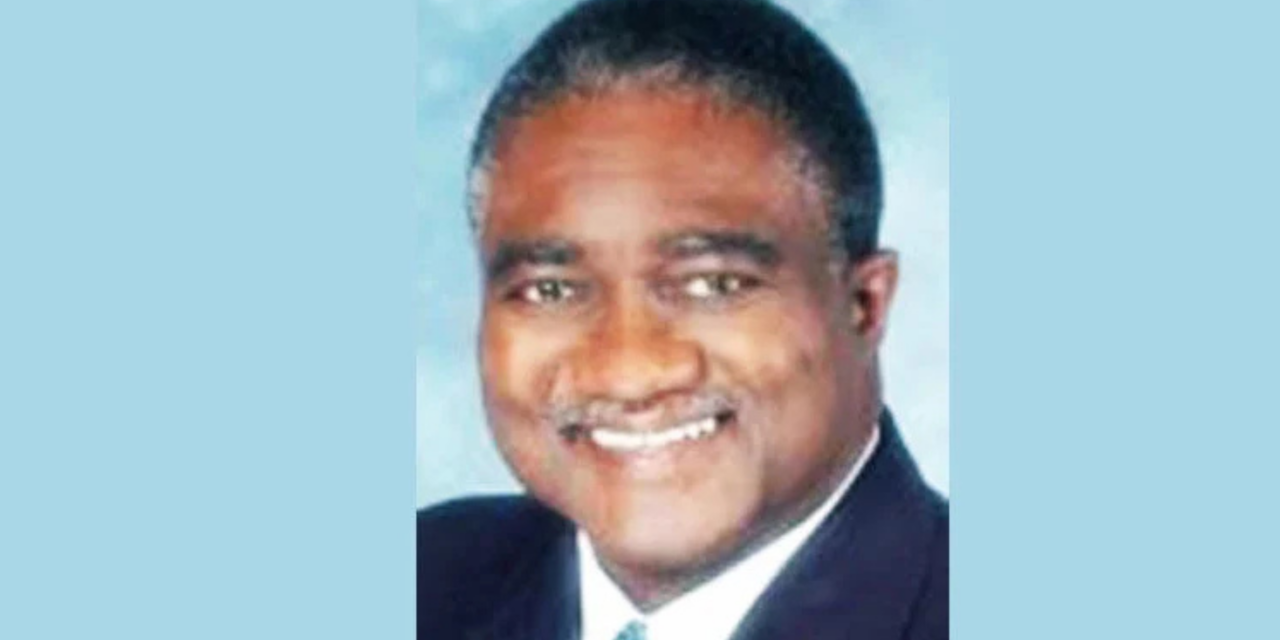
One of the driving forces for equality in journalism and truth in telling the Black experience, George Curry, passed away this past Saturday (Aug. 20) at the age of 69.
Curry known as a fiery, tell it like it is, journalist was best known in his role as editor-in-chief of Emerge magazine – a role he held from 1993 to 2000. Most credit Curry and Emerge with President Bill Clinton’s 2000 pardon of Kemba Smith, a young African-American woman convicted and sentenced to 24 years in prison under federal mandatory minimum guidelines. Written by Reginald Stuart and approved by Curry in 1996, the 17-page Emerge article revealed that the extent of Smith’s role in her abusive boyfriend’s drug operation was making a couple of phone calls and handing off money to an associate of her then boyfriend. The exposé told how a naïve Hampton University student was unwittingly and unwillingly lured into the world of drugs and it unearthed the absurdity of mandatory minimum sentencing.
“Had it not been for George Curry and his purpose I easily could have had to serve my entire prison sentence,” said Smith during a phone interview with Insight News. “Mr. Curry was like a father to me; he and Mr. Stuart.”
Smith said she and Curry stayed in close contact following her release, having seen him last in late summer of 2015 at the home of Stuart. She said she was devastated to hear of Curry’s death.
“I was outside at my parents’ home and my mom came out and I could tell by the look on her face something bad had happened. I asked what was wrong and she said ‘George Curry.’ It really hit me hard. I always talk about how much Emerge meant to me.”
In Curry’s tell it like he saw it style; Emerge also featured articles with provocative cover illustrations of Justice Clarence Thomas – one with a rag on his head and another depicting Thomas as “The Lawn Jockey for the Far Right.”
Immensely respected by his peers, Curry later went on to become the editor-in-chief of the National Newspaper Publishers Association (NNPA) News Service and was a regular columnist, whose writings appeared in more than 200 publications, including almost weekly appearances in Insight News. In 2003 Curry was named Journalist of the Year by the National Association of Black Journalists (NABJ).
It was Curry, who was at the time a reporter for the St. Louis Post-Dispatch and president of the Greater St. Louis Association of Black Journalists, who created the NABJ chapter’s journalism workshop that would train such journalists as Russ Mitchell (CBS’s Evening News, The Early Show) and Insight News’ managing editor, Harry Colbert, and later became the model for the NABJ national body.
“There are hundreds of journalists who can trace their roots back to Curry thanks to his founding of the Greater St. Louis Association of Black Journalists Minority Journalism Workshop. I know because I am one of them,” said Colbert. “George Curry was one of the most poignant voices of our time and his loss immensely saddens us here at Insight News.”
Curry was a graduate of Knoxville College (Tenn.), a historically Black institution. He also received training at Harvard University and Yale University.
Curry’s death was unexpected; as it appeared he suffered a sudden heart attack.