Washington, D.C. – In the midst of national primaries and caucuses in a run-up to the November election to select the nation’s next president, renewed calls are being made to have Congress restore key protections that were stripped from the Voting Rights Act.
According to many civil rights activists and several politicians – mostly Democratic, the U.S. Supreme Court’s 2013 5-4 decision to strike down Section 4 of the Voting Rights Act greatly limits key protections of the act and has resulted in several instances of voter suppression. Section 4 required that states with a history of voter suppression be precleared by the Department of Justice before making changes to state voting rules. November’s election will be the first presidential election in 50 years without the full protections in place of the Voting Rights Act.
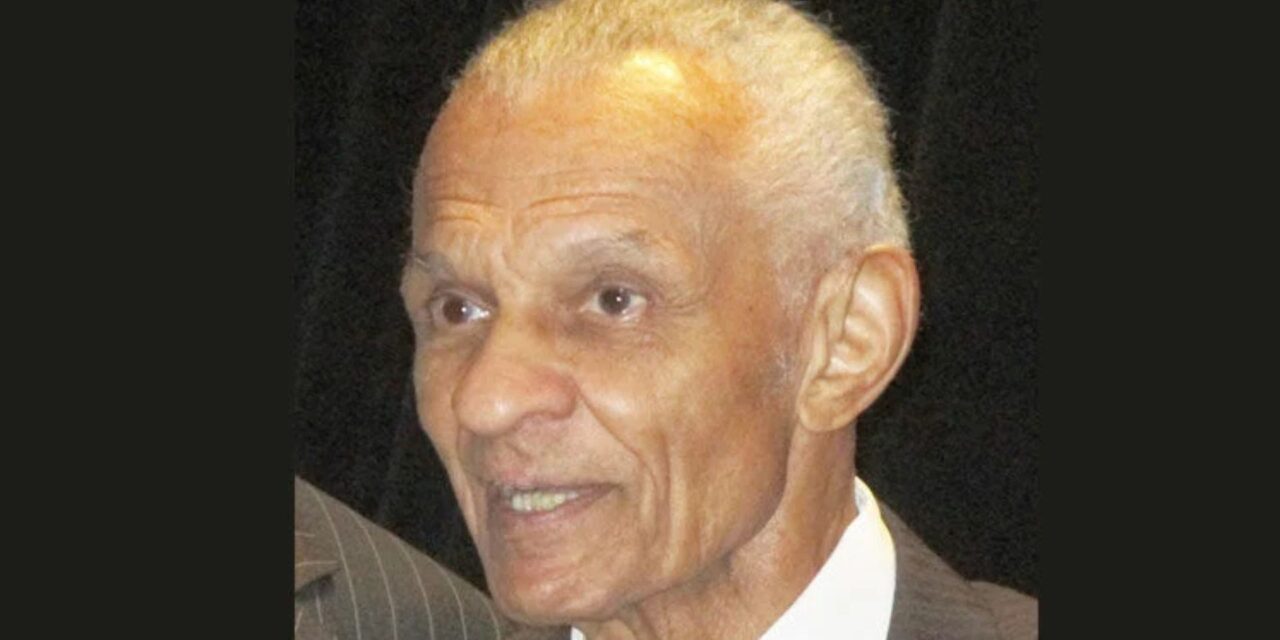
The Rev. C.T. Vivian, who last week received the Congressional Gold Medal for his efforts and participation in Bloody Sunday – the historic march for voting rights from Montgomery, Ala. to Selma, Ala. – said the 2013 Supreme Court decision was just as brutal as the beatings he took in Alabama.
“I was there in Selma and personally was beaten by Dallas County Sherriff Jim Clark. But when the Supreme Court gutted the Voting Rights Act it was like being beaten all over again,” said Vivian. “People want to put us in museums like we are history. If you think this is history instead of present day reality, ask Black voters in South Carolina and Texas and Georgia and Virginia. This is not history, this is present day and we won’t allow our legacy to be relegated to a museum.”
Vivian called on Congress to act on one of the two bills before the body to restore provisions that were deemed unconstitutional by the Supreme Court.
Kristen Clarke, Lawyers’ Committee for Civil Rights Under Law, president and executive director said the ink was not dry before certain states began turning back the hands of time.
“Just hours after the Supreme Court ruling, the state of Texas announced restrictive government issued ID laws that severely limited people’s access to the vote,” said Clarke. “And the laws were very selective targeting minorities, youth and other voters. For instance, a concealed gun permit qualifies as a valid ID, but student IDs do not.”
Former Minnesota state senator Mee Moua, president of Asian Americans Advancing Justice, said Asians are seeing their path to democracy being blocked based on the 2013 Supreme Court ruling.
“The Voting Rights Act long protected Asian-Americans but that protection doesn’t exist anymore,” said Moua. “Asian-Americans are the fastest growing group in the U.S. and that growth is heavily in the South and it’s in those states that Asians are most likely to be victims of voter suppression.”
Moua said hostile and unwelcoming polling places and language barriers allow for many to be easily denied the right to vote.
“Each election cycle we see Asian-Americans harassed because of the way we look or because of our language barriers,” said Moua.
With the recent death of Supreme Court Justice Antonin Scalia, one of the more conservative judges on the High Court and one of the five who voted to strike down provisions of the Voting Rights Act, many are hopeful that either President Obama or his successor, if it is either Hillary Clinton or Bernie Sanders, will appoint a liberal justice who will shift the balance of the court. That appointment is very unlikely to happen before November’s election, so advocates for voting rights are mobilizing now in preparation for the national election.
Actor, author and activist Hill Harper said with or without the protections of Section 4, it is the duty of African-Americans to head to the polls this election cycle.
“My civil rights heroes were beaten and died for me to have the right to vote and I take that sacrifice and my duty very seriously,” said Harper.