
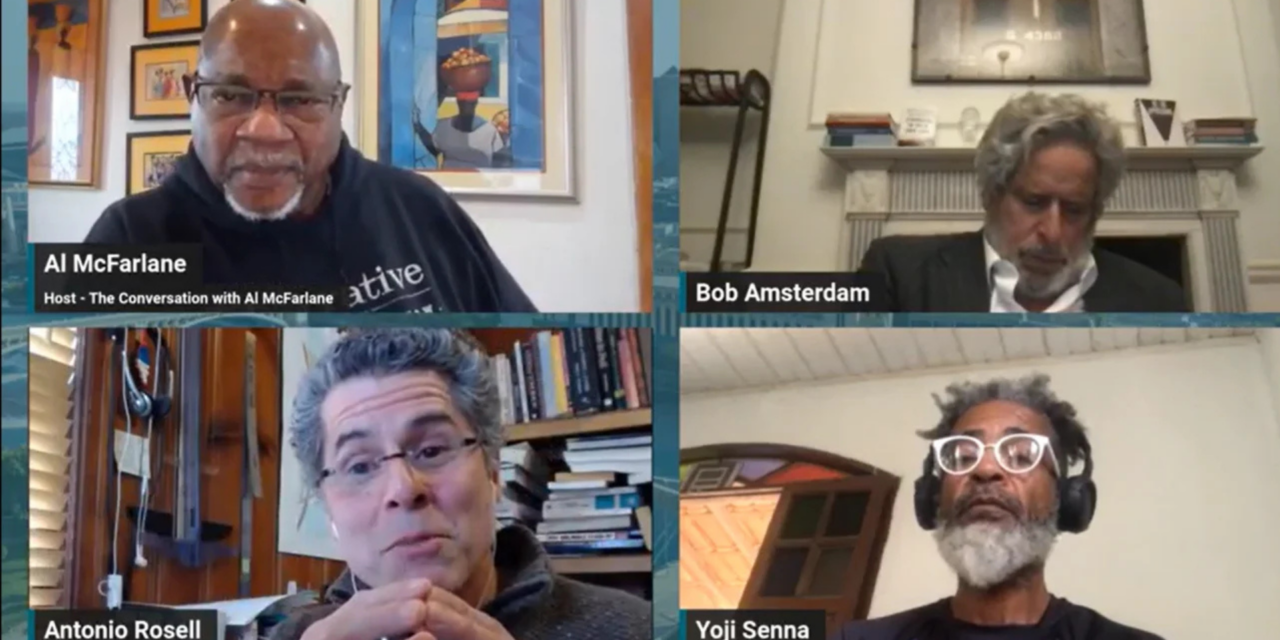
In the ever-churning realm of global politics, few topics ignite as much discourse and contention as the intricate dynamics surrounding conflicts in regions such as Ukraine and Gaza. Recently, on “The Conversation with Al McFarlane,” esteemed guests Antonio Rosell, Yoji Senna, and Bob Amsterdam embarked on a profound exploration of these complexities. Their perspectives, enriched by historical context and keen analysis, offered profound insights into the underlying causes and extensive ramifications of these conflicts.
An overarching theme that reverberated throughout the discussion was the role of the North Atlantic Treaty Organization (NATO) in Eastern Europe, particularly its involvement in the Ukraine-Russia conflict. Rosell’s incisive commentary shed light on NATO’s eastward expansion, highlighting the historical promises made to Russia and the resulting geopolitical tensions. “NATO has done the expansion toward the east that they promised they wouldn’t do,” Rosell emphasized, encapsulating the gravity of broken assurances.
For those less familiar with NATO, understanding its origins and evolution is paramount. Established in 1949 as an intergovernmental military alliance, NATO emerged as a bulwark against the perceived threat of the Soviet Union during the Cold War. Over time, NATO’s membership expanded to encompass former Eastern Bloc nations, a development that elicited mixed reactions and heightened tensions with Russia.
Senna added another layer of complexity to the discourse by drawing parallels between historical colonialism and contemporary conflicts in the Middle East. His eloquence in articulating the impact of Western interventions on the region framed the Israeli-Palestinian conflict within a broader narrative of imperialism and power dynamics. Senna’s resonant words echoed, “Israel is the same: instead of British colonizers, pilgrims, It’s the same European colonialism applied to the population of Palestine.” By adding this statement, Senna suggests that the actions of the Israeli state, predominantly led by Ashkenazi Jews of European descent, reflect a continuation of European colonialism in the Middle East. Senna implies that the historical legacy and identity of Ashkenazi Jews shape their position as agents of settler colonialism, impacting the trajectory of the Israeli-Palestinian struggle.
Delving deeper, Senna also elucidated how imperialism has historically shaped global affairs through territorial acquisition, economic dominance, and cultural influence. In the context of the Middle East conflict, imperialism manifests in historical and ongoing attempts by external powers to exert control over the region’s resources, territories, and populations.
The Israeli-Palestinian conflict, as Senna highlighted, serves as a poignant testament to the enduring consequences of imperialism and colonialism in the Middle East. Rooted in competing nationalisms, territorial disputes, and ethnic tensions, this longstanding struggle epitomizes the injustices perpetuated by imperialist agendas.
Amsterdam’s contributions to the conversation provided further depth, emphasizing the necessity of acknowledging deep-rooted historical grievances to pave the way for lasting peace. “We must recognize the profound historical grievances underpinning these conflicts if we ever hope to achieve lasting peace,” Amsterdam remarked, underscoring the importance of historical awareness in conflict resolution efforts.
Throughout the dialogue, Rosell, Senna, and Amsterdam advocated for a nuanced understanding of global conflicts—one that transcends simplistic narratives and confronts uncomfortable truths. Their insights serve as a beacon, challenging listeners to critically examine the role of Western powers in perpetuating violence and suffering while acknowledging the complexities of historical legacies and geopolitical dynamics.
As the world grapples with ongoing humanitarian crises and geopolitical tensions, the conversation on “The Conversation with Al McFarlane” serves as a poignant reminder of the imperative to engage with diverse perspectives and confront complex issues head-on. Through informed dialogue and critical analysis, there lies the potential to aspire toward a more just and equitable global order—one that upholds the principles of peace, justice, and human rights for all. The discourse ignited by Rosell, Senna, and Amsterdam serves as a catalyst for introspection and action, urging us to confront uncomfortable truths and strive toward a brighter, more inclusive future.