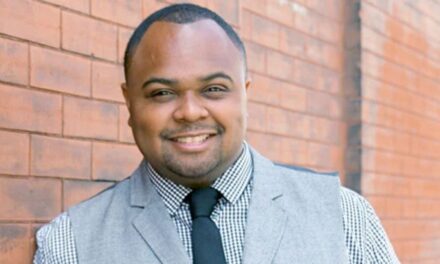
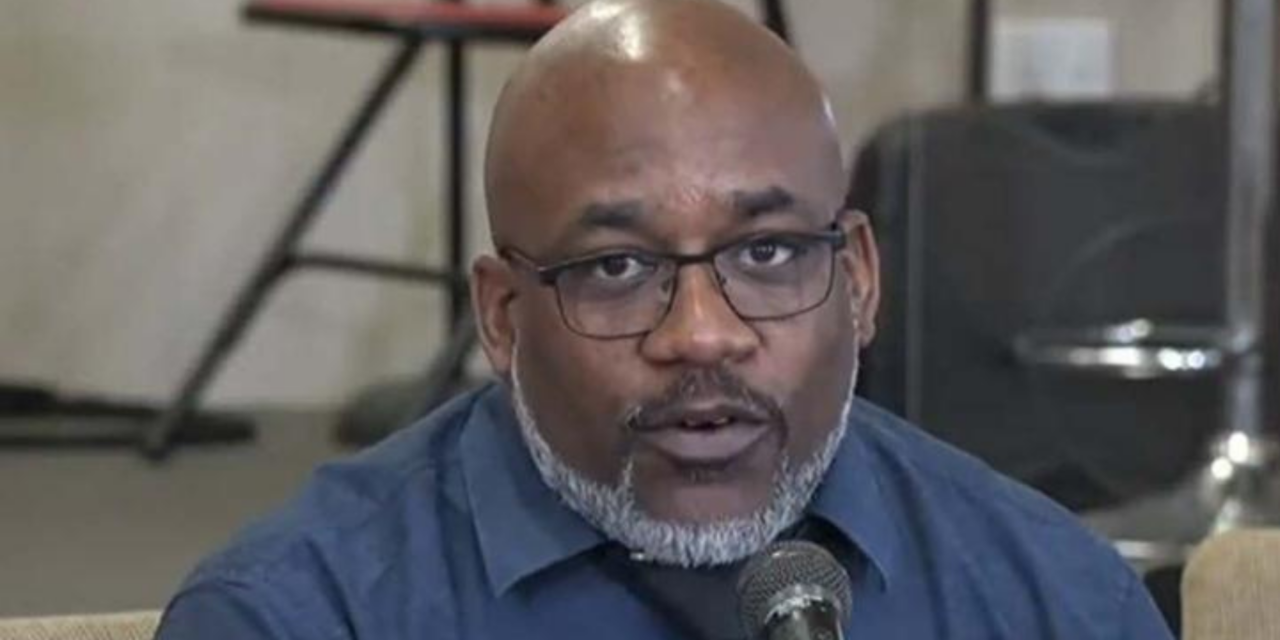
“The opposite of poverty is not wealth,” said Justin Terrell, executive director of the Minnesota Justice Research Center, citing Bryan Stevenson. “The opposite of poverty is justice.” Terrell added that “the opposite of trauma is not healing” but “agency,” because trauma can strip people of the ability to act while agency restores it.
Six years after George Floyd’s murder, speakers at George Floyd Square argued that justice cannot depend on police reform promises, philanthropy after destruction, or official action after harm is already done. They said the deeper test is whether Black communities gain the agency, resources and authority to prevent crisis before it returns.
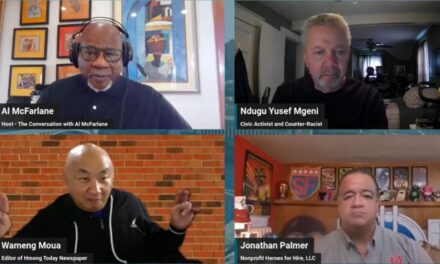
The discussion took place during day four of Amplified Voices, Global Impact, broadcast live from George Floyd Square on KFAI 90.3FM’s The Conversation With Al McFarlane. KFAI describes the show as a public affairs program featuring conversations with McFarlane and community leaders about issues affecting the Black community and the broader public. (KFAI | Minneapolis & Saint Paul)
Broadcasting from Worldwide Outreach for Christ Ministries at 3808 Chicago Avenue South, McFarlane said the weeklong series was leading up to the commemoration of Floyd’s death at “ground zero, 38th and Chicago.” He called Floyd’s murder “cataclysmic” and global, saying protests after his death were seen in Asia, Europe, Africa and South America.
The conversation unfolded as Minneapolis prepares to close 38th Street and Chicago Avenue to all traffic on June 8, 2026, for the 38th & Chicago Re-envisioned project, with closure expected to continue through late 2027. It also came amid a complicated police reform landscape: a federal judge dismissed the proposed federal consent decree over the Minneapolis Police Department in May 2025, while the city remains under a separate court-enforceable agreement with the Minnesota Department of Human Rights.
Terrell said Floyd’s murder immediately moved him into crisis response. At the time, he was executive director of the Council for Minnesotans of African Heritage, advising the governor and Legislature on issues affecting African-American and African immigrant communities.
“We just got activated,” Terrell said. “Me and my team, we made a list of 100 community members we knew we needed to check in with and started calling folks and checking in with the neighborhood.”
Those community calls, he said, shaped recommendations to state leaders: an independent investigation, Attorney General Keith Ellison’s involvement, and serious discussion of a consent decree.
“They were all coming from the community,” Terrell said. “It’s not a stretch of the imagination by any means to say that it changed the trajectory of my career. It changed my life.” Terrell said some accountability tools are stronger now than they were in 2020. One example, he said, is Minnesota’s police licensing system. The Minnesota POST Board adopted new rules effective May 30, 2023, including new standards of conduct for peace officers.
“One of the things we changed was the licensing process for officers in the state,” Terrell said. “The licensing body that controls every officer’s conduct in the state was pretty much inactive for 40 years.” Since new conduct standards were adopted, he said, the board has been “very active in holding officers accountable.”
But Terrell warned against treating reform as victory. “We have a long way to go to repair trust,” he said, “and to figure out a way to make sure that something like George Floyd never happens again, where you have elders and children begging officers to be responsive and they ignored them and let a man die in front of the world to watch.”
He also pointed to Minneapolis’ new Firearm Assault Shoot Team, known as FAST, as a public-safety tool aimed at nonfatal shootings. The city says FAST began operations on March 23, 2026, with personnel from MPD, the Bureau of Criminal Apprehension, Hennepin County Sheriff’s Office, Ramsey County Sheriff’s Office and Metro Transit Police. (Minneapolis)
“A lot of times violence in our community gets facilitated by the failure of the criminal legal system to intervene effectively,” Terrell said. Treating nonfatal shootings more like homicides, he argued, could help prevent retaliatory violence and reduce the feeling that residents must “take the law into their hands.”
Todd Western III, a sixth-generation farmer, co-founder of Iowa Farmers of Color and senior donor advisor at Greater Twin Cities United Way, said Floyd’s killing forced philanthropy and business to respond differently. He was on a tractor in Iowa planting corn and soybeans when he first heard the news.
“Unfortunately, when I heard the news, I said, ‘Well, there’s another one,’ not knowing this was not going to be just another ordinary another one,” Western said.
Western said corporate spaces often acknowledge racial trauma briefly before returning to business.
“It was, ‘That’s bad. I’m sorry it happened, but where’s the report? Where’s your numbers?’” Western said.
At United Way, he said, he was able to help raise about $3 million for a rebuild fund for Lake Street. More broadly, the Minneapolis Foundation says the Restore-Rebuild-Reimagine Fund provided more than $14 million for small-business repairs, security upgrades and community art after the unrest. (Minneapolis)
“I wasn’t on the sideline on this one,” Western said. “United Way provided that platform where I could actually do something. I was able to work with our donors to raise money to help rebuild the community.”
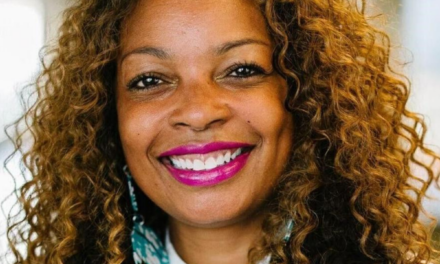
The panel then turned from institutional reform to community-controlled justice. Carmen Lewis, referred to on air as Reverend Carmen Lewis, said she had been leading the Central Area Neighborhood Development Organization and working in Bryant during the uprising. She said faith and justice cannot be separated.
“I really believe that part of our faith and part of our movement has to be centered in justice,” Lewis said. “It’s not either-or. It is a both-and.”
Lewis said the Minnesota Restorative Training Program, developed in partnership with Sabathani, aims to train 80 justice-impacted Black and brown residents as healing practitioners and circle keepers.
“There will not be a turning to outsiders, if you will, for culturally relevant services,” she said. The goal, she added, is to help communities “express and process the trauma that we are experiencing.”
Manu Lewis said restorative practice is about rebuilding relationships before harm escalates.
“How do we invest in each other and build those relationships so we can talk about some things and address some things before they happen, while they’re happening, and with solutions so that they actually never happen again?” he asked.
For Terrell, that is public safety.
“If there is violence in our community, there is not an intervention from the criminal legal system that we can rely on,” he said. “The intervention has to come from us. We can choose other interventions than violence.”
At George Floyd Square, the panel’s challenge was direct: justice after Floyd cannot be measured only by what institutions promise. It must be measured by whether communities have the power to act before the next crisis arrives.