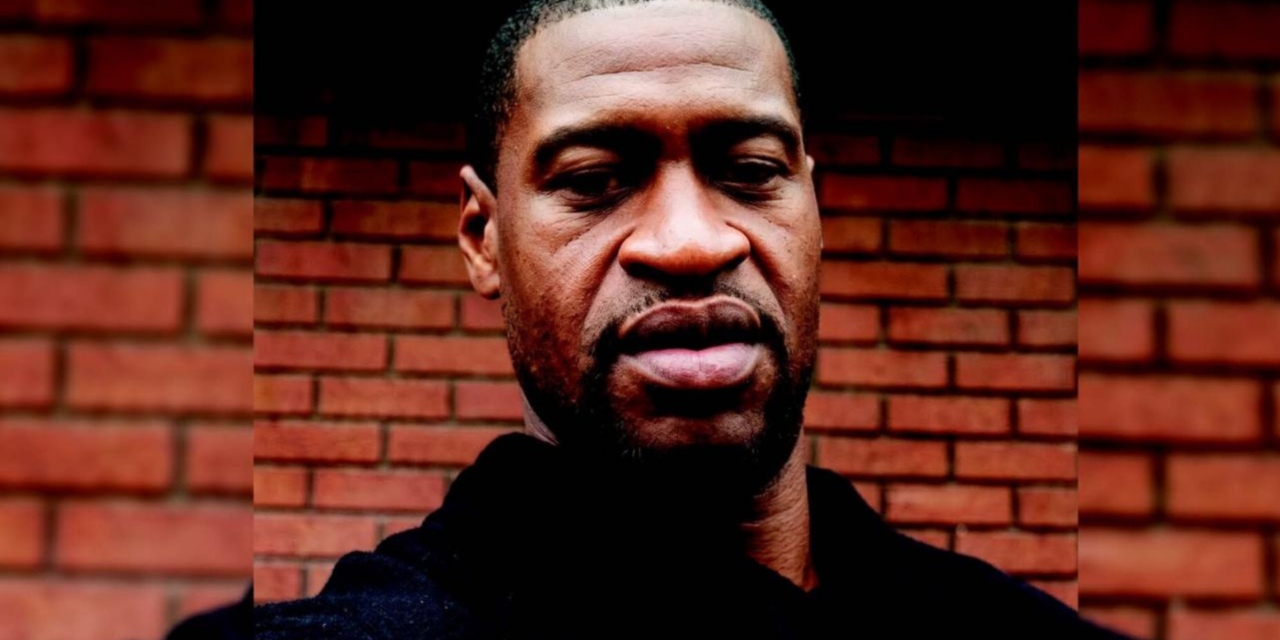
On day two of Amplified Voices Global Impact, broadcast live from George Floyd Square, the conversation moved from remembrance to policy, from public grief to public health, and from the trauma of George Floyd’s murder to the systems still shaping Black life in Minnesota.
The discussion took place on Radio KFAI 90.3FM’s popular public affairs show The Conversation With Al McFarlane, which features conversations with community leaders on issues affecting the Black community and the wider public. Speaking from Worldwide Outreach for Christ Ministries at 3808 Chicago Avenue South, host Al McFarlane said the day’s focus was “justice, public policy, civic trust, legal reform” and the continuing national conversation on accountability six years after Floyd’s murder.
McFarlane’s first guest, Ruth Richardson, president and CEO of Planned Parenthood North Central States and a former Minnesota lawmaker, said she was at home on her couch when she first saw the video Darnella Frazier had uploaded.
“For me, everything stopped,” Richardson said. “It was a really heavy moment. And it was also one of deep, compounded trauma. Around the world there was this outpouring and this outcry, but for many within our communities who have been in this space before, it was layered, compounded trauma.”
Richardson said Floyd’s killing immediately brought back other names, including Philando Castile and her own cousin, who she said was shot by law enforcement in front of her mother. “There was this moment of intense grief and pain and a heaviness that really settled around me,” Richardson said. “I was pacing back and forth in my living room with just that grief and that anger and not knowing quite how to channel that. Being within the legislature at the time, I really started to think about what was within my power to do.”
That moment, she said, helped lead to House Resolution 1 declaring racism a public health crisis and the creation of the House Select Committee on Racial Justice. A Minnesota House document confirms the committee was formed by House Resolution 1 during the 2020 second special session and declared racism a public health crisis affecting all Minnesotans.
Richardson said the work that followed had to be driven by community. “What followed was really work with community, for community, to come to the Capitol to say this is what we need, as opposed to being told what they need,” she said.
But the conversation was not only legislative. It was deeply personal. Richardson described her mother seeing her cousin running down a St. Paul street, watching him fall after being shot, and later seeing the family treated without dignity at the hospital. “I was struck by how disrespectfully my family was being treated in that moment as we were grieving,” Richardson said. “It really felt like baseline humanity wasn’t being recognized.” For her, that failure of humanity is why colorblind policy cannot repair racial harm. “We haven’t gotten to this place by being colorblind,” she said. “I don’t think we’re going to get out of this place by being colorblind.”
She pointed to the Office for Missing and Murdered Black Women and Girls as one result of work that became possible after Floyd’s murder. Minnesota became the first state to dedicate resources to a task force investigating violence against Black women and girls, according to the task force’s executive summary.
“You can’t solve for something that you’re not willing to measure,” Richardson said. “You can’t solve for something that you’re not willing to talk about.”
Haley Taylor Schlitz, an attorney, educator and columnist, joined the conversation from the perspective of a Gen Z Black woman. The Minnesota Star Tribune describes Schlitz as an attorney and writer who graduated from law school at 19 and writes from the perspective of a new generation stepping into leadership.
“This is something that we grew up watching,” Schlitz said. “If you were in Minnesota when his murder occurred, it was on your streets, and otherwise it was on your TVs, it was on your social media feeds. It’s something that we’ve grown up talking about, seeing, witnessing, something that shaped us.”
She said social media has created a generation that sees horror and ordinary life in the same scroll. “The murder is on your screen and you scroll, and the next thing is a get-ready-with-me for prom,” Schlitz said. “You’re transitioning between something horrific to something normal and mundane.”
That has changed how young people respond, she said.
“Thoughts and prayers don’t go as far as maybe they used to,” Schlitz said. “It really is like, this is our lived experience. My friends died in these hallways. Your thoughts and prayers are not enough.”
Schlitz also named her own family’s grief. Her grandfather, Dwight Taylor, she said, was killed during the Rodney King civil unrest. Richardson named her cousin as Demetrius Hill. McFarlane paused to ask for both names, saying the community owed it to them and “to the ancestors” to acknowledge them.
The conversation widened to education, book bans, misinformation and young people’s access to history. Schlitz, a former fifth-grade social studies teacher in Texas, said students today are more connected than ever, but also more exposed to falsehoods.
“There’s no limit on information, but there’s also no limit on mis- and disinformation,” she said. “We’re walking the line of balance between information and the misinformation that’s being spread.”
Richardson warned that the urgency of 2020 has faded in some circles.
“People are talking about it less than they were in 2020,” she said. But she rejected the idea that Floyd’s murder can be treated as one isolated moment. “Before 2020, there was your grandfather. Before 2020, there was my cousin. We can go back to Emmett Till and others. To narrow this down to just one moment, the fight that we are in, it’s not a moment. This is a movement.”
Health equity became the final thread. Richardson said Planned Parenthood North Central States, which serves Minnesota, North Dakota, South Dakota, Iowa and Nebraska, provides services including contraception, STI testing and treatment, cancer screenings, vasectomies, fertility treatment, menopause care and mental health services. She called health equity the organization’s “north star.” The issue is urgent: Planned Parenthood North Central States announced in 2025 that it would close eight centers across Iowa and Minnesota amid federal funding cuts and budget pressure. (Axios)
Richardson said reproductive justice is inseparable from dignity and safety. “People have the right to have a child, not to have a child, and if they have a child, to raise them in a safe and sustainable community,” she said.
Near the end, McFarlane asked both guests to reflect on healing. Richardson said communities cannot heal without access, dignity, trust and accountability. “I don’t think that you can have healing without accountability and without justice,” she said. “There’s the grief that comes with sitting on sacred ground, but there’s also the hope that comes with seeing what the future can look like.”
Schlitz closed with a warning against mistaking law for lived justice. “Reform on paper is not the same as reform in reality, as reform on the streets, as reform in lives,” she said.
At George Floyd Square, the message of the second Amplified Voices conversation was clear: justice is not memory alone. It is policy, health, education, law, truth-telling and the daily decision to keep fighting.