
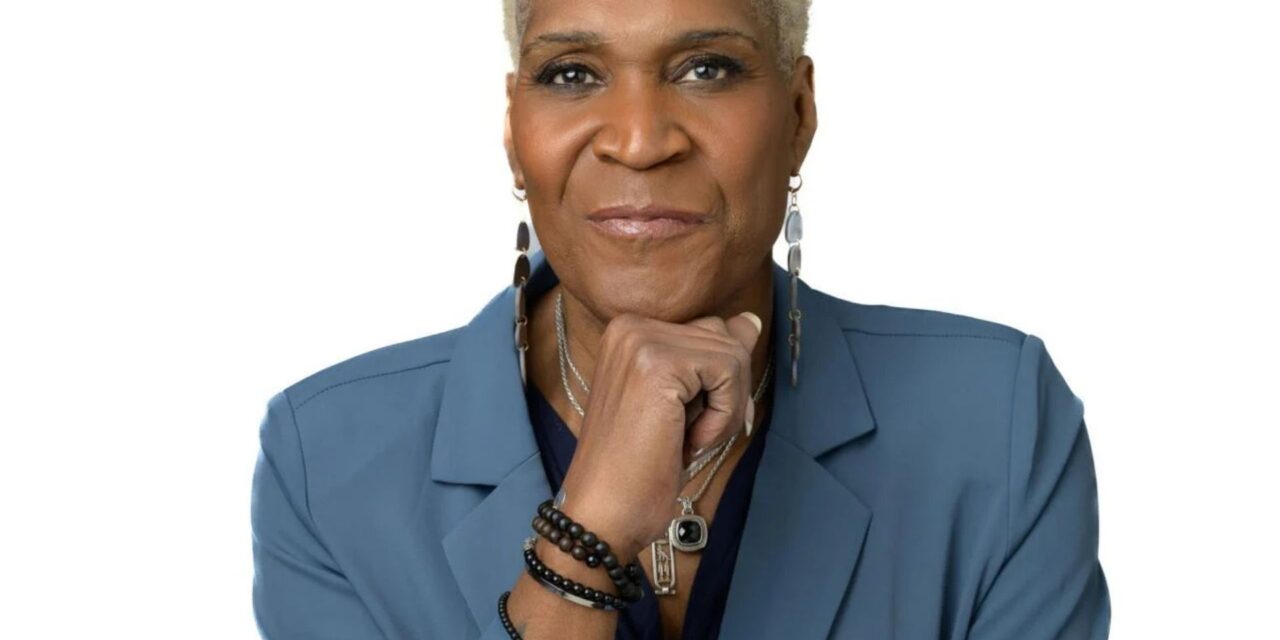
Andrea Jenkins, Minneapolis City Council member and the first openly transgender Black woman elected to public office in the U.S., called for renewed resistance and “radical love” in response to rising anti-LGBTQ+ legislation and last week’s U.S. Supreme Court ruling upholding a Tennessee law banning gender-affirming care for minors.
Speaking on The Conversation with Al McFarlane during Friday’s Healing Circle segment, Jenkins described the ruling as part of a larger movement seeking to erase trans people from public life.
“I’m not exaggerating when I say we are experiencing a coordinated erasure,” Jenkins said. “They are trying to make us invisible, remove us from public spaces, rewrite textbooks and erase our contributions to society.”
The Supreme Court ruling, delivered on June 18 in a 6–3 vote, allows Tennessee to enforce its ban on gender-affirming healthcare for minors while lower court challenges continue. The decision has implications for similar laws in at least 25 other states.
Jenkins, who transitioned in her 30s and has served on the Minneapolis City Council since 2018, reflected on the personal and political weight of the moment.
“By age 30, I was slowly dying inside,” she said. “I had to live as myself, regardless of the consequences.”
During the broadcast, which is co-hosted by Dr. Bravada M. Garrett-Akinsanya, Ph.D., LP, LISCW, Jenkins emphasized the connection between trans rights, racial justice, and historical resistance. She invoked the legacies of Audre Lorde, Marsha P. Johnson, and other Black queer thinkers, calling on communities to “stand up and speak out.”
“This isn’t just about trans people,” she said. “This is about the entire community being under attack; our rights, our history, our families, our futures.”
In addition to legal and political challenges, Jenkins referenced repeated threats to her safety in office, including vandalism of her home. “I live with fear,” she said. “But I also live with courage. And I am not alone.”
Jenkins warned that the shift in federal legal precedent signals a deeper national crisis. “What we’re seeing isn’t new,” she noted. “It’s an old pattern, just recycled.”
Still, she emphasized that healing is possible, particularly when communities ground themselves in solidarity and cultural memory.
“We need to remember who we are,” she said. “As Black people, as queer people, as people of conscience. Our stories matter. Our survival matters.”
Jenkins’s comments come amid growing scrutiny of anti-LGBTQ+ laws and an uptick in targeted hate crimes, according to data from the Human Rights Campaign.
McFarlane, who hosts The Conversation, described Jenkins’s remarks as “an urgent wake-up call.”
“She’s not just speaking for one identity,” he said. “She’s naming a pattern of political and cultural suppression that affects us all,” McFarlane said.
Watch the full episode on Insight News’ YouTube Channel: https://youtu.be/0vXcFCE8uQI.
Be sure to subscribe to Insight News on YouTube for more Healing Circle and other conversations that are all essential to Minnesota’s community journalism community.