
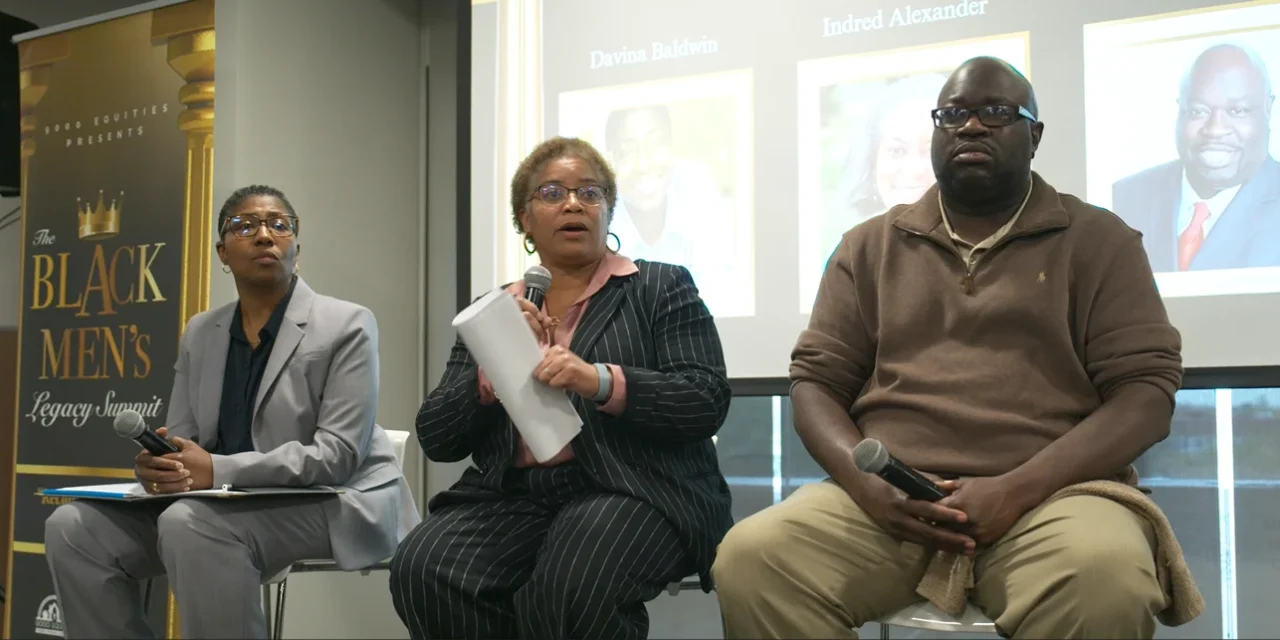
By the time the insurance panel took the stage at the Black Men’s Legacy Summit IV, the room had already done heavy work. The earlier conversations had traced what was lost, how ownership is reclaimed, how mentorship repairs the gaps, and how legal planning protects what families build. This session dealt with something less visible but just as decisive. What happens when life interrupts the plan? “This is the part we really cannot overlook,” said Freddie Bell, who was moderating this session and in that one statement, thus set the tone. “We’re building legacy, protecting legacy, and now we’re talking about ensuring legacy.” Insurance rarely carries the same emotional weight as homeownership or healing conversations. It does not come with applause or photographs. Yet the panelists were clear. When insurance is missing, everything else becomes fragile.
BJ Wilder of Country Financial began with a truth many in the room recognized immediately. “When I first started in insurance, they tell you to make a list of fifty people. Friends and family,” he said.
“The first people I talked to, my best friends and my mom, all said the same thing. ‘Don’t do it. Insurance is a scam. It’s not going to be there when you need it.’”
That belief, Wilder explained, is not accidental. “In our community, we’re taught how to survive,” he said. “Feed the kids. Keep the lights on. Get to work. We’re not taught how to thrive. Insurance is about thriving. And that’s why it’s overlooked.”
Indred Alexander placed that mindset in historical and economic context. “There’s deep rooted mistrust of the insurance industry in our community,” she said. “And it didn’t come from nowhere. But there’s also a focus on the here and now instead of long-term thinking. Insurance feels expensive. It feels confusing.”
Alexander shared how a lack of coverage reshaped her own life. “I came from real estate. I owned a brokerage. I was developing property,” she said. “When the housing market crashed, I was left holding the bag. I didn’t know how to mitigate risk. Meanwhile, I watched white counterparts survive while I was closing doors and filing bankruptcy.” That experience forced her to ask harder questions. “I wanted to understand why Black owned businesses fail at higher rates,” he said. “Over and over, it came back to how we perceive and manage risk. Insurance is not optional if you want sustainability.”
Davina Baldwin spoke to the day-to-day reality of those conversations. “Insurance isn’t sexy,” she said. “You don’t drive it. You don’t get immediate gratification from it. So, people see it as just another bill.” She described clients who start policies, drop them, then come back later. “Life happens. Jobs change. Emergencies come up,” Baldwin said. “But this policy might be the thing that keeps you in your home. The thing that keeps your child in school if something happens to you.” Rather than leading with fear, Baldwin reframes the discussion. “I don’t start with death,” she said. “I ask, what do you want this policy to do for you? Loans. Income replacement. Final expenses. Education. We let people dream first. Budget comes later.”
Across the panel, one theme stayed consistent. Insurance only works when it is part of a broader plan. “This isn’t about what someone else requires from you,” Alexander said. “It’s about what you want for your family. How you protect your home, your business, your future.”
The panel also challenged common assumptions.
“The biggest myth is that insurance is unaffordable,” Alexander said. “Many young people can get coverage for less than what they pay for streaming services.”
Baldwin addressed another belief that often shuts the conversation down. “I already have insurance through work,” she said. “That benefit usually ends when you leave the job or retire. Life does not stop in between.”
Wilder pushed the point further: “Life insurance isn’t just about death benefits,” he said. “It can be a vehicle. It can build value. It can support retirement. It depends on how you use it.”
Placed within the larger Summit, this panel did not close the conversation. It steadied it. It reminded the room that legacy is not only built through ambition or healed through conversation. It is also preserved through preparation. As the Summit continued into the remaining sessions, one quiet truth lingered: you can build something strong and you can even protect it legally.
But without planning for risk, that legacy remains exposed.