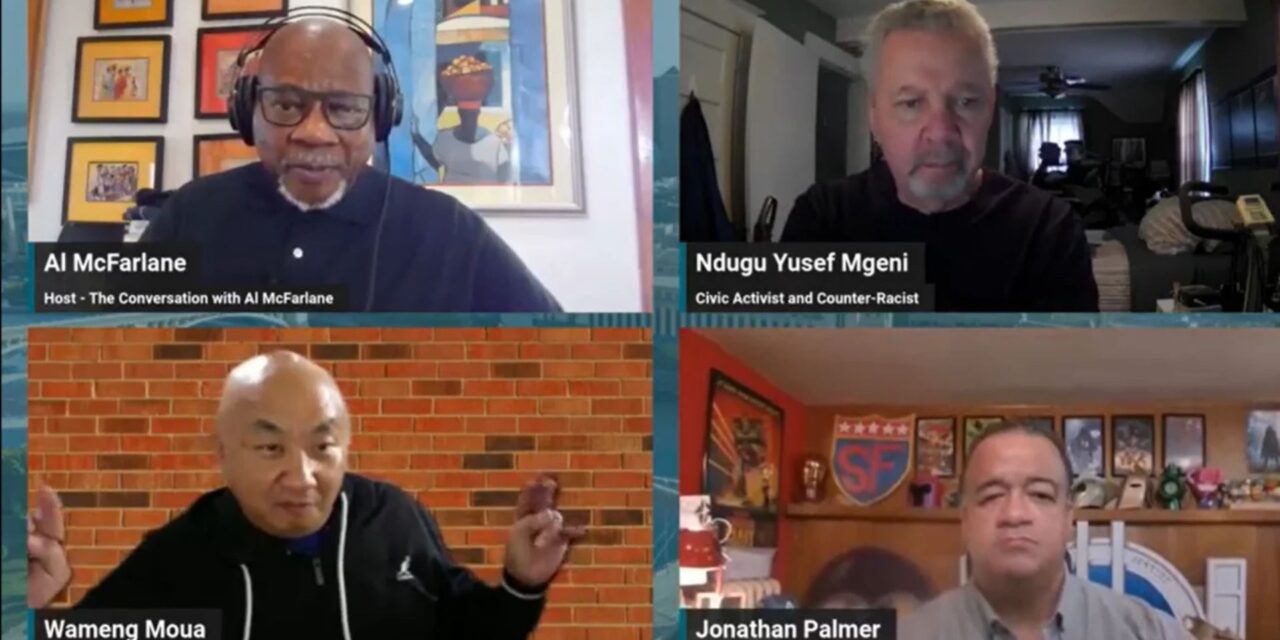
On another charged episode of *The Conversation with Al McFarlane* on KFAI Radio, Minnesota’s Hmong and Black communities engaged in a thought-provoking dialogue around identity, politics, and faith as they prepared for tomorrow’s pivotal 2024 presidential election. Hosted by Al McFarlane, the segment explored the complexities surrounding why some Hmong voters align with former President Donald Trump despite his anti-immigrant rhetoric—a stance that deeply perplexes community leaders and stands at odds with many Hmong values.
“The Hmong are the largest Asian group here in Minnesota,” shared long time community leader *Wameng Moua*. “We arrived here in the late ’70s after fighting alongside Americans in Southeast Asia. And yet, I see many in my community, especially Christian Hmong voters, who side with Trump—a man who, on all fronts, speaks against the values we hold as immigrants.” Moua expressed bewilderment at what he called a “misguided allegiance,” adding, “I want to address why you would side with someone who actively dislikes who we are.”
McFarlane emphasized the high stakes of this election, framing it as a crossroads in America’s ideological landscape. “This isn’t just about who sits in the Oval Office,” he noted. “It’s about defining our country’s identity, safeguarding democracy, and addressing systemic issues that affect every community.” The program underscored the mounting tension across the U.S., with political strategies like voter suppression and rhetoric steeped in nationalism stoking division and eroding trust in democratic processes.
Panellist *Yusef Mgeni* drew attention to the growing influence of “Christian Zionism,” a force aligning evangelical nationalism with unwavering support for Trump. “It’s loyalty driven by fear and old affiliations,” he explained, noting that some Hmong Republicans may feel allegiance rooted in past support from figures like the late Senator John McCain. “But today’s political climate is different,” Mgeni cautioned, referencing a spike in anti-Asian violence fuelled by Trump’s inflammatory language on China.
Meanwhile, *Jonathan Palmer* argued that the racism emboldened in today’s political climate was never eradicated but merely resurfaced. “What we’re seeing now is White supremacy in full force, dressed in bravado, and openly calling for dominance over communities of color while holding up Trump as a ‘saviour.’ It’s the playbook of authoritarianism, and many feel it’s tearing at the nation’s democratic fabric,” he stated. Palmer added that the resurgence of this rhetoric calls for unity and resilience among marginalized communities.
CoachLeah, another panellist, voiced concern about the influence of faith leaders in political discourse, particularly after *Donnie Swaggart* recently condemned Black churches for supporting Democrats. “It’s heartbreaking,” she said. “To say we’re not one church because of our political choices speaks volumes about the divisive power of Trump’s message.” She underscored that this election could provide a unique opportunity to “show that things can be inclusive,” urging voters to unite in favor of leaders who advocate for equity and justice.
The conversation turned to polling and voter suppression, with Mgeni warning that the sheer number of mail-in ballots, combined with restrictive voter laws, could delay election results. He predicted that swing states like Pennsylvania and Georgia, where early votes won’t be counted until Election Day, will play critical roles. “This will be the tightest race possibly in the history of presidential elections,” he remarked, “and it may take days to know who won.” Polling shows that Black women overwhelmingly support Kamala Harris, though 14% of Black men are leaning toward Trump—a trend Mgeni flagged as significant.
McFarlane closed with a sobering perspective on the post-election landscape, foreseeing potential conflict no matter the outcome. “If Republicans win, it feels like they’ll double down on divisive policies,” he cautioned. “But if Harris prevails, we’re likely to see a misinformation campaign claiming the election was stolen, stirring people to conflict.” Palmer offered a tempered note of optimism, saying, “While some may follow Trump’s lead, many Americans won’t tolerate blatant racism. But we need unity now more than ever.”
With the election just hours away, *The Conversation* urged listeners to make their voices count. “Every race on the ticket matters,” CoachLeah reminded. “Vote the whole ticket, and make your voice heard.” As McFarlane concluded, “This election is about more than a candidate—it’s about choosing what kind of country we want to be.”