An interesting thing happened this past week during the BET Awards … the world was reminded that the B in BET stands for Black.
Sure we knew the network had Black programing and Black faces but let’s be real here, for a time what it was presenting was a caricature of Blackness and not a full depiction of the culture and condition of a people. Now some would – and rightfully so – argue that no singular network could fully present an accurate picture of a people so diverse. But for a few years – again, let’s be real – since the network was sold to Viacom and Debra Lee took over, BET has been a shell of its former self and a cultural joke, opting to focus on the E in BET – pure mindless entertainment. Gone is all news programing. Gone are the Ed Gordons, Tavis Smileys, Cousin Jeffs, Shelia Banks and so on. Twerking reigns.
For years the BET Awards (and BET Hip-Hop Awards) have been three hour montages of buffoonery, plain and simple. BET and its shows were heavy on entertainment and light on Black – to be more to the point, light on Blackness. BET was being made palatable to the masses. It was so palatable in fact that this year’s awards show was also broadcast on Nickelodeon, MTV, Comedy Central, VH-1, Logo and Spike. But following what happened this year, I’m not so sure Nickelodeon and the likes will be inviting the neighbors over for dinner again any time soon.
For years, many in the Black community had quit checking for the BET Awards … and really for BET in general, but this year was different. As hip-hop artist and activist Nick “Mastermind” Muhammad noted in a recent conversation, this year Black folks could hardly wait for the BET awards.
“With how (Billboard) did (the tribute to) Prince and being left out of the Grammys and ‘Oscars So White’ we were really ready to be able to honor our people in our space,” said Muhammad.
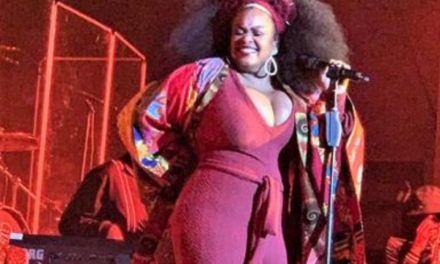
BET is our space, and in case anyone forgot that, Beyoncé and Kendrick Lamar reminded us from the very start of the program. What struck me most about Beyoncé’s performance was the song choice. Beyoncé could have chosen to sing any song, but she chose “Freedom” – a soul-stirring anthem of Black struggle, Black pride and Black power. The megastar that has a legion of fans from all ethnicities opened with the Rev. Dr. Martin Luther King, Jr.’s words from his iconic “I Have a Dream” speech, but Bey didn’t pull from the warm and fuzzy text.
She pulled from the part that most of us don’t know … the part some in white America would rather us never know. She pulled from the “When the architects of our republic wrote the magnificent words of the Constitution and the Declaration of Independence, they were signing a promissory note to which every American was to fall heir. This note was a promise that all men, yes, Black men as well as white men, would be guaranteed the unalienable rights of ‘Life, Liberty and the pursuit of Happiness.’ It is obvious today that America has defaulted on this promissory note, insofar as her citizens of color are concerned. Instead of honoring this sacred obligation, America has given the Negro people a bad check, a check which has come back marked ‘insufficient funds.’ … We refuse to believe that there are insufficient funds in the great vaults of opportunity of this nation. And so, we’ve come to cash this check, a check that will give us upon demand the riches of freedom and the security of justice.”
Yeah, that text.
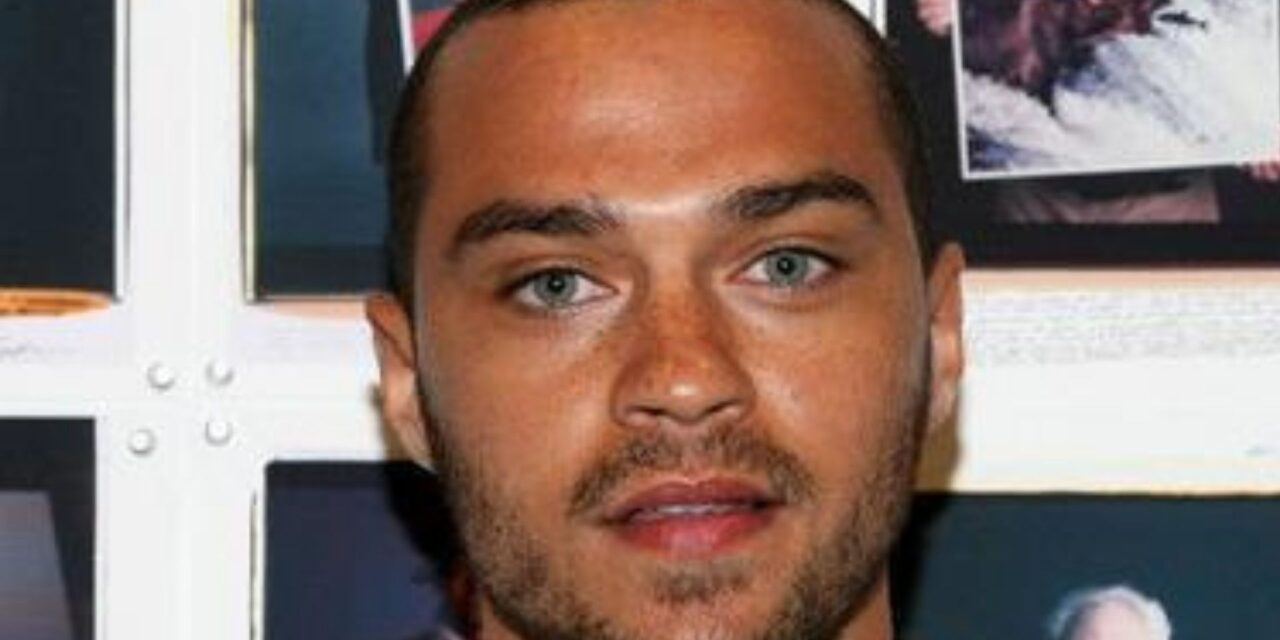
At any awards show in the past, that performance alone would have been the next day’s conversation. So too would have been the wonderfully done tributes to Prince – actually done by relevant artists who worked with or who were directly influenced and inspired by the icon. But the in the scheme of things they were just blips compared to what happened when Jesse Williams took the stage to accept his award for his humanitarian works in the wake of the proliferation of police killings of Black men, women and children.
I’m not sure if the powers at Viacom and white America as a whole … hell, Black America too … were ready for Williams to say what he said, but thank you Brother Williams for saying it. What he said was far more powerful than any line he could have ever delivered on “Grey’s Anatomy.” Someone must have been asleep at the switch when they allowed Williams’ mic to remain on.
“They would have cut his mic off and ushered him off the stage had he said it at the Oscars,” said Muhammad.
The “it” that he said is – and allow me to paraphrase – no longer will Blacks in entertainment be content with just entertaining. In 658 words he singlehandedly changed the E in BET from entertainment to enlightenment.
Now, more so than in the past few years, we’re seeing a blending of arts and activism. In the 1960s Harry Belafonte and Dick Gregory locked arms with Malcolm X. Similarly, today we have brothers and sisters such as Williams, Beyoncé and Lamar aligning with the brothers and sisters in movements such as Black Lives Matter calling for … demanding … structural change.
Now the conversation has gone on and will continue of for quite some time, but it’s a worthy conversation to be had. Artists (and athletes) have a platform. The question is how they use that platform. And more and more fans are demanding cultural accountability from the artists they support.
“Now with social media and the internet people can have direct contact with artists and they can ask: ‘why are you not talking about Freddie Gray (killed by Baltimore police), or Sandra Bland (dead after a police stop for failing to signal),” said hip-hop artist and cultural activist, Toki Wright.
Let’s be clear. The number one job for an entertainer is to entertain. If an artist doesn’t entertain there is no platform … period. And not all artists should be required or obligated to speak on social issues. What Beyoncé, Kendrick and Williams did was out of choice, not obligation.
Entertaining is how the artist earns a living and speaking out can cost an artist dearly. And like Beyoncé’s husband once said, “I can’t help the poor if I’m one of them.” So when an artist does speak out and risks his or her standing among the Hollywood elite and major record labels, let’s make sure we are there to support that artist … even if he is “light skinned.”
But that’s a conversation to be had in a forthcoming commentary.