YOU CAN FLY
The Tuskegee Airmen
By Carole Boston Weatherford
Illustrated by Jeffrey Boston Weatherford
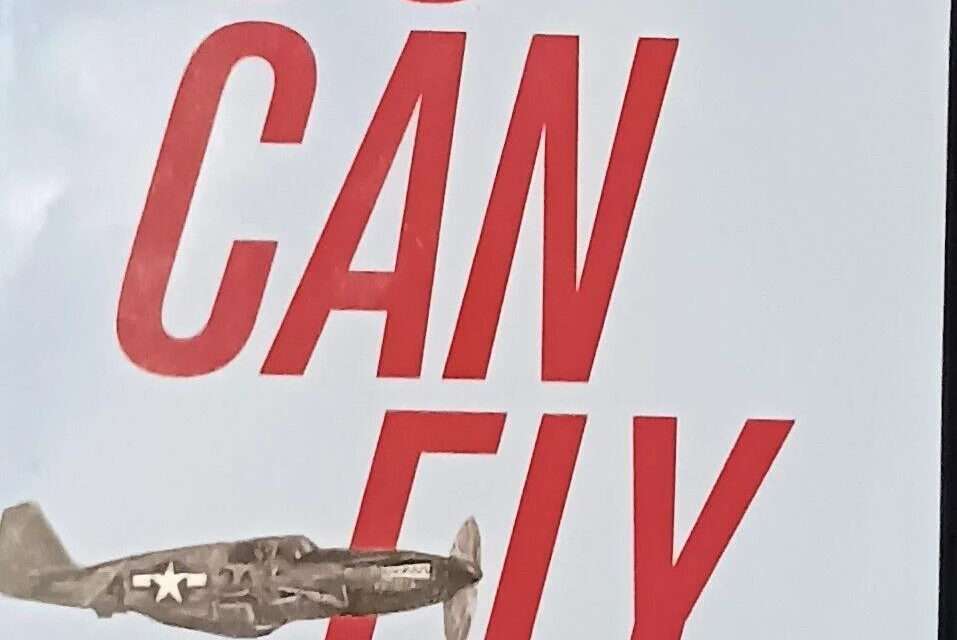
In every walk of life in the African Diaspora, we stand on the shoulders of the greatness that went before us. The military is no exception, given the mentality that African Americans weren’t considered fit for combat duty, to become officers, etc. in America’s past, much less fighting for a country that didn’t respect you. Against those odds, a group of Black men in the Army Air Corps (later known as the Air Force) proved those naysayers and obstructionists wrong, as illustrated in Carole Boston Weatherford’s You Can Fly: The Tuskegee Airmen.
You Can Fly is a collection of poems by Weatherford and illustrated by her son Jeffrey Boston Weatherford which documents the history of this extraordinary division of men, from its inception in 1940 to the day former President of the United States Harry Truman desegregated the U.S. Armed Forces in 1948. Through her gift as a poet, coupled with her research, Weatherford takes us from the point where future Black pilots are dreaming, the Civilian Pilot Training Program which finally admitted Black applicants, training at Tuskegee to become the Fighting 99th, and the pivotal role First Lady Eleanor Roosevelt played in challenging the belief that Blacks weren’t fit to pilot planes.
Weatherford’s poems bring us through World War II with celebrities such as Joe Louis and Lena Horne, heroes like Dorie Miller, and movers and shakers such as Judge William Hastie, Lt. Col. Benjamin O. Davis, Jr., and the NAACP. These poems speak powerfully not only about the challenges the Tuskegee Airmen overcame to garner an outstanding service and combat record, but the reality of dealing with a two-front war—the enemy abroad and the enemy of racism and discrimination at home.
The final poem in the collection, “Epilogue,” gives us a look at what we as African Americans have accomplished “if you live long enough.”
As the son of a career military man—Air Force, in fact—these poems strike home. Dad was in his early teens when World War II ended, so he was among the first wave of enlisted African American airmen following the desegregation of the Armed Forces. He retired from the Air Force as an officer and is honored now in the Air National Guard Museum here in the Twin Cities, but back in those days he had to walk the line between the military structure and not tolerating any mess from the whites around him. I am deeply grateful to Weatherford for keeping the memories of the Tuskegee Airmen alive and paying it forward to the younger generations.
You Can Fly is available through the Planting People Growing Justice Bookstore, Amazon, and Barnes & Noble.
Thank you, Carole and Jeffrey, for reminding us on whose shoulders we stand, and how our history continues to make a difference in this nation. If we don’t share our stories, who will?

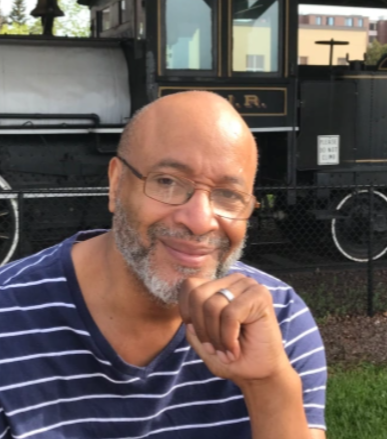
W.D. Foster-Graham
W.D. Foster-Graham is a native son of Minneapolis, Minnesota. He received a B.A. in psychology from Luther College, and he was an original member of the multi-Grammy-Award-winning ensemble, Sounds of Blackness. He has also been recognized by the International Society of Poets as one of its “Best New Poets of 2003,” is a guest writer for journalist/author/entertainer Wyatt O’Brian Evans.