The legacy of Jamar Clark and Philando Castile continues.
In this instance their legacy is in the form of a comprehensive report compiled by the NAACP highlighting the economic disparities that exist between Minnesota Black and white residents and the ways in which those disparities negatively impact Blacks and the state as a whole. And while many in the state know the realities of the multiple achievement gaps, having the nation’s oldest civil rights organizations focused on the problem could bring a heightened sense of urgency from state and local officials. As for how Clark and Castile play into this, NAACP senior director of Economic Development, Marvin Owens, Jr. said the community’s response to their killings at the hands of police caused the organization to take a deep-dive look into the root causes of the unrest.
“Three years ago we were going around the county in respect to police violence and we began to realize we needed to pay attention to the economic conditions fueling some of the unrest that was on the ground,” said Owens at a Dec. 7 meeting at the Minneapolis Urban League. “The disparities in wealth, in home ownership, in economic inclusion were actually fueling the frustration on the ground.”
Owens said similar reports were done in Baltimore, Ferguson, Mo. and St. Louis – all sites of civil unrest following police killings of Black citizens.
The 47-page report, “The Twin Cities Economic Inclusion Plan,” details the may disparities in wealth, income, housing/home ownership, unemployment, business ownership, education, health and criminal justice. It also focused on solutions. And while most are at the federal level, Owens said the state has an opportunity to provide tangible solutions.
“This plan is to see who’s going to be with us. Minnesota announced a $1.3 billion surplus in the state budget. This is not a situation where the state can say there’s no money to get things done,” said Owens.
Area NAACP leaders agree.
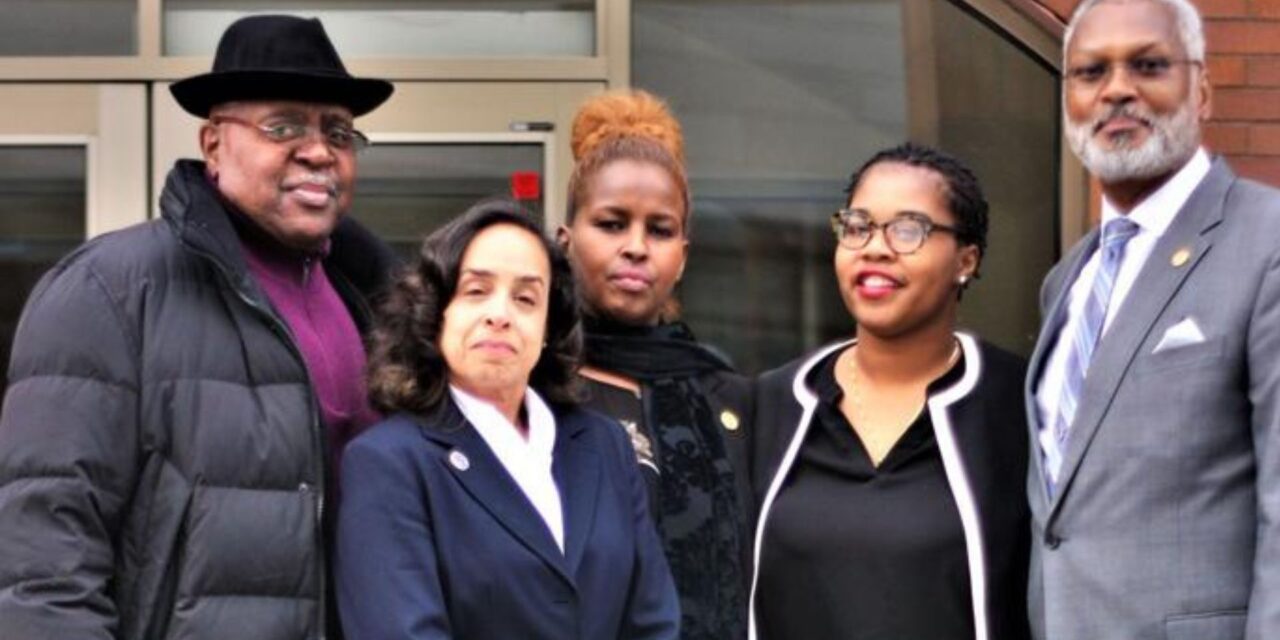
“What’s happening with the economic disparities in Minnesota is unacceptable,” said St. Paul NAACP President Farhio Khalif. “The economic disparities are real and unacceptable, and we must come together to change things. The gun violence in our community is unacceptable. In St. Paul we have lost 30 young men to this violence.”
Minneapolis NAACP President Leslie Redmond said the violence stems from the noted disparities.
“When we talk about gun violence affecting our community, if we were providing these young people with jobs, opportunities, hope, we wouldn’t see it as much,” said Redmond.
She said – as with most instances – to find the root, follow the money.
“We live in a state where white people, white privilege and white supremacy is thriving,” said Redmond. “But I always say don’t complain, activate. This plan is a form of activation. It contains tangible action items to move forward in a world where these disparities do not exist. If you follow the money long enough, you’re going to get to the problem and to the solutions.”
To watch the townhall meeting in its entirety, go to Insight News’ Facebook page at www.facebook.com/Insight-News-145233765561468/. To view the report, visit the St. Paul NAACP website at www.naacp-stpaul.org.