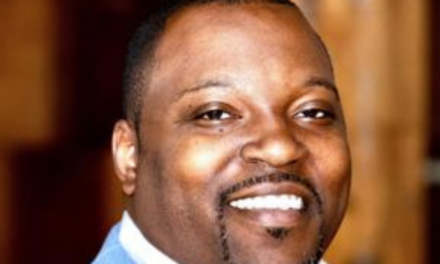

Over the past several years as a columnist for ‘Insight News’, I have had the privilege of writing quite a few articles on impressive city, county, and state political figures, one becoming quite familiar after the George Floyd televised execution and the aftermath of pain and anger explosions having spilled out on a Minneapolis city street. Attorney General Keith Ellison, often referred to as ‘the people’s lawyer’ and his astute team of legal scholars, played a key role in landing a conviction of the murderer and saving the city from even more destructive upheaval. Ellison always has something important, informative, and thought provoking to say, and his guest appearance on the Hawthorne Huddle’s October meeting was no exception.
On the first Thursday of every month, except July, Hawthorne neighborhood residents, law enforcement, social service professionals, educators, political officials, faith leaders, and others convene in a forum to discuss major issues affecting North Minneapolis. In 1997, there was high crime and people were struggling. Twenty-five years later, the Attorney General, a Northside resident, opens the Huddle gathering with a special presentation discussion on the challenges of segments of impoverished people, crime, and safety in North Minneapolis, particularly around the corner of West Broadway and Lyndale.
“Let me just begin by saying everybody has the right to be safe. Our community, North Minneapolis, has that same right to be as safe as anyone in a strong community with a network of neighbors who look out for each other. Strong schools, housing, quality health, food security, and of course police and prosecution give us a chance for transformation in our neighborhoods. But we also know that so many times, much deserved rights have been threatened and challenged,” said Ellison. “So, it’s important to be in community and in partnership as General Mills has been in support of the Hawthorne Huddle. That’s the key. Working together and making sure people give information when they have it, that those with subpoenas comply, and that residents become educated about community and city affairs by learning how to navigate the tip lines. Local businesses are doing a great job. So are landlords but not all. We need to step up and help any way we can.”
Ellison the opportunity to cite important facts that residents and the business community should know. He said the Attorney General’s office does not have the legal authority to just walk in and prosecute crime in the city or Hennepin County. The office must be invited in to proceed, or be appointed by the Governor. Legal jurisdiction does not exist. Crime is prosecuted and investigated locally in the state. But, he said, civil tools have been used at the Attorney General’s discretion.
Ellison’s office prosecuted 267 cases simultaneously when Steven Meldahl was proven to be a slum landlord in North Minneapolis. Ellison views the action his office is taking at Winner’s Gas Station and Merwin Liquor in the same light.
“The office of the Attorney General does not allocate money. We don’t write laws. We don’t write ordinances. But we do have a role to play. We have set up a wage theft unit in the Attorney General’s Office and we’ve literally returned hundreds of thousands of dollars back to workers who were stolen from, and we represent the Minnesota Department of Labor and Industry, which also enforces wage theft. Together, the two entities have gotten back nearly $2 million for workers who were cheated.”
We cannot pass an ordinance to raise a minimum wage like Jeremiah and his colleagues have done, but if somebody disobeys that ordinance, I can and I will and I have taken them to court,”
A nuisance action filed together by the Attorney General, Hennepin County, and the city ofMinneapolis, stipulates that the business owners in infringement of the law have a right to be notified that they are the subject of the nuisance action. There’s a-30-day abatement period, a time-period where the business has a right to fix, mitigate, clean up, or take care of the complainant’s charge, after the notice is filed.
“So, what the combined governing entities are asking is for these businesses to comply with the loitering ordinace. Customers should legally buy and then go!” Ellison said.
“They must hire their own security. The City of Minneapolis should not have to pay their security on their premises. We have an obligation as residents of Minneapolis to offer our policing services on the streets and in the common areas, but when it comes to their premises, they must clean it up. With garbage everywhere, it looks like a great place to commit a crime. What’s that about the broken window theory? If it looks like people don’t care, then the people who are willing to execute illegal and inappropriate acts of criminality feel comfortable carrying out their devious plan,” he said.
The Attorney General also recommended additional lighting and improving the bus stop by having policing go through there on the hour. “If it looks like drugs are being sold, the illegal activity will be caught on a secure camera. And if they decide to move their location, we will decide to continue our relentless campaign to enforce the law by the book and encourage them comply,” he said.
Last week, the Attorney General’s office filed a lawsuit against retailer Fleet Farm. There was irrefutable proof through serial number tracing that they have sold 37 guns that have turned up in crimes on several occasions, he said. With one of the guns, 14 people were shot in St. Paul resulting in one fatality. The Attorney General said that conversations about public safety cannot lead to positive outcomes if no one discusses the responsibilities of gun ownership. And if someone has the right to sell them, their business must take serious measures to make sure the guns don’t get into the wrong hands. Fleet Farm didn’t follow the rules, so we took action against them,” he said.
What he made perfectly clear was that no retailer was above the law, and that the authorities were watching. “But it’s community members who must ask, ‘Who’s doing the shooting, who’s got a beef with who, and where are the drugs being sold’? Until that information is shared based on trust, we can never really have stronger and safer communities”, Ellison said.