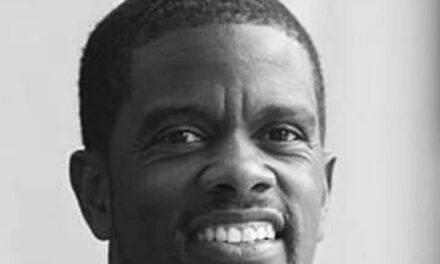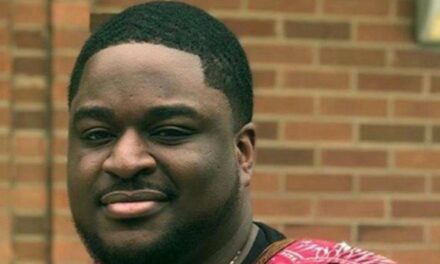
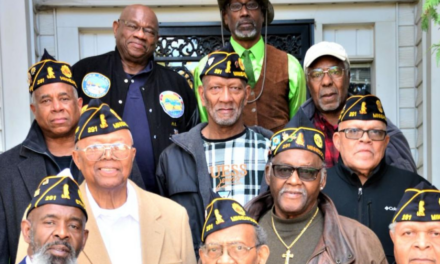
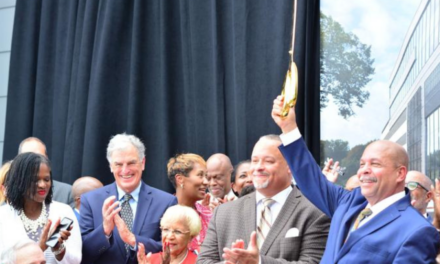
Last Wednesday’s edition of The Conversation with Al McFarlane reflected the power of sitting together in community, examining the sense of inevitability and imminence of exponential development of our community fueled by excellence and experience in data driven decision making in creating health and wealth.
“I think people interested in business need to explore and understand there are no real boundaries or barriers in life. You must make up your mind on what you want to do and who you want to be and put yourself in a position to win,” said Kenya McKnight, founder, President and CEO of Black Women’s Wealth Alliance (BWWA) and owner of ZaRah a Cultural Wellness Hub located at 1200 West Broadway in North Minneapolis.
“At BWWA, we continue to learn more, build more, and fill in the gaps in important ways, resulting in our being more healthy, wealthy, wise, and being bridges for others to cross,” McKnight-Ahad said.
Dr. Brooke Cunningham, Assistant Commissioner, Minnesota Department of Health (MDH) holds doctorate degrees in medicine and sociology from the University of Pennsylvania. She completed her residency in internal medicine at Duke University and fellowships in health services research, health policy, and bioethics at Johns Hopkins University, and an Academy/Health Delivery System Science Fellowship at the Medica Research Institute. Currently, she is a general internist, sociologist, and assistant professor at the Department of Family Medicine and Community Health at University of Minnesota.
This year she was named Assistant Commissioner for the new Health Equity Bureau at MDH.
“We say things with a general sense that are rather vague, like ‘there are huge disparities and problems’ But Minnesota Department of Health has an imperative to provide, encourage, and support data driven decision making in our communities. We are the organizers and the interpreters of the data, and we do our jobs quite well,” Cunningham said.
As part of working their way into the next legislative session, MDH and the Governor’s office, along with colleagues from the Minnesota Department of Education, are conducting a series of listening sessions on different topics of concern to Black Minnesotans, she said. The sequence is called ‘Mind, Body, and Soul’.
“As the appointed representative for MDH, I emphasized in my presentation that not only do we have to produce the data, but we must appropriately act on the analyses with community participation, as well. What the data made clear was the need for more disaggregated data from the very diverse Black communities because cultural and home country experiences and tenure in the U.S. can vary in different ways including gender and age. We have to start with disaggregating race by ethnicity and comparing multi-generational African American communities to new African American communities like the Somali community,” Cunningham said.
“Different risks, strategies, beliefs, world views, and encounters with racism in America can prove to be critical in strategizing ways to improve public health. I don’t want to be showing the same 40 slides 10 years from now where statistics depicting the same dismal disparities for people of color have not changed,” she said.
“I’m talking about transformational strategies and outcomes, and more positive and inspirational stories coming out of our lived experiences in our state,” Dr Cunningham said.
Dorothy Bridges recently was named CEO and President of Meda (formerly Metropolitan Economic Development Association). She brings over 40 years of financial and banking industry knowledge, leadership and relationships to focus commercial and community development lending in minority, small business, and development markets.
Bridges’ stellar career included serving as Senior Vice-President of the Federal Reserve Bank of Minneapolis, overseeing the bank’s activities in government and media relations, internal and external communications, public outreach, and community development, along with the activities of the bank’s Center for Indian Country Development (CICD).
“As a lifelong banker and a lifelong learner, I’ve had many opportunities to engage with MEDA over the years. As a banker, you first cut your teeth on lending in the consumer world and then you move over to the commercial world. That’s when your real passion begins for not just banking, but for what banking can do to help promote sustainable communities, particularly Black and brown communities,” Bridges said.
“MEDA operates a Community Development Fund Institute (CDFI) that provides capital to enable business owners to become sustainable entrepreneurs and employers. Our mission is to provide integrated wrap around services in the areas that those contemplating owning a business need including management education, money, and marketing. MEDA has all the resources to be able to engage in a very intentional way with technical assistance for start-ups, and a different support component for the next phase of growth. The organization also assists in connecting entrepreneurs with buyers and decision makers in the corporate world,” Bridges said.
McKnight-Ahad brings a laser focus on problem solving to illuminate, transform and eliminate some of the ills historically perpetrated against African Americans. She says vanquishing the immobilizing notion of impossibilities motivates her determination to create and deliver generational wealth to our community through Black Women’s Wealth Alliance (BWWA).
The work reflects the guiding hand of the ancestors who instruct her to take the leap of faith and make things happen, she says.
Black Women’s Wealth Alliance (BWWA), is a million dollar company that has curated and developed a team of professionals who have a passion for entrepreneurial success and community building. The company currently is developing a ten-year strategic plan.
“I believe in creating the reality we want to see, and we’re making that happen. We are growing an infrastructure. I’m proud to say we’ve raised 9 million dollars in the last year and a half to renovate this building, turning it into the first Black holistic wellness complex in the state and located in North Minneapolis,” McKnight-Ahad said.
“ZaRah will be occupied by Black women entrepreneurs who provide holistic wellness services from acupuncture to massage therapy to Black mental health therapists, birth works, and other amenities our community really needs as part of how we address our own health disparities,” she said.
“We intend to broaden our modalities, normalize the necessity of health and wellness, and recognize the opportunities for prosperity that occur in our communities and in our lifetimes, starting with the creation of jobs and the vision of ownership,” McKnight-Ahad said.
“We will have retail, direct services, an event space, and 15 office suites. We are modifying the original restaurant expanding it into a food hall. We have the only commercial kitchen and sit-down eatery on West Broadway,” she said.
It should be noted that singer, Lizzo, included BWWA in one of her Juneteenth Annual Giveaways citing that the organization is on the front lines doing the real work and that it was an honor for her to contribute in any way.
This intergeneration conversations elevated the brilliance, intensity, power, and insight at work transforming our community and authoring futures that show our people, humanity, winning. The conversation acknowledged a legacy of fierce accomplishment that is noteworthy and is foundational. According to McKnight-Ahad, “forward progress entails research and innovation and building on the work of giants whose shoulders we have stood on. It is a responsibility we have to the memory of those who laid down their lives. They taught us all that none of us can do everything, but all of us can do something. One of those ‘somethings’ is keeping our work alive without undermining each other.”.
McKnight-Ahad paid personal tribute to one of those giants, business titan Dorothy Bridges. “Her name says it all! She is a bridge helping BWWA and others to advance our generational work and she describes me as a ‘movement’ within my own right. ‘I will do everything I can,’ she told me. ‘It might be just a shoulder to cry on, but know, I’ll be there.’”
Another ‘something’ is prioritizing solution making for our youth who are surrounded in a digital world environment that often turns violent, and by challenges our generation never had to experience, especially looking at the past two years and the continued paralyzing impact of the televised execution of George Floyd.”