Across the United States thousands of African American women and girls go missing and murdered each year. According to Research in Action (RIA), over 60,000 women and girls of African American descent are missing in the United States and Black women are more than twice as likely than their peers to be victims of homicide.
The Minnesota Legislature contracted RIA, to conduct substantial research on the topic of missing and murdered African American women. In 2021, to help the Black women and girls who have gone missing and murdered, the Minnesota legislature created a task force (the first in the county), named the Missing and Murdered African American Women (MMAAW) Task Force. It was developed to research and report on the violence against Black women and girls and consider the measures necessary to support them, their families, and their communities.
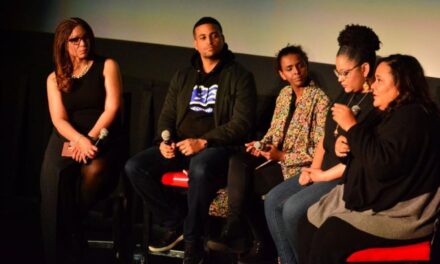
The authors and contributors for the final report are Dr. Catherine Squires, Dr. Brittany Lewis, Dr. Lauren Martin, Ariana Kopycinski, and Ayize James. Findings and recommendations were reported on Friday December 17 at the Capri Theatre.
With these key findings and recommendations, during January and February 2023, RIA and MMAAW, plan to communicate to community and key stakeholders, the findings and strategies for better serving Black Women and Girls who have gone missing and murdered.
The MMAAW Task Force was charged to examine and report on:
- Systematic causes of violence against African American women and girls
- Appropriate methods of tracking and collecting data
- Policies, practices, and institutions that assist in perpetuating violence against African American women and girls
- Measures necessary to address and reduce violence against African American women and girls
- Measures necessary to help victims, their families, and their communities.
The Minnesota Department of Public safety developed the task force and contracted with Research in Action to conduct research and prepare the final report. The MMAAW Task Force included 20 Key Informant interviewees. Key informants are task force members and include government and other local officials. A few of the 20 Key Informant Task force members include Co-Chair: Lakeisha Lee, Rep. Ruth Richardson; Biiftuu Ibrahim Adam (Bureau of Criminal Apprehension); Beatriz Menanteau (Minnesota Department of Health); and Lisa Clemons (A Mother’s Love). Expert Consultants included Kamisha Johnson from Amani Healing Services and Dr. Lauren Martin from the University of Minnesota.
Other research interviews were conducted with The Advisory Council formed of 15 community members with lived experiences of violence, abuse, homelessness, job concerns, and trafficking.
RIA used Asset-Based research to conduct their research with the Advisory Council about the needs of missing and murdered African American women and girls who have experienced various traumatic experiences. Asset-Based research engages participants by recognizing them as valued members of society that have the undeniable capability of solving their own problems with sustainable solutions.
According to RIA and MMAAW, an example of Asset-Based research is incorporating different demographic questions into their initial intake and consent process to help interviewees enter a mindset of articulating their own value and imagining what could be possible for their future. As a part of this approach, interviewees were asked to describe themselves as well as how others see them; discuss their self-care habits; and describe what brings them joy. Asset-based research approaches allow participants the ability to recognize their strengths and assets, while getting into a headspace of joy, love and abundance.
Having these 15 Advisory Council members with lived experiences, was a requirement of RIA when accepting the contract to do the research work. RIA wanted to get real world, lived experienced, information that was useful, to find and suggest better solutions for care in the future.
According to RIA, recent research illustrates the criminalization of Black women begins when they are girls in school. Black students are punished more harshly than their white classmates for the same behaviors or rule infractions. In Minnesota, black girls are 10 times more likely to be suspended than white girls. Insufficient mental health resources, teacher biases, and racially biased school policies all play a role in these disparities. The consequences of biased disciplinary actions can be severe, ranging from lower academic performance to early involvement in the criminal justice system.
Due to intersectional factors such as racism and sexism, Black women and girls are continuously targeted in less human living and working conditions, finding themselves victims or predatory lending and renting practices, as well discriminatory job and hiring practices.
The first goals of the research are to define the issues; making sense of the data; and make recommendations for actionable outcomes that lead to tangible, real world changes.
To address the needs of our missing and murdered black women and girls there are three major themes we need to focus on the government and community levels.
- We need to hire people who care about and reflect the community
- Require training for professionals working in MMAAW-related domains
- Increase resources for the work, especially specific support for black women and girls
- An increase for more black practitioners to lead community work and efforts
Key Recommendations:
- Establishing a missing and murdered African American women’s office
- Create and fund specific spaces and resources to serve black girls and women
- Develop effective, culturally appropriate, anti racist trainings and professional education
- Hire and retain African American staff
- Design and support better coordination across agencies
- Make emergency and long-term housing accessible and affordable
If you are interested in reading the full report, go to reasearchinaction.com/mmaaw.