“He felt his poverty; without a cent, without a home, without land, tools or savings, he had entered into competition with rich, landed skilled neighbors. To be a poor man is hard, but to be a poor race in a land of dollars is the very bottom of hardships”.
These words were written by prominent American sociologist, intellectual and civil right’s activist, W.E.B. Du Bois in 1902, in his work “The Souls of Black Folk”, and yet 121 years later, every word rings true. Black men and women in America continue to bear the burden of being a “poor race in a land of dollars”.
There’s even a term to describe what Du Bois had termed the “very bottom of hardships” and economists refer to it as the “racial wealth gap”. Leading financial platform, Investopedia refers this gap as the “difference in assets owned by different racial or ethnic groups”. The gap measures not only the disparity in income between various racial groups, but also the disparities in opportunities, means of support, and resources.
Considering the slave history of Blacks in America as well as the economic oppression that occurred during the Jim Crow era, it’s then not suprising to note that African Americans are still lagging behind other racial groups on the wealth gap scale.
This as the 2019 Survey of Consumer Finances reported in 2020 that “White families had eight times the wealth of Black families and five times the wealth of Hispanic families”.
This assessment was made by examining the homeownership, savings, investments, pensions and retirement assets of the ethnic groups concerned. Even in cases where African-Americans succeed at the same level as their white counterparts, disparities in outcomes persist.
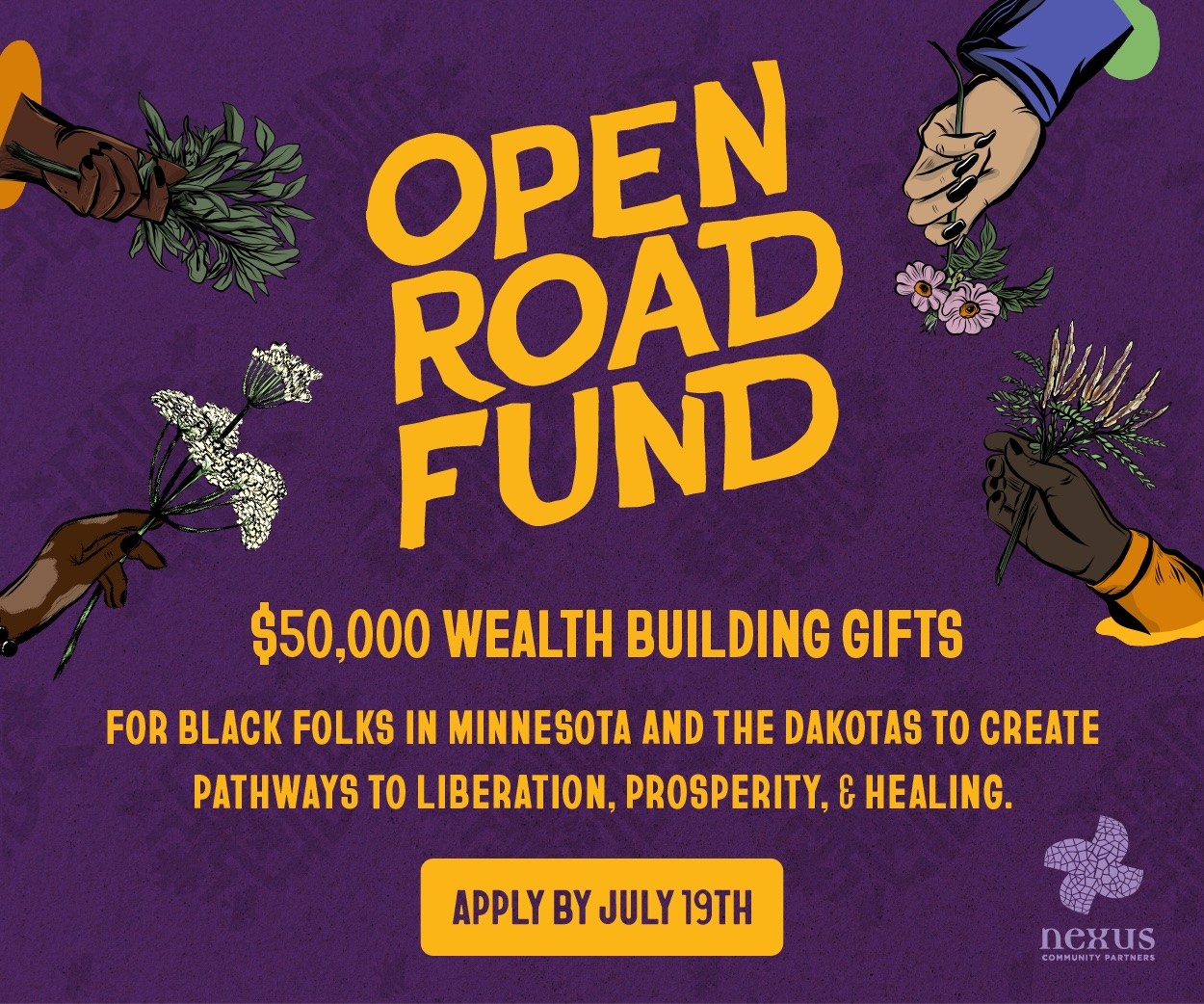
However, Nexus Community Partners, through it’s $50 Million Open Road Fund for hopes to change this by bridging the wealth gap, particularly in Black communities. Speaking to Al McFarlane, the host of the The Conversation with Al McFarlane, Grant Manager for the Fund, Duaba Unenra, said that this fund intends to over the next eight years award $50 000 grants to atleast 800 eligible applicants, who will use the funds for several wealth-building projects.
Applicants were given the choice of applying either as individuals, making them eligible for a $50 000 grant, while those applying in groups of either families, co-workers or individuals working towards a common goal were limited to five people and these are eligible for a $250 000 grant. The application process was only open to individuals and groups and not to those with tax entities such as LLC, S-Corps or C-corps.
While applications for the Fund are now closed, they opened in mid-June and applicants were required to meet the following requirements to be eligible to apply:
– Be age 14 and up.
– Be a resident of Minnesota, North Dakota, or South Dakota.
– Be a descendant of the Atlantic slave trade, including the Caribbean, North, Central, and South America. Descendants of formerly enslaved people who repatriated to Africa are also eligible.
With these specifications in mind, the Fund seeks to empower disadvantaged communities such as formerly incarcerated persons, single parents, senior citizens, those living with disabilities as well as those from the LBGTQ+ communities.
“This project is fundamentally about invigorating black imagination, creativity, and also cooperation in our communities again. We have the benefit as well of not doing this work alone. And then there’s also a larger community that guides and supports that work in the form of an advisory committee. And we’ve had the honor of doing this work of dreaming what a process for redistributing wealth to black community would be together,” Unenra says.
Funded by the Bush Foundation, the almost decade long project seeks to support projects from Black folks in Minnesota, North Dakota and South Dakota to create pathways to liberty and prosperity through wealth redistribution, to overturn the trillions of dollars Black communities lost during slavery by creating opportunities to reimage, rebuild and restore wealth in these communities.
“It isn’t only about rebuilding wealth, reattaining wealth lost over generations but also seeks to defend and secure the wealth that they do have,” Unenra says.
Meanwhile, Project Manager of the Open Road Fund, Lavasha Smith says that at the heart of the project, are the communities Nexus Community Partners serves and with them in mind, they decided to work on an expansive definition of wealth, that cuts across several areas that these communities can invest in as they set out to build their wealth for generations to come.
“From the time that we started dreaming when we first were told that we were stewards of the fund all the way up until now, we’ve made sure that community was at the center of that. And so that looks like our advisory committee. That looks like the community helping us to shape our definition of black wealth, as well as our five black wealth-building themes, which are housing and shelter, education, health and well-being, ownership, and financial well-being, as well.”
Despite it’s best intentions, the Open Road Fund will help 100 applicants every year over the course of the 8 years, with these being limited to only Black communities in the three states previously mentioned, which is a drop in the ocean compared to the hundreds of thousands, if not millions in America, who also need this kind of project in order to be able to create new wealth pathways.
However, perhaps even more important than the monies that the applicants will receive from the grants is the change of ideologies that they will over the course of that time begin to develop, which will invigorate the imaginations of these and other communities around these states to consider the possibilities for wealth creation that lie ahead.
The two principals of the Open Road Fund said that they had received over 5900 applications, reaching 10% of their intended population.
“The next step is to support these folks in developing their wealth-building plans. And we want to celebrate and support those folks because we know no matter what happens, there will be some benefit that’s extended to the rest of us,” Unerna says.
He concludes by encouraging those who haven’t applied or weren’t selected to apply in the coming years, as this will be an ongoing project until 2031. The next applications for the fund will re-open in Summer 2024.
To find out more about Nexus Community Partners and the Open Fund Plan, visit for more information. Contact ORFSupport@nexuscp.org with all application-related questions. You can also call the Open Road Fund at 612-886-3449.