Although the United States Marine Corps was established by the Revolutionary era Second Continental Congress on November 10, 1775, the first Black members would not be inducted until June of 1942—about six months after Imperial Japan launched their devastating attack on the Pearl Harbor Naval Base—an attack that preceded America’s formal entry into World War II.
While First Lady Eleanor Roosevelt was well known for her advocacy that led to a Black Army Air Corps unit that would become the famous Tuskegee Airmen, the First Lady also used her influence to encourage the Marine Corps to recruit and train Black members!
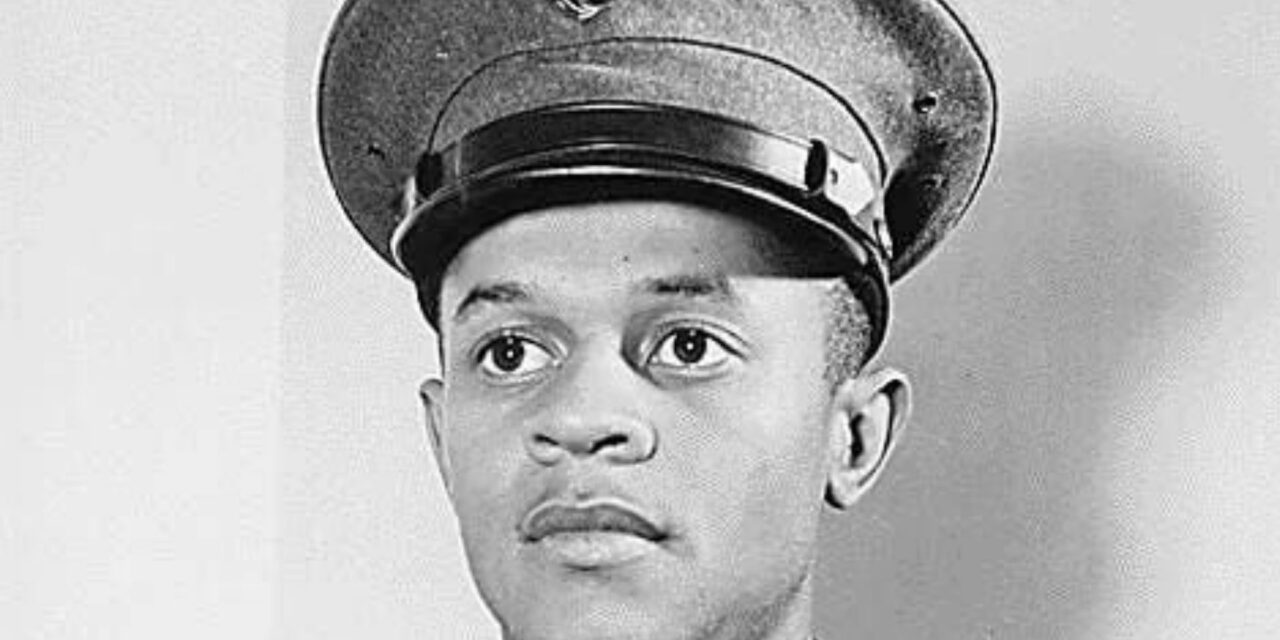
To that end, the very first Black enlistee was Howard P. Perry, a native of Charlotte, North Carolina who soon joined 119 other Black men for their initial training in Quantico, Virginia, before they were shipped to Montford Point, a Parris Island styled training camp near Camp Lejeune, North Carolina.
Upon arrival at Montford Point, Perry and the other Black recruits met with Captain Judson Creech, a white Marine who commanded a group of 12 interviewers who decided which military occupational specialty the new recruits would pursue. In a 2007 interview, then Maj. (Ret.) Creech recalled that, “As the recruits came in…they would test these boys and interview them, and decide where they thought they were best suited to serve. So, we had 12 interviewers, and they were all African Americans. And they were all smart boys because most of them had a master’s degree, and two or three of had doctorate degrees. And then we, as I said, classified what we thought they were best suited for.”
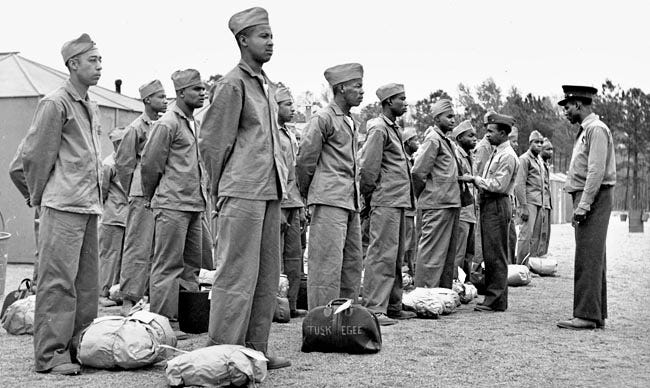
Black recruits preparing to become Marines at Camp Montford circa September ‘42
Though most of the Black recruits had earned master’s and doctoral degrees, per Maj. Creech’s recollection, upon completion of Boot Camp, each was assigned to a segregated unit before shipping out to combat zones across the Pacific. Additionally, as was the case in the Army and Navy at the time, many were assigned to unload supplies during the “Island Hopping” campaigns in the Pacific Theater or, like the decorated Naval enlistee Doris “Dorie” Miller, they became cooks, mess servants, and in the wake of brutal fighting, grave diggers responsible for burying Marines and Soldiers killed in action.
But many Black Marines fought and fought well as Japanese soldiers, deeply entrenched in the thick jungle terrain, fired upon them with rifles, mortars, and artillery.
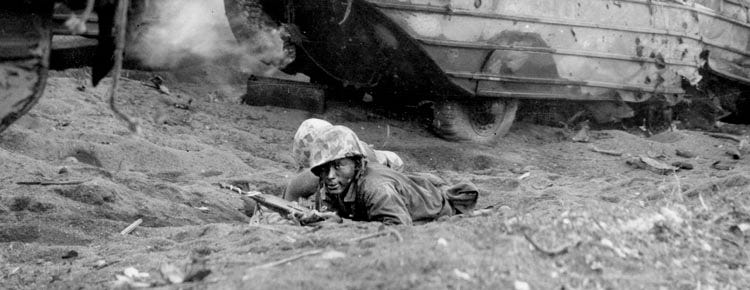
Black Marines under heavy Japanese fire during the Battle of Iwo Jima
In 1948, three years after the end of World War II, President Harry S. Truman signed Executive Order 9981, a move that desegregated the armed forces six years before the Supreme Court’s Brown vs. Board of Education decision, and 16 years before the Civil Rights Act of 1964 was signed into law.
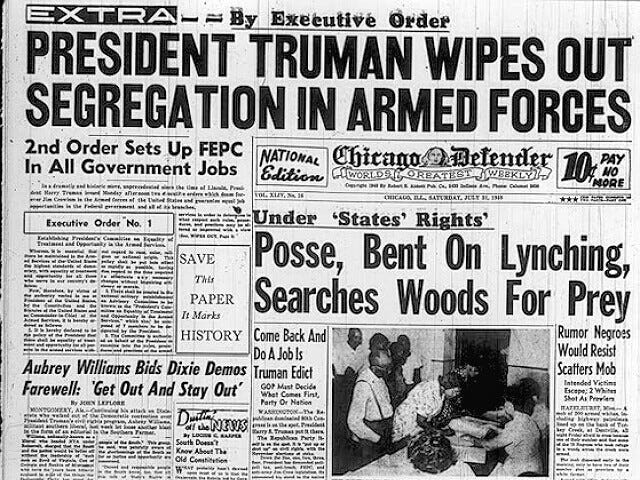
But the Marines like PFC Howard Perry (died in 1986) who served during World War II, men who faced discrimination in theater from their fellow white Marines all the while facing death each day from the Japanese military, are owed a debt of gratitude for their courage, their service, and their sacrifices as pioneers who paved the way for many thousands of Black Marines who followed their lead in the decades since!
Lest we forget…
Chuck Hobbs is a freelance journalist who won the 2010 Florida Bar Media Award and has been twice nominated for the Pulitzer Prize for Commentary.
"Real Politics in Real Time"
Chuck Hobbs is a freelance journalist who won the 2010 Florida Bar Media Award and has been twice nominated for the Pulitzer Prize for Commentary.