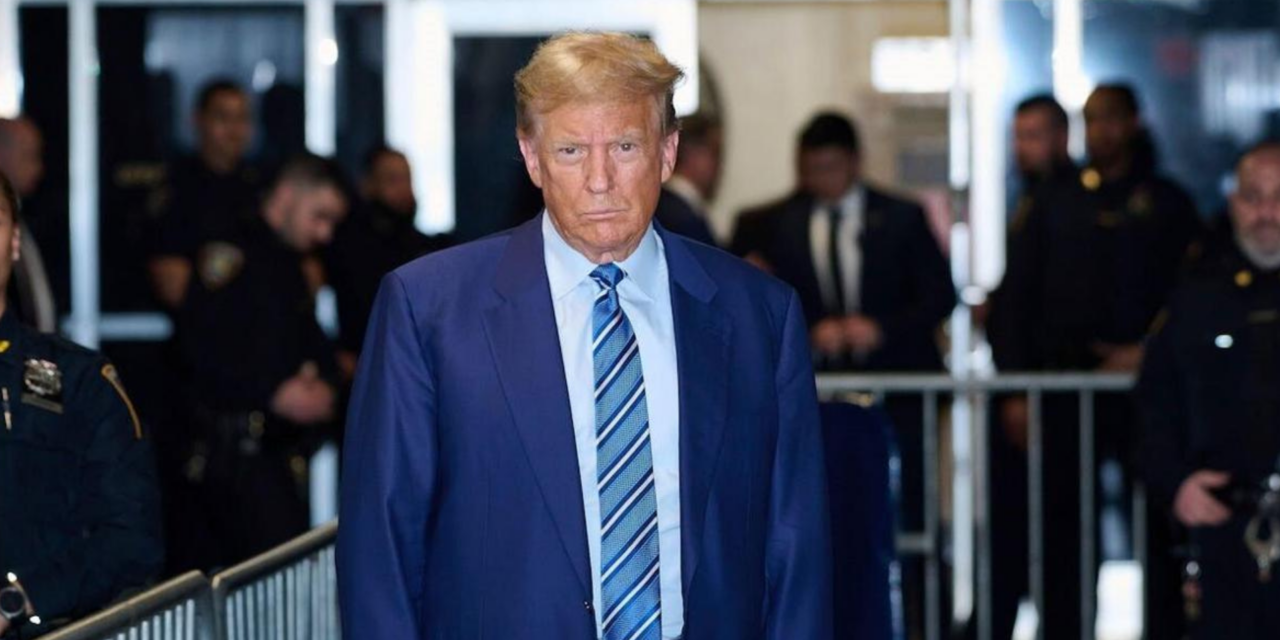
In the heart of Manhattan, a courtroom buzzes with anticipation as jury selection unfolds in what promises to be a historic trial involving former President Donald Trump. With each potential juror questioned, the stakes grow higher, and the spotlight intensifies on Trump’s legal woes.
As reported by CNN’s Lauren del Valle, Kara Scanell, and Jeremy Herb, the trial revolves around allegations of hush money payments to an adult film star and the subsequent cover-up, casting a shadow over Trump’s presidency just weeks before the 2016 election. Day two of the jury selection sees Trump himself present, as prosecutors and defense attorneys meticulously assess the impartiality of potential jurors.
With nearly half of the initial 96-person pool already dismissed, both sides scrutinize each remaining candidate, seeking individuals capable of rendering a fair verdict. Yet, amidst the legal proceedings, broader questions loom regarding the trial’s significance against the backdrop of the ongoing political landscape.
Yusef Mgeni, a keen observer of the trial’s developments, highlights the gravity of the charges against Trump, citing 34 felony counts related to alleged financial misconduct. Mgeni draws attention to the potential electoral ramifications, echoing sentiments from Melania Trump, who reportedly views the trial as a potential game-changer that could sway the outcome of future elections. He passionately states, “There’s 34 felony counts of lying about personal wealth on applications on the one hand, and then lying on it again in the opposite direction when it came to taxes or paying his fair share, overvaluing and then devaluing.”
From Brazil, Yoji Senna offers a unique perspective, noting the trial’s resonance beyond American borders. In Brazil, where political turmoil mirrors that of the United States, the trial evokes comparisons, prompting reflection on the integrity of justice systems. Senna’s observations underscore a global fascination with the trial’s implications for democracy and governance. He remarks, “So it seems that in Brazil the justice has been swifter and more serious. And to us and the media, it seems more that the American justice system, it’s bending or is being influenced by Trump or giving him certain immunity.”
As the conversation unfolds, the focus shifts to Trump’s attempts to rally support outside the courtroom. Despite his call for a mass demonstration, reminiscent of January 6th, only a handful of supporters heed his call. The scene outside the courthouse reflects a stark contrast to previous displays of fervent loyalty, signaling a potential shift in public sentiment. Yusef Mgeni reflects on the turnout, stating, “One important signal was that yesterday Trump indicated that, or over the weekend, he wanted thousands of thousands of his hordes and supporters to show up in front of the trial and raise hell.
Yet, amidst the legal intricacies and political theater, Al McFarlane steers the discussion towards a deeper examination of the African-American community’s role in shaping the nation’s future. Mgeni’s reflections on the perplexing support for Trump among some Black voters highlight the complexities of identity and ideology within marginalized communities. He shares his puzzlement, saying, “It is perplexing because the last time Trump ran, 12% of Black males supported him.” Yoji Senna adds another layer to the discourse, noting similarities between the experiences of Black communities in Brazil and the United States. From feelings of political neglect to nuanced motivations behind individual choices, Senna underscores the multifaceted nature of Black political engagement. He emphasizes, “So there is several motivations why there is this 12% of Black males because many Black people do embrace the values of Eurocentrism.”
The conversation concludes with a sobering reminder of the challenges ahead. As election season looms, the need for unity and collective action becomes ever more apparent. McFarlane’s parting words serve as a call to arms, urging readers to engage with the issues at hand and seek a path towards justice and equality.
In the midst of legal proceedings and political intrigue, one thing remains clear: the trial of Donald Trump transcends mere courtroom drama. It is a testament to the enduring struggle for accountability and the resilience of democratic institutions in the face of adversity.
For those eager to delve deeper into the conversation, a full video of the discussion is available on InsightNewsMN’s social media platforms, including YouTube. s the trial unfolds and the nation watches with bated breath, one thing is certain: the story of Donald Trump’s legal saga is far from over.
This article is based on a conversation held on Al McFarlane’s KFAI 90.3FM radio show, The Conversation with Al McFarlane.