

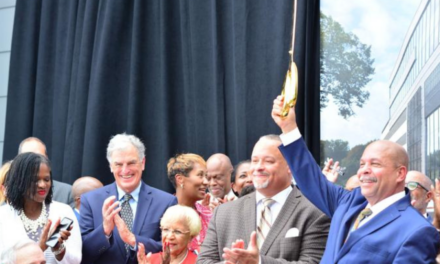
U.S. politics were analyzed with deep insights from Professor Emeritus Burnele Powell and Yusef Mgeni on radio show The Conversation With Al McFarlane. The discussion, which unfolded last week, was centered on President Joe Biden’s decision not to seek re-election, his endorsement of Kamala Harris, and the broader implications of this for American democracy.
Al McFarlane kicked off the conversation by reflecting on the past tumultuous week: “We’ve seen President Biden’s announcement not to pursue re-election amid a storm of controversies, from recent Supreme Court decisions to Biden’s own health struggles. It’s been a dramatic turn of events, to say the least.”
Professor Burnele Powell, former Law School Dean at University of South Carolina and at University of Missouri at Kansas City, speaking from South Carolina, shared his perspective on Biden’s political trajectory. “From my viewpoint, it was becoming increasingly clear that Biden might need to step aside,” Powell noted. “Despite his efforts, the polls weren’t moving in his favor. It seemed inevitable that he would eventually need to find a graceful exit. The crises – from his poor debate performance to his health issues – created a backdrop where stepping aside became a practical decision.”
Powell elaborated on Biden’s decision, describing it as a strategic move amidst a series of crises. “I had anticipated that Biden might use these crises as an opportunity to step aside. Instead, we saw a culmination of challenges – health issues, political setbacks, and external pressures – that accelerated his decision. Biden’s ultimate choice to support Kamala Harris reflects both a strategic and a personal decision.”
Powell also offered his views on the broader political landscape: “This isn’t just about Biden stepping down. It’s about the future of American democracy. We’re at a critical juncture where the integrity of our democratic institutions is at stake. The rise of autocratic tendencies globally – as seen in France, Turkey, and Hungary – serves as a cautionary tale for us. We need to remain vigilant and ensure that democracy prevails.”
Yusef Mgeni, joining the discussion from St. Paul, echoed Powell’s sentiments and highlighted the immediate implications for the Democratic Party. “The decision for Biden to endorse Kamala Harris was not just a strategic move but a necessary one for the health of the party and the country,” Mgeni said. “In the wake of Biden’s endorsement, Harris has already seen a surge in support and fundraising. This reflects a critical shift as the campaign gears up for the next phase.”
Mgeni emphasized the importance of Harris’s fundraising success, noting, “Kamala Harris has raised over $100 million in just 24 hours, which is crucial to counteract the significant financial advantage held by the Trump campaign. The stakes are high, and the funding will play a pivotal role in shaping the upcoming election.”
The conversation also touched on the potential vice-presidential candidates and the implications of having two women on the ticket. Mgeni discussed the considerations and potential drawbacks of this choice.
“There’s a debate about whether having two women on the ticket could amplify issues of sexism. Yet, Kamala Harris’s extensive experience as a prosecutor and her role as Vice President position her well to confront the challenges ahead. Harris, being of Afro-Caribbean Indian descent and not an African American woman, brings a unique perspective to the ticket. “
Mgeni also added that her journey from an ‘invisible’ role behind the scenes to centre stage contrasts sharply with Trump’s bombastic style. Her legal background equips her to face Trump, a man accused of numerous felonies and fraud. “The questions now are how will Kamala fare on the campaign trail, and who will she choose as her running mate? Minnesota’s own Senator Amy Klobuchar and Governor Tim Walz are strong contenders, with the party weighing the potential impact of a dual-female ticket,” said Mgeni.
Mgeni further elaborated on Harris’s potential to challenge Trump directly. “Kamala Harris’s background as a prosecutor, district attorney, and Attorney General of California certainly prepares her to stand against a figure like Trump, who has been accused of 34 felony crimes and other charges. Her legal acumen and tough stance on justice provide a stark contrast to Trump’s contentious legal history.”
Furthermore, Powell and Mgeni explored the implications of recent Supreme Court decisions, which have altered the landscape of U.S. law and governance. Powell pointed out the dangers of the current judicial climate, saying, “The recent rulings – from overturning Roe v. Wade to the new precedents set by the Supreme Court – pose serious risks to our democratic institutions. The court’s actions suggest a shift towards authoritarianism, which could undermine democratic norms.”
Mgeni added to this, highlighting the broader consequences: “The judiciary’s current trajectory, especially with the Supreme Court’s decisions, creates an environment ripe for authoritarian rule. This represents a significant threat to democratic governance and personal freedoms.”
As The Conversation ended, Al McFarlane underscored the urgency of voter participation by saying: “The upcoming election is not just about choosing a president; it’s about safeguarding our democracy. Every vote counts, and the coming months will be crucial in determining the future of the nation.”