In North Minneapolis, a new model of Black economic strength is quietly but powerfully taking shape, and it is rooted not just in profit or policy, but in healing, ownership, and ancestral wisdom. During a recent episode of The Conversation, journalist and publisher Al McFarlane sat down with entrepreneur and holistic wellness leader Kenya McKnight Ahad to explore what it means to build Black wealth in the present day. Their dialogue offers a layered roadmap for transforming trauma into infrastructure, consumerism into capital, and survival into strategy.
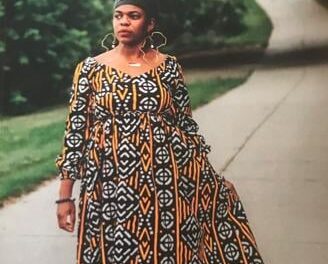
Kenya McKnight Ahad is the founder and owner of the ZaRah Integrated Root Center, a holistic wellness and retreat hub located at the intersection of Fremont and West Broadway in North Minneapolis. But ZaRah is more than a building, it is a manifestation of cultural and economic recovery.
The building has been in service to the Northside for over 120years beginning as a funeral home for nearly 80yrs, a childcare center for teen moms who were students at the Mpls Public Schools, and the building operated as an assorted business hub incubating prominate Northside organizations and businesses such of the Northside Achievement Zone, Breaking Bread Café, Headliners Barbershop, and TRI Construction, Black Women’s Wealth, Alliance, and several others.
Before McKnight Ahad purchased the building, it became an active site that experienced gun violence, congregation without purpose, and public infrastructure neglect. “There were shootouts here,” she recalled. “There are still bullet holes in the fences.” As a former tenant in the same building, she recognized both the need and the potential for change. Owning the building would for her be the turning point as it would then give her the power to determine who occupied the space and in that way give her autonomy over the kind of energy that would be cultivated in that space as well as how that would all contribute to transforming that corner.
This transformation didn’t happen in isolation but instead, ZaRah grew out of a collaboration with three other Black women business owners who initially formed a wellness co-op inside a small suite. They offered services like massage therapy, herbalism, acupuncture, and energy healing. What began as a shared experiment in cooperative business blossomed into a full-fledged retreat center that now employs a dozen people and serves the broader community with both traditional and ancestral healing practices. “We have a Himalayan salt room, we do herbal therapy, we even offer services informed by Dr. Sebi,” McKnight Ahad said. “But most of all, we offer people a place to heal and grow economically.”
Ownership, in her model, is not about individual accumulation. It is about shifting the culture and the power dynamics of a neighborhood. By owning the building, she can set affordable rental rates, subsidize other Black women entrepreneurs, and create an ecosystem that is regenerative rather than extractive. “I can lower operational costs for others because I carry the weight in ownership,” she explained. “That helps them stay in business, grow, and stabilize their families. That’s wealth building.”
For host, McFarlane, this approach aligns with a deeper, intergenerational view of Black economic survival. Drawing on his childhood experiences in his parents’ grocery store in Kansas City and his travels to Jamaica, McFarlane emphasized the importance of early exposure to entrepreneurship. He described how, in Jamaica, Chinese families would raise their children in the store, literally placing toddlers behind the counter to watch and learn. “Those kids knew from age two that they were supposed to be on the merchant’s side of the counter,” he said. “That was their role. It was ingrained.”
McFarlane believes this cultural modeling is essential for reversing what he sees as the disempowering effects of modern consumerism. “We’re great consumers, but we’ve forgotten how to be producers,” he said. “We need to rebuild that entrepreneurial mindset across generations, across institutions.”
Both McFarlane and McKnight Ahad argue that reclaiming economic agency requires more than business acumen. It demands a spiritual and cultural framework. For McFarlane, this is grounded in the principles of Nguzo Saba, the value system articulated during Kwanzaa but applicable year-round. Cooperative economics, self-determination, collective work and responsibility are not abstract ideas, he said. They are survival tools.
McKnight Ahad deepened this point by addressing the financial trauma that often haunts Black communities. She linked it directly to the historical violence faced by successful Black entrepreneurs, especially men, who were targeted, lynched, and destroyed for their ambition. “They beat ownership out of us,” she said. “You didn’t just lose your store; you lost your life. So, we inherited a kind of fear… ‘Don’t buy a house, they’ll burn it down. Don’t trust the bank, they’ll steal your money’. That fear shapes our choices.”
This generational trauma, she argued, makes entrepreneurship in Black communities not just an economic act, but an act of courage. She also pointed out how contemporary realities (which among others, include rising costs, strained public resources, and demographic shifts) are adding to that fear she spoke of earlier. “We’re almost sub-service in our own neighborhoods,” she said, noting that Black residents often find themselves behind recent migrants in food lines and healthcare access. “We already had less. Now there’s fear we will have even less like Chicago.”
Both speakers called for immediate and localized responses. McKnight Ahad emphasized that institutions, especially those led by Black people, must become more flexible and responsive. “Your wellness center might need to be a school next week. A food shelf. A clinic. We need to be ready to pivot.”
McFarlane echoed this sentiment by urging a shift from reactive to proactive thinking. “We cannot keep waiting for permission or rescue. This is our moment to design something new.”
Their conversation also engaged in the broader political landscape. As McFarlane read headlines about new executive orders on elections and trade tariffs, both speakers reflected on how macroeconomic and political shifts often trickle down hardest on those least protected. Yet they remained focused on local agency.
“What can we do today, right now, on this block, in this building?” McFarlane asked. “How do we become the architects of our own future?”
McKnight Ahad’s answer was both clear and expansive. “We need to develop a collective vision for the next 20 to 30 years. It has to include diverse truths, different strategies, and shared goals. Everyone doesn’t have to be an entrepreneur, but everyone has a role to play.”
In North Minneapolis, that vision is already taking root. At the ZaRah Integrated Root Center, healing, culture, spirituality, and economics are not separate, they are inseparable. Ownership is not about status; it’s about stewardship. And entrepreneurship is not just about making money; it’s about making meaning. As McKnight Ahad put it, “We’re not just in business. We’re in service. That’s what makes this sacred.”
What emerges from this conversation is not a blueprint in the technical sense, but a cultural framework shift in how Black communities see themselves, their power, and their future. It’s a reminder that economic sovereignty does not begin in the marketplace. It begins at home, behind the counter, on the sidewalk, in the community, and in the spirit.