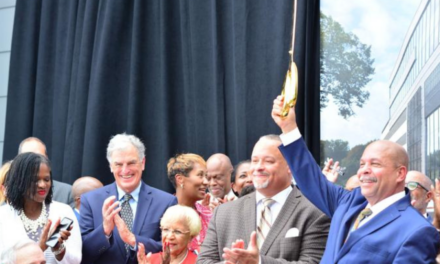
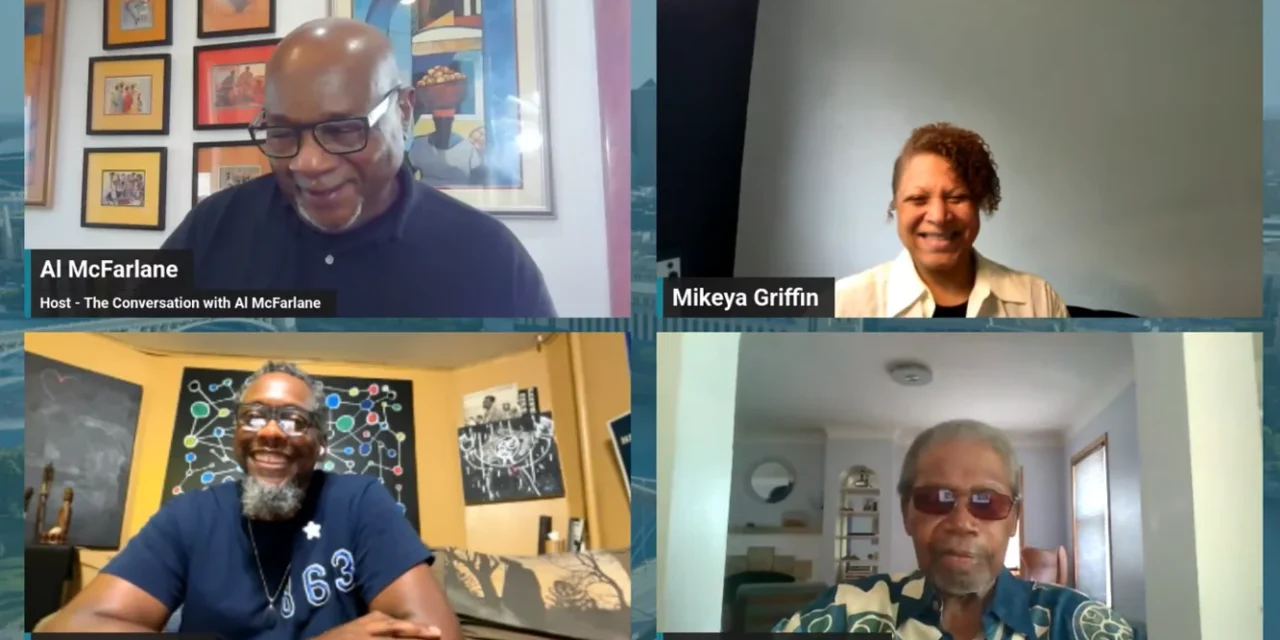
The pulse of the Rondo community beat strong in a powerful episode of The Conversation with Al McFarlane, aired on KFAI 90.3FM, where elders and new-generation leaders came together to reflect on Rondo’s living legacy, community power, and the critical need for healing and historical preservation. As Rondo Days approached, this conversation became more than just a preview of an event. It became a collective declaration of identity, truth, and self-determination.
“We’re not memorializing anything,” said Gayle Smaller, board chair of Rondo Avenue Inc. “Memorials are for things that are dead. Rondo is not dead.”
This sentiment set the tone for the dialogue, which featured his father Floyd Smaller, founder of Rondo Days and community elder; Kedar Hickman, an officer at the St. Paul Foundation; Mikeya Griffin, executive director of the Rondo Community Land Trust; and host Al McFarlane, a longtime voice of the Black press in Minnesota. Together, they spoke on legacy, displacement, and the active work of preserving and rebuilding what remains.
“The spirit of Rondo is what you’re doing right now,” Floyd Smaller said to McFarlane. “It’s people opening up and finding the true truth of Rondo. Our neighborhood housed and protected us, taught us what school could not, and gave us the space to grow.”
Smaller described Rondo as a living classroom and a family unit. Even those society overlooked played critical roles in guiding the youth. He shared how his activism came at great personal cost, balancing his roles as a coach, teacher, and advocate while raising a family. “What I did for Rondo was not easy,” he said. “I sacrificed my family, myself, and a whole lot of people for that.”
He reflected on the loss of Rondo’s name during the destruction brought by highway construction and the deep spiritual victory of restoring it. “When they take your street, it’s like taking your shoes and coat off your back. They are telling you that you no longer count.”
Kedar Hickman emphasized that despite the physical destruction of Rondo, the people endured. “There’s this narrative that the road destroyed us,” he said. “But I look around and see five people who are not destroyed, who are not broken. A new generation built on Selby. We kept our culture and our businesses.”
For Hickman, the work ahead includes not only continuing to build institutions but also expanding what is possible. He challenged the community to dream of a regional Black college or innovation space and called for the creation of a lasting community endowment. “We are the foundation. Let’s build on that truth.”
Mikeya Griffin brought this vision into reality through the work of the Rondo Community Land Trust. “When I took over, I inherited a 28-year-old startup,” she said. “We stabilized, and now we reimagine. This is about reclaiming space for the community and holding assets in trust for the people who built Rondo.”
Under Griffin’s leadership, the trust has supported homeownership, protected local businesses, and designated part of Selby Avenue as the Rondo African American Arts and Cultural District. She explained that land trusts originated from the struggle of the civil rights movement. “People forget that community land trusts came out of our suffering. This is about economic mobility for Black people. In perpetuity.”
Gayle Smaller spoke with deep emotion, acknowledging those who helped revive Rondo Days in recent years. He praised Mikeya for stepping in when others hesitated, offering funds to keep the event going. “You gave us the mission to continue building something that could be extraordinary. I honor you for that.”
The conversation unfolded as a testimony to Black resilience and community care. Floyd Smaller, a respected elder, was surrounded by people who had been mentored by him and were continuing the work in their own ways. “We were raised to protect each other,” he said. “And if you don’t love your community, you can’t sacrifice for it.”
McFarlane reminded listeners of the broader meaning of the conversation. “We must keep the memory of who we are, whose we are, and where we are going. Our work is to be the authors of a future in which we win.”
The broadcast closed with an invitation for the broader public to attend Rondo Days and to reflect on what community means beyond a single day of celebration. The street may have been torn apart, but the spirit has not been extinguished. From land ownership and cultural events to youth mentorship and political advocacy, the people of Rondo continue to write a new chapter grounded in legacy and forward motion.
Note: This conversation aired prior to the 2025 Rondo Days celebration on KFAI 90.3FM’s The Conversation with Al McFarlane, as part of the “Healing Circle” series. Rondo Days took place on Saturday, July 19, 2025, at Martin Luther King Park in St. Paul, Minnesota.
To watch the full conversation and explore more stories from Rondo Days, visit: