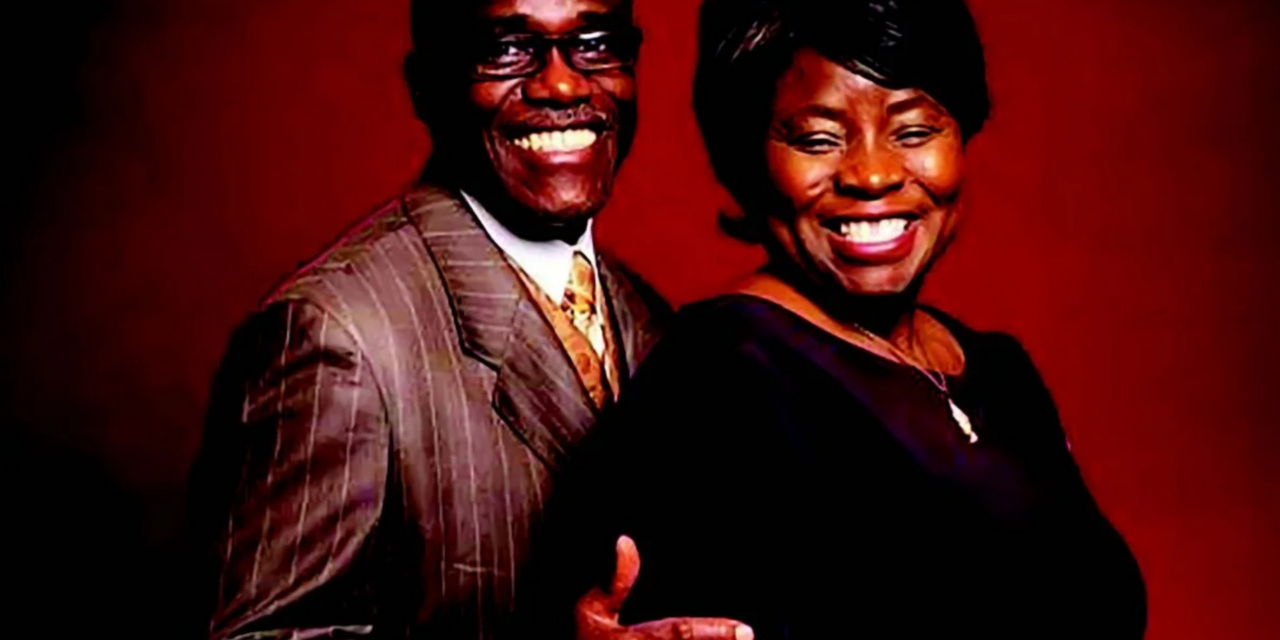
Ebenezer Community Church, 9200 West Broadway Avenue in Brooklyn Park has grown from a Bible study of eight people in 2000 into a 700-member congregation with a $10 million campus that serves as a cornerstone for Minnesota’s Liberian community.
For senior pastor Dr. Francis Tabla, the mission has always been about healing and empowerment. “Like you heard, I’m from Liberia and it had always been my desire to do graduate studies…because I wanted to be able to empower my people back in Liberia,” he said. “I went through the first phase of the civil war and then I came to the United States to study and upon completing my studies the civil war erupted again into two different phases, and I could not go back.”
What began as a small Bible study has become a thriving congregation. “We just started a Bible study with about eight people,” he recalled. “It was just the desire to bring us Africans together to worship God, to heal from our wounds we experienced during the course of the civil war. We had no idea that this would evolve into a plethora of ministries not just in the Twin Cities, but across the country and even in Africa.”
The trauma of Liberia’s brutal conflict continues to shape the lives of many in the diaspora. “Our civil war was one of the most devastating civil wars in the history of mankind,” he said. “Our country was just about three million people. And we lost 10% of the population in that war. So, you’re talking about 300,000 people were killed.”
He described how those memories remain raw. “When I came to the United States, when I heard a gunshot, I begin to relive the experience of the Civil War because I went through that. On one occasion, I was driving my professor…we were driving in a part of Virginia where they had these jet bombers flying. When the jet bomber flew over the highway, I swerved from the highway and was going into the ditch. And he says, ‘Francis, what’s going on with you? Do you want to kill me?’ But that was the trauma.”
Events in Minnesota have added new layers of pain. “When George Floyd got murdered the trauma in our community increased because we felt now our children were at risk and any time they could be killed,” the pastor said. “So, it was a difficult time to stand before our congregation to even preach.”
Immigration fears compound the challenge. “Some of our members are afraid to come to church,” he explained. “Some are making arrangement with some friends that if for any reason I’m taken out of the country forcefully you will take care of my children that were born here who are citizens. I mean can you imagine that? This is not anything that we are used to. We come from Africa and we have dignity. Then you come here and then you have to deal with the issue of immigration. It is traumatic.”
Yet Ebenezer has remained focused on opportunity. “Last month we had our graduation celebration at our church where we had 37 graduates,” he noted proudly. “Eighteen from high school, 11 from college, seven from graduate schools. We also do professional development…people in our church help people to become professionally developed, writing resumes, putting their curriculum vitae together.”
Now celebrating its 25th anniversary, the church is in a capital campaign to eliminate its remaining $4 million debt. “Our total project cost us a little over $10 million US. We have paid $6 million of that, and we are in a capital campaign to raise funds to get the debt off because we have great ministry opportunities to us here in America and in other parts of Africa,” he said.
His vision also extends back to Liberia, where he recently joined the launch of a privately funded smart city in Bentol. “This has never happened before in the history of Liberia to build a smart city,” he explained. “So, this will be the first. It’s going to be 350 homes on 100 acres of land and it’s going to have all of the amenities you can think about.”
He emphasized that the project is African led. “Interestingly, all of the investors are Africans,” he said. “And so, the slogan, the mantra is Africa for Africa. Africa must be able to help develop Africa.”
Looking back at the journey from eight people to a multimillion-dollar campus and now international projects, the pastor reflected: “From the very early part of my walk with the Lord, I’ve always learned to believe God for things to happen. With God, all things are possible.”