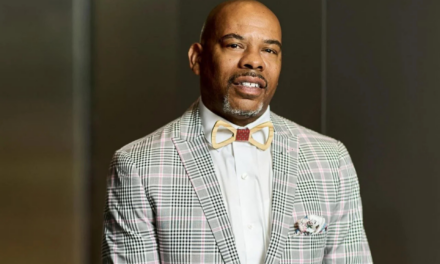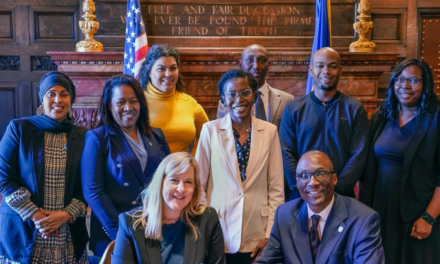
On a recent episode of KFAI 90.3FM’s acclaimed program The Conversation with Al McFarlane, three dynamic voices, Marquita Stephens, Justin Butler, and TiAnna Anderson, came together to explore the profound power of Black philanthropy.
But this wasn’t just a conversation about checks and donations. It was about redefining what it means to give, lead, and leave a legacy in a community that has long been both overlooked and overburdened, yet continues to give abundantly.
“Philanthropy is not just about money,” said Justin Butler, Chief Risk Officer at Belvedere Risk Management. “It’s time, talent, and treasure. And the truth is, our community shows up in all three, quietly, consistently, and with heart.”
For Butler, who serves on the board of Greater Twin Cities United Way and holds deep roots in Omaha through a lineage shaped by Jim Crow-era resilience, philanthropy starts with proximity. “You can’t solve problems you don’t understand,” he said. “Our communities don’t need saviors. We need partners who are grounded in the work and who respect the lived experience.”
That foundation is exactly what Marquita Stephens, President and CEO of the Urban League Twin Cities, brings to her leadership. As the organization celebrates its 100th year, Stephens reflected on a century of Black leadership in Minnesota, and how that legacy is evolving.
“The Urban League is a place where people can come and admit what they don’t know,” she shared. “That’s the kind of trust we’ve built. We help people find their genius, and it’s there. Always has been.”
Stephens detailed an inspiring range of programs, from employment pipelines in IT and AI to the Black Gems youth initiative, which develops social-emotional resilience among high schoolers. “We’re not just preparing them for college or work,” she said. “We’re preparing them to show up whole, confident, and capable in any environment, even when they’re the only ones in the room.”
One of the League’s boldest new steps? A state-funded training program in the cannabis industry. “We see it as reparative,” Stephens explained. “For decades, our people were over-policed and incarcerated for something that’s now legal and lucrative. We need to be in the front of this industry, not catching up, but leading.”
TiAnna Anderson, a marketing strategist, ministry leader, and founder of the Ready Set AIM Summit, echoed Stephens’ call for expansive thinking around legacy and giving.
“Philanthropy isn’t just something for rich people,” Anderson said. “It’s about asking, what do I have? What can I give? My grandmother cleaned homes for a living. But if you were hungry, she made sure you got fed. That’s philanthropy. That’s legacy.”
Anderson, who works at Sanctuary Covenant Church in North Minneapolis, sees her work through a social justice lens. “We’re on the corner of Broadway and Aldrich, once known for crime, now known for care. We provide groceries, clothing, utility support, and dignity,” she said. “We don’t look away from the challenges. We face them with faith and strategy.”
Throughout the conversation, McFarlane anchored the discussion in both historical context and forward-looking urgency. “When people say make America great again, they’re talking about returning to a time when our freedoms were denied,” he said. “Our giving, our organizing, is a form of resistance.”
Stephens, who grew up during the Civil Rights Movement, agreed. “My lens has always been justice. Whether I’m talking about today or tomorrow, I’m thinking about who gets left behind, and how we make sure nobody does.”
For Butler, the vision is intergenerational. “My father pushed snow at 3 a.m. so I could live better. Now it’s my turn. My kids serve food alongside me. They need to know, we stand on shoulders, and we lift as we climb.”
Closing the segment, each guest pushed back against the myth that Black communities don’t give.
“We are our own safety net,” Anderson affirmed. “We may not have our names on buildings,” Butler added, “but we cut the checks, offer the time, show up.”
And perhaps Stephens summed it up best: “We give. We’ve always given. Maybe it’s time the world caught up.”
Watch the full conversation on Insight News’ YouTube channel: