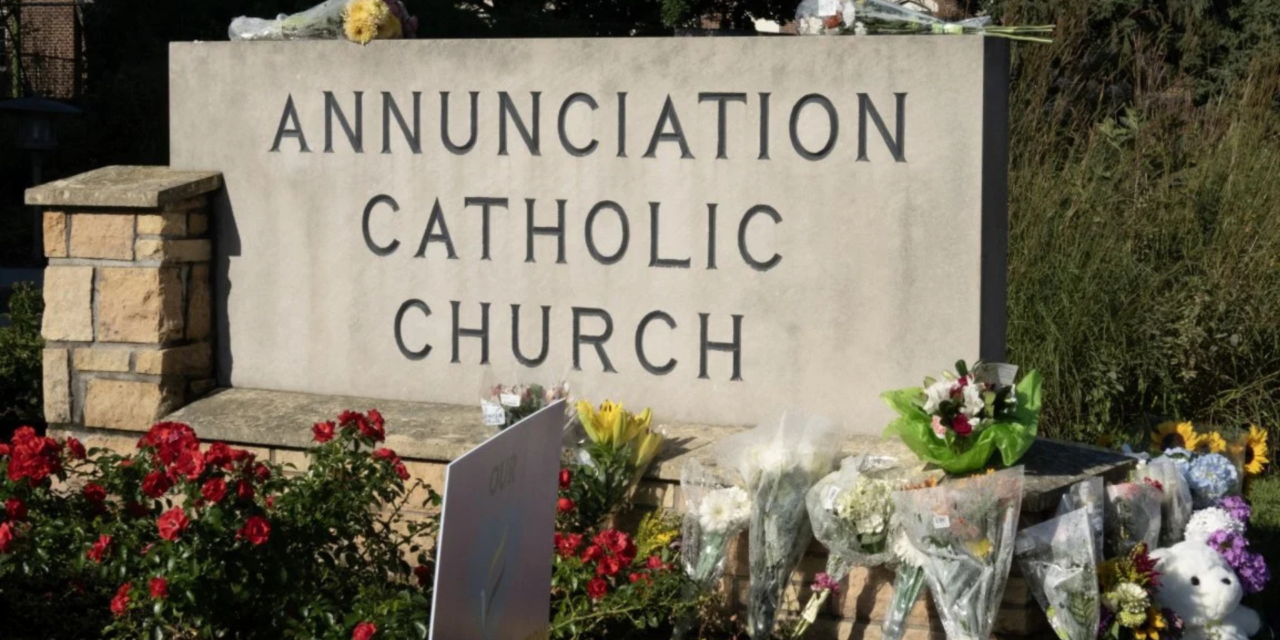
A dark cloud loomed over South Minneapolis last week as news broke of a mass shooting at Annunciation Catholic School, a Pre-K through 8th grade institution rooted in the community’s heart. On the morning of August 27, 2025, during what should have been a joyful back-to-school mass, a lone gunman opened fire through a church window, killing two children, aged 8 and 10, and injuring 18 others. Among the injured were elderly parishioners in their 80s and 15 schoolchildren. The tragedy has left a community in mourning and searching for answers.
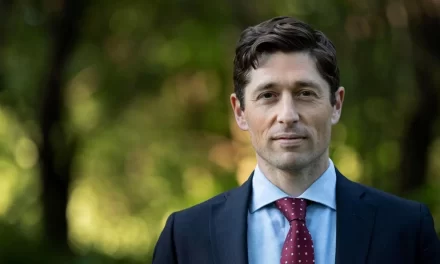
“This is unspeakable evil,” said Minneapolis Mayor Jacob Frey in a press briefing. “These kids were literally praying. They should have been learning, laughing, playing on the playground, not dying.” Frey urged the public not to weaponize the shooter’s identity, stating, “Those using this tragedy to villainize our trans community, or any community, have lost sight of our shared humanity.”
The shooter, identified as 23-year-old Robin Westman, was an alumnus of the school. Authorities confirmed Westman was armed with multiple firearms including a rifle, a shotgun, and a pistol. They also confirmed that Westman and took his own life following the attack. His mother, Mary Grace Westman, had worked at the school until her retirement in 2021.
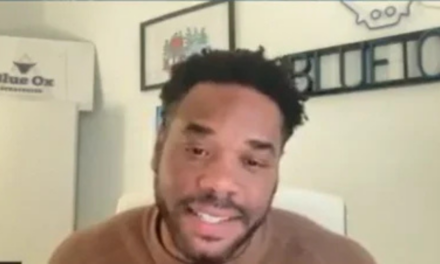
Broadcasting from the KFAI 90.3FM program The Conversation with Al McFarlane, host Al McFarlane and Dr. Oliver Williams, a nationally respected expert in family violence and cultural competence, joined the conversation as a specialist in trauma, mental health, and community healing within African American contexts. Dr. Williams unpacked the layers of grief and systemic failure surrounding this tragedy during the weekly Healing Circle segment.
“We’ve got to find ways to reach people before it happens,” said Dr. Williams, a renowned voice in violence prevention and community mental wellness. “So many perpetrators of violence share something in common, a profound sense of disconnection, isolation, and emotional discomfort.”
According to Williams, these underlying struggles often go unnoticed or unsupported. “They don’t know where to go, or they’re surrounded by people and places that don’t encourage seeking help,” he explained. “When someone lacks a sense of belonging or control, violence can become their language of expression.”
McFarlane echoed the urgency, tying the Annunciation shooting to a string of recent violent events across Minneapolis, including a separate shooting near Cristo Rey Jesuit High School that left one dead and seven injured. “Our city is experiencing public trauma,” he said. “And every parent dropping their child at school is now asking: ‘Will my baby be safe?’”
Williams emphasized that the community must go beyond mourning and prayer. “We need common-sense solutions,” he urged. “Other countries limit access to firearms. Why can’t we? We can’t keep saying this is about the Second Amendment while children die in churches and classrooms.”
He pointed to the broader social implications, citing his brother Dr. William Oliver’s research: “Mass shooters often operate in extreme social isolation. Unlike other forms of violence, mass shootings have no normative support. Nobody justifies them. But still, they keep happening.”
The healing process must start with dialogue and community-based prevention as McFarlane and Williams agreed. “We’ve got to create spaces where people can talk about their pain before they act it out,” Williams said. “Not everyone learns healthy ways to manage their anger or hurt. But we can teach that.”
The two community leaders spoke of displacement, how unresolved trauma in one area of life gets projected onto unrelated people or places. “This young man returned to a school he once belonged to, but instead of love, he brought violence,” Williams said. “That’s displacement. And it’s devastating.”
Williams also urged communities not to generalize the shooter’s gender identity. “I can’t judge an entire group based on one person’s actions,” he said. “Some of my dearest friends are gay, lesbian, or transgender. What matters is the content of their character.”
The conversation also turned inward. Both McFarlane and Williams reflected on past parenting practices, specifically, the normalization of corporal punishment in Black households. “I stopped spanking my daughter when I realized I was passing down violence, not discipline,” McFarlane shared. “I apologized to her, and I apologized to myself.” Williams agreed: “Our ancestors may have spanked to protect us from racist violence. But that doesn’t mean we have to carry that forward. We have other tools now.”
As the Healing Circle drew to a close, Dr. Williams offered a sobering reminder. “There’s situational PTSD in communities after events like this. If we don’t address it, it festers. It replicates. Healing must be deliberate.”
McFarlane concluded with a call to action: “We have to build communities that are emotionally intact, resilient, and loving. It’s not enough to survive. We have to thrive, and that begins by refusing to turn away.”