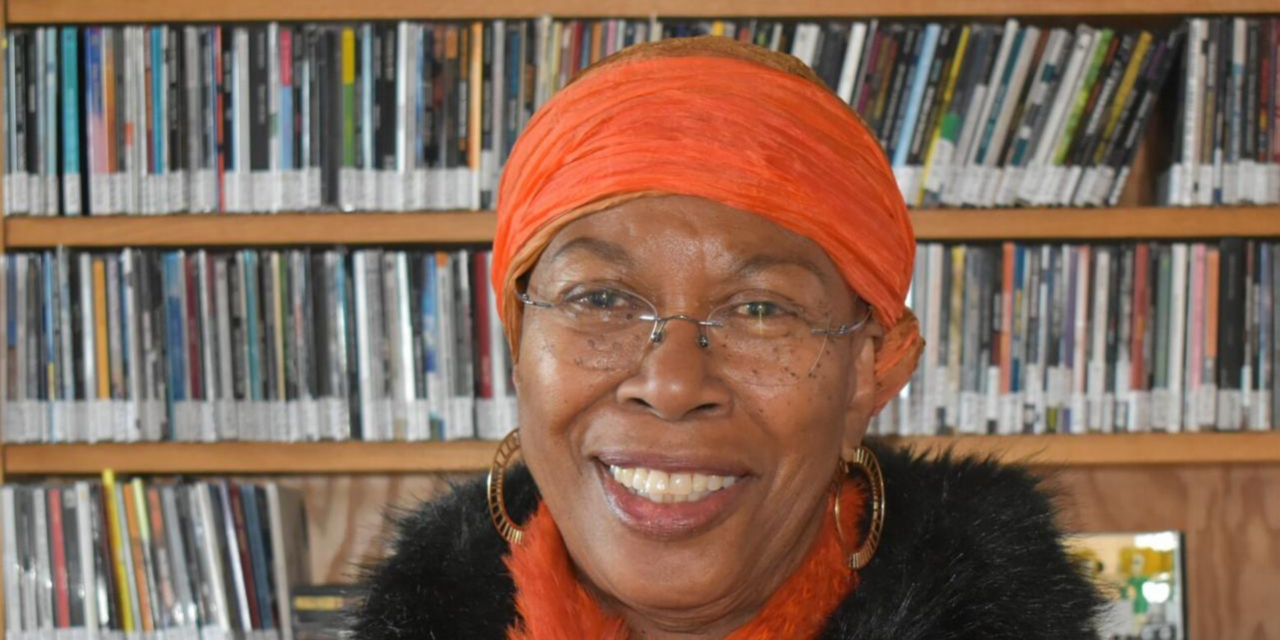
Dee Henry Williams, known to Twin Cities radio audiences as the “Grand Deeva,” has spent nearly four decades using music as a bridge across generations and as a balm for the soul. “The intention is healing and celebration,” she said. “We want to celebrate our healing and then we want to heal as we celebrate.” Henry Williams shared her story and philosophy during a recent edition of The Conversation With Al McFarlane on Radio KFAI 90.3 FM, streamed live through the Insight News MN YouTube channel.
Henry Williams traced her beginnings to a call for volunteers and a push from her late husband. “He says, you’ve always wanted to be on radio,” she recalled with a laugh. “I said, really, when did that revelation come to you?” She answered that call, attended orientation at Walker Church, and soon found herself on-air at a small space above Butler Drug at Lake and Bloomington.
From those humble beginnings came a co-hosted Saturday morning show with Bonnie V. “There’s a spot open from 6:00am to 9:00am,” she remembered telling her co-host. When Bonnie worried about losing Friday nights party time, Henry Williams replied, “That’s not our conversation, darling.” The show, first called Watercolors, blended styles but eventually grew into Henry Williams’ own creation: R&B for Healing and Celebration. “To me watercolors meant a blend,” she explained. “It’s purple, it’s blue, sometimes it’s red, and most definitely it’s got to be Black.”
Raised on the Blues
Henry Williams’ musical foundation was laid on a porch in Omaha, Nebraska. “On a weekly basis my mother and her sister got together on our front porch and played the blues on a record player with that little arm on it,” she said. “I kept Bobby ‘Blue’ Bland going, and B. B. King, Lord have mercy. These were my very first Blues artists that remember.”
She rattled off the canon of her life: “Buddy Guy, Johnny Taylor, Latimore,” she said, before placing one artist at the top. “Koko Taylor number one as far as I’m concerned.” For Henry Williams, the Blues is not to be confused with jazz. “We call the Blues by many different names, but we never call it jazz,” she said. “Jack McDuff told me personally; I don’t play jazz. I play the Blues.”
Ownership and Roots
The discussion turned to B. B. King’s lament that Black audiences were abandoning the bBlues as white crowds filled arenas. Henry Williams pushed back. “I still like the music. I’m still listening,” she said. Instead, she pointed to co-opting in the 1960s. “Maybe it was the Beatles, the Rolling Stones,” she reflected. She recalled King’s own words after his trip to Africa. “He came back and said, this is Black folks’ music. We created this out of that enslavement period. And that indeed is where gospel also came from, the Blues.”
On Robert Johnson, Henry Williams dismissed myths of The Devil’s bargain at The Crossroads. “Robert Johnson was a genius. All these other artists leaned on his style,” she said. “Practice, practice, practice, and mor practice…sheer determination.
Music and Spirit as One
McFarlane described the moment when artist and instrument merge, changing the room. Henry Williams nodded. “Are you one with yourself,” she asked. “The music is the spirit, and the spirit is the music.” She listed Aretha Franklin, Bettye LaVette, Stevie Wonder, James Brown, and Prince among those who embodied that wholeness. “Bettye can hone in and then bring you in with her. You feel it.” Henry Williams sees her visual art in the same way. “When I teach photography, I teach how to see,” she said. “The sky is not always blue. Go get purple or orange or gold. Look beyond the subject and around it.”
Shango Spirit: A mixed-media portrait by Dee Henry Williams, created with denim, pearls, and patterned fabric (2010). The work echoes her philosophy of “healing and celebration,” blending everyday materials into a soulful face that reflects resilience and creativity. As she told Al McFarlane, her art—whether on canvas, through photography, or over the airwaves—is about “learning how to see” and transforming ordinary fragments into something whole, spirited, and healing.
Healing Recipes
Henry Williams’ credo of healing grew sharper after the death of her husband. “After Lin Williams died in 2003, devastation,” she said softly. “I needed to gather myself and maintain equilibrium.” She began to build what she calls “healing recipes.” “Rituals. Candles. Mantras. Music always. Reading. Journaling,” she said.
“Meditation is critical. Make space even if it’s five minutes.” Even small gestures matter. “A half smile. You don’t always have to grin or frown. Part your lips, open your eyes, just a little lift,” she said.
Her sign-off has become both mantra and mission: “Cherish The Good Times. Don’t linger in the gray.”
The Business of the Blues
Henry Williams calls her crate “Music from the Black Diaspora.” Every Saturday morning, she opens it for listeners. “The Blues is my business and business is good,” she said. “Be willing to celebrate yourself. And then do it. That in itself is healing.”
Catch the full interview with Dee Henry Williams on The Conversation With Al McFarlane, streaming via the Insight News MN YouTube channel: https://www.youtube.com/watch/PRL6M4ZeuGs