Gambling addiction is often seen as a vice confined to men in smoky card rooms or sports bars. But in reality, women are living and surviving the devastating consequences of gambling addiction.
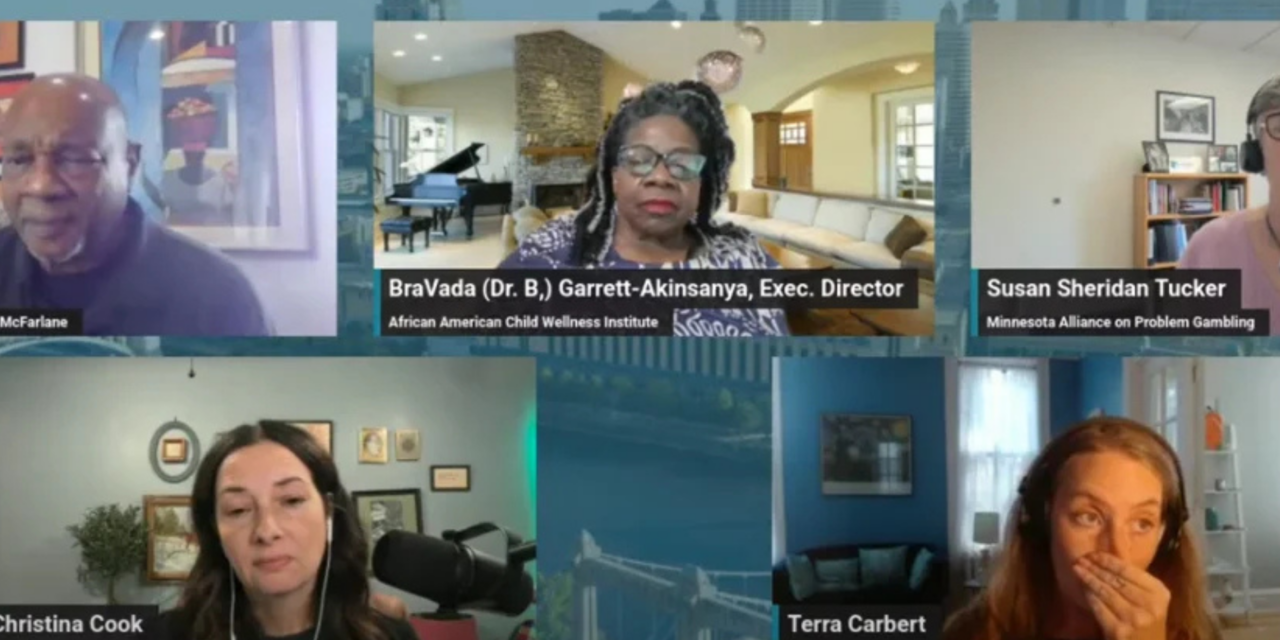
That truth came into sharp focus on a recent Healing Circle edition of KFAI’s The Conversation with Al McFarlane, where two Minnesota women, Christina Cook and Tara Carver, shared unflinching testimonies of how gambling harmed their lives, families, and communities.
The discussion, guided by Susan Sheridan Tucker, executive director of the Minnesota Alliance on Problem Gambling, peeled back the myths that gambling is “entertainment” without consequence. It revealed how addiction grows quietly, fueled by grief, trauma, and social isolation.
Cook began gambling at 28, newly divorced and searching for connection. At first, the casino felt like a safe alternative to bars. But what started as occasional fun spiraled into a 15-year cycle of financial devastation, broken relationships, and emotional collapse. “I thought I was just bad with money,” she admitted. “I never once thought it was an addiction.”
Her lowest point came in 2020 when she lost everything financially. “I really didn’t want to be here anymore,” she said. The turning point was recognizing gambling for what it was :an addiction as well as then seeking help through Gamblers Anonymous and therapy. Today, she is in recovery and co-leads The Broke Girl Society, a community of over 3,000 women impacted by gambling.
For Carver, gambling was normalized from childhood. Her grandfather taught her poker strategy before she could read at grade level. Trips to racetracks and casinos reinforced the idea that gambling was “fun” and harmless. But as an adult, grief and loss fueled her own descent into addiction. After the deaths of her mother and grandmother, she turned to casinos for comfort and connection.
By the time her father passed away, gambling had consumed her life. “I was high functioning on the outside,” she said. “But I was completely disengaged from my community, my purpose, my spirit.” Her recovery began in 2016 after a moment of despair that echoed the death by suicide of her biological father. Choosing life, she placed her last bet that year.
Both women emphasized that gambling addiction is never a private matter. The ripple effects extend to families, workplaces, and entire communities. Borrowed money, broken trust, and financial collapse strain relationships far beyond the gambler. “It’s estimated that one person’s gambling can impact 8 to 10 others,” Tucker explained.
And yet, recovery also ripples outward. By sharing their stories, Cook and Carver are not only healing themselves but also creating safe spaces for others to seek help.
Dr. Bravada Garrett-Akinsanya, clinical psychologist and co-host of the Healing Circle, added that in African American communities gambling often intersects with trauma, depression, and cultural barriers to mental health support. “We gamble when we can’t pay our rent and hope to fix it at the casino. We gamble with our lives when we feel trapped in unsafe jobs or systems. Addiction is a reflection of deeper wounds,” she said.
Stigma remains a major barrier in many societies grappling with gambling addiction. Many families avoid mental health services, believing faith alone should deliver them. Others dismiss gambling as harmless until harm explodes. As Garrett-Akinsanya noted, “It’s an act of defiance to heal. Saying ‘hell no, I won’t keep doing this’ is revolutionary.”
Nationally, 2-4% of Americans struggle with problem gambling. In Minnesota, that number translates to 250,000 people, including 7,100 high school students who already show signs of gambling problems. Yet prevention programs are scarce, and conversations in schools are almost non-existent.
The rise of sports betting apps, online gambling, and fantasy leagues has made access easier than ever. Tucker warned that without early conversations and culturally responsive recovery spaces, communities risk losing more lives to an addiction that hides in plain sight.
Despite the pain, Cook and Carver embody hope. Both women are proof that recovery is possible and that healing multiplies when shared. Their voices challenge stereotypes and spotlight the need for gender-specific and culturally grounded recovery programs.
“The house is always designed to win,” Garrett-Akinsanya reminded listeners. “But when people recover, they break stereotypes and reclaim power. That’s the message our communities need to hear.”
The conversation was not just about gambling but about survival, resilience, and the courage to say enough.
If you or someone you know is struggling with gambling, resources are available. Free treatment is offered in Minnesota for individuals and family members affected by problem gambling. The Minnesota Alliance on Problem Gambling also provides support, education, and referrals.
Watch the full conversation on The Healing Circle via KFAI’s The Conversation with Al McFarlane here: https://www.youtube.com/live/7qQVQIfSU40?si=2_AxseX5eYfgab4E