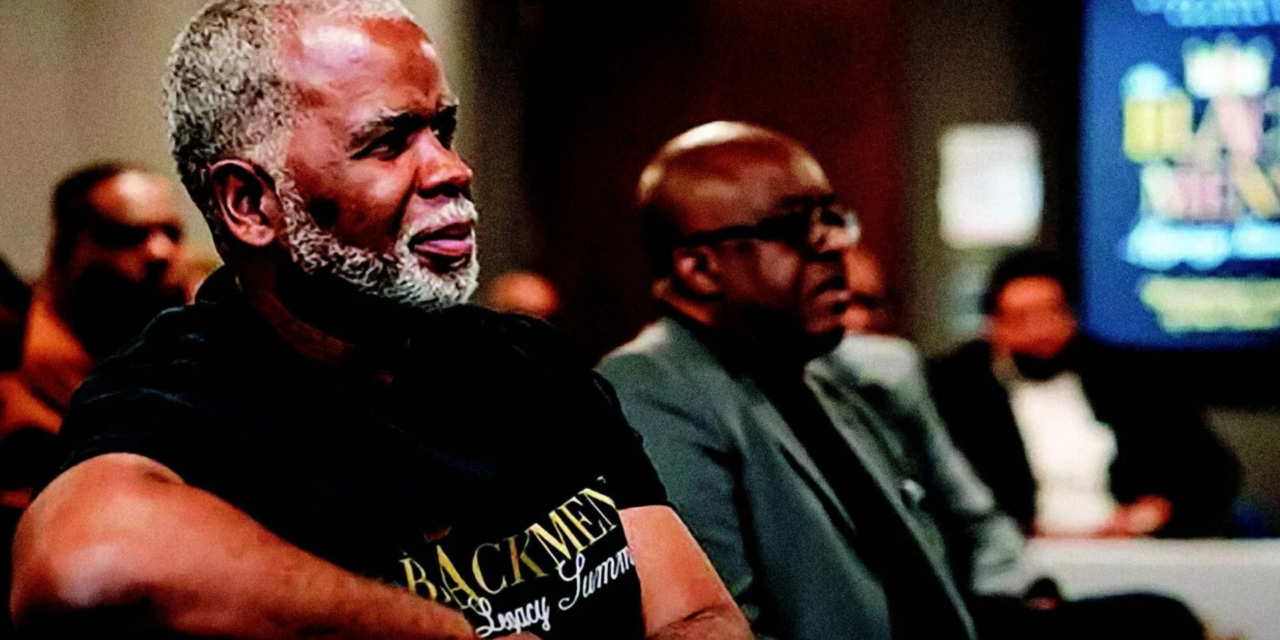
(Part 2 in a series) One month after the Legacy Summit opened with a stark reminder that less than half of Black households in the United States own homes compared with nearly three quarters of White households, the conversation shifted from broad vision to the ground floor work of creating generational anchors. In Part I we traced the larger dream of long-term prosperity. This second installment brings readers into the room where that dream turned into a practical map for families who want to build and keep wealth.
The homeownership panel opened with a moment that set the emotional tone for the entire discussion. Moderator Jeffrey Robinson told a story so ordinary yet so powerful that people in the audience nodded before he even finished the sentence. He recalled buying a home with his wife and not knowing that this simple act would one day become the lifeline for people he loved.
“When me and my wife bought our house, we never knew that our house would be the place where I would save my best friend’s marriage. ‘Cause when him and his wife separated, I asked him to move in with me and I placed them in the coldest room in the house,” he said, and before he could finish hist story, someone from the audience responded, “You know that’s wrong.”
But Robinson retorted: “No, that was exactly what I was supposed to do, ‘cause I can’t make my house more comfortable than the house that he’s leaving or else he’ll never go back. So, after two months of staying in the freezer, he was ready to go back”.
With a chuckle, he paused before sharing the next example. “When my nephew came here from the Bahamas for school, that extra bedroom meant he could focus on studying instead of trying to pay rent. When my brother came home from incarceration, our home was the place he rebuilt his life. Today he owns a house with his wife and kids. All of that started because we had a place where he could land.”
The room stayed quiet as Robinson continued. “And so, when I when I think about how home ownership has expanded my legacy, my understanding of what legacy is, it’s more it’s much more than just owning a home. It’s much much more than just owning a home. Every time somebody came to our house, we never had to ask somebody else for permission for them to move into our house. And that’s what it’s really about.”
If Part I established why legacy matters, this moment showed what it looks like in practice. A home is not only an asset on a balance sheet. It is the tool that allows families to protect each other, reduce future crises, stabilize children and create momentum for the next generation. It is the opposite of starting over every decade.
Henry Rucker, a loan officer who has guided families into ownership for decades, picked up from that emotional foundation with a message that immediately grounded the room. He said the biggest barriers he sees are not income or even credit, but misinformation and silence. “We noticed there were a lot of women of color, African American women, who were getting help buying homes. And that is a blessing. But the men who were either already in the home or wanted to be in the home did not have the credit score or the system around them to make it possible,” he told the audience.
Rucker said many Black men carry financial embarrassment alone, shaped by years of hearing rules that were never true. “People are walking around thinking they need perfect credit and twenty percent down. That is simply not true,” he said. “You can have a score in the six twenties and still qualify. You can have a score as low as six hundred. Those are facts, not myths. But if you don’t know the rules of the game, you cannot play the game.”
He urged men to stop silently disqualifying themselves. “I always tell people it is never a hard no. It is a slow yes,” he said, leaning forward as if speaking to each man individually. “Most people do not realize where they are financially. And we get embarrassed. We think we need a seven hundred and fifty credit score, or that we do not have enough in the bank. None of that is true. The information is out there, but people do not know it exists.”
Rucker then walked the room through the very resources designed for them. “Think about what Brother Eric Michal Dyson said earlier. Advancing Black Homeownership can get you up to forty-five thousand dollars. There is a program called FirstGen that gives you thirty-two thousand. The City of Minneapolis has down payment money. Minnesota Partners is here with money. These are real numbers, real dollars, not token support.”
Knowing this, he said, shifts power back into the hands of Black buyers. “When you walk into a lender’s office, and they say, ‘I don’t know if you qualify,’ but you know you have that six sixty credit score, you have a 401k, you have the income, you have the assets, you can say, ‘Actually, I do qualify. And if you don’t want to help me, I can go down the street to someone who will.’ That is the confidence that comes with understanding the process.”
Rucker told the room why this work is personal for him. “Today marks twenty-five years since I bought my house in 2000,” he said, pausing as the room quieted. “My daughter has never walked into a place that wasn’t her home. I never rented. She is nineteen now, at North Carolina Central HBCU, celebrating homecoming. And this morning I woke up thinking; this is a blessing. I am about to speak to Black men, and my daughter is thriving because I bought a home twenty-five years ago. That is it for me.”
Tre Adams, a real estate professional who often partners with community organizations, added another dimension. He described the emotional weight of losing family property and why owning a home is about memory as much as finance. “There is a house my family lived in years ago,” he said. “I still drive by it from time to time. That place holds pieces of who we were. When you lose that, you lose part of your history. When you keep it, you give the next generation a sense of where they come from.”
Adams also spoke about the courage required to begin. “A lot of folks are capable and ready, but they do not believe they are. Once they sit down with someone who can explain the costs, the programs and the steps, something shifts. They start imagining themselves in that home. That belief is the first door that opens the rest.”
Shereese Turner from non-profit organization, Habitat for Humanity added the structural perspective. She shared how her own family lost land because there was no will or trust, and how lack of legal preparation can erase everything a family builds. “People think the hardest part is getting the house,” she said. “But the real challenge is keeping it and passing it on. Probate can take property from a family without anyone meaning harm. Foreclosure can erase years of sacrifice. I want people to get through ownership, not just get into it.” She described how Habitat now works in deeper partnership with Black communities, financial coaches and local housing programs. “We want to make sure people have support before and after they close, so the house becomes a foundation for the next generation.”
By the time the panel ended, the mood in the room had shifted. The first part of the Summit had inspired people. This session gave them a path. It showed that legacy is not an abstract dream. It is a sequence of conversations, programs, legal steps and daily choices that turn a paycheck into equity and equity into stability.
Robinson closed with a simple invitation. “You heard the stories and you heard the facts. What matters now is connection. Do not leave these resources in the room. Pick them up and let someone walk with you. Legacy becomes real when you take the next step.”