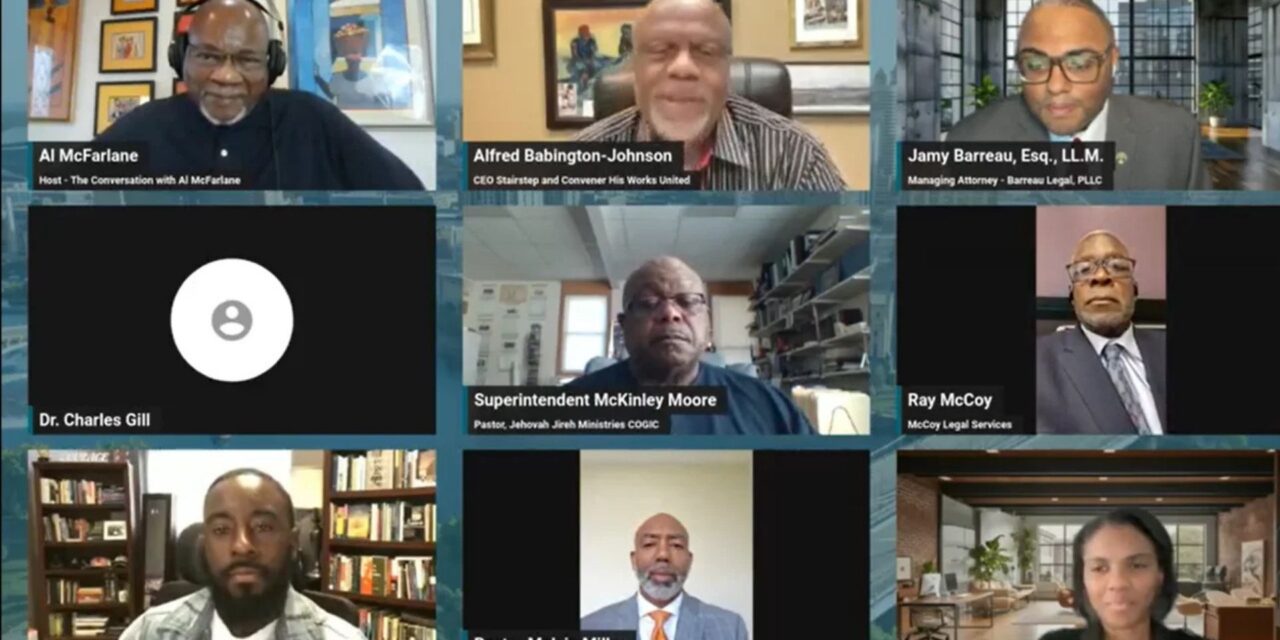
As the conversation deepened on The Conversation with Al McFarlane, the panel explored the threats posed by disinformation and the role of artificial intelligence (AI) in shaping voter behavior, highlighting how these issues could undermine the upcoming election. Reverend Dr. Charles Gill emphasized the dangers of manipulated narratives designed to confuse and divide. “Disinformation campaigns aren’t just local—they’re international,” Gill warned. “We’re seeing AI tools being used to create false images and manipulate public perception.” This concern comes at a time when AI and social media platforms have become major players in spreading misinformation, particularly targeting communities of color. Disinformation not only distorts facts but also seeks to disenfranchise voters by making them question the integrity of the election process itself. With Minnesota being a battleground state where voter turnout can make or break close races, the issue is particularly pressing.
McFarlane echoed these concerns, noting the potential for such tactics to reignite old power dynamics. “Some factions seem determined to revive a mindset that sees us as less than human,” McFarlane said. “It’s not just about geography—it’s a mindset that seeks to undo progress.” The threat of returning to an era where Black voices were systematically silenced looms large in the minds of community leaders. Reverend Babington-Johnson agreed, stressing that the battle against disinformation requires vigilance. “We must stay informed and engaged,” Johnson declared. “This isn’t just about who wins the election—it’s about ensuring that those in power serve all Americans, not just a select few.”
The urgency of this message was clear, especially as discussions turned toward how young people can play a critical role in combating misinformation. McDavid highlighted the importance of engaging young people, especially as AI becomes increasingly influential. “Our youth are already tech-savvy,” he said. “We need to empower them to use technology responsibly and critically, equipping them for future careers while protecting democracy.”
Bogan emphasized that efforts like Souls to the Polls are part of a broader strategy to keep communities connected beyond election day. “We have to build trust and maintain conversations year-round,” she said. “It’s about ensuring that everyone understands the power they hold—not just during elections, but every day.” This long-term vision reflects a growing awareness that civic engagement must be continuous to create lasting change.
The conversation concluded with a call to action. “This isn’t just about politics—it’s about reclaiming our story,” McFarlane reflected. “We owe it to those who fought before us, and we owe it to future generations.”
With the Black Men’s Legacy Summit III on the horizon and voter mobilization efforts in full swing, Minnesota’s Black leaders are united in their mission: to confront disinformation, engage the community, and shape a future rooted in justice and equality. As McDavid put it, “We’re not just voting—we’re building a movement.”