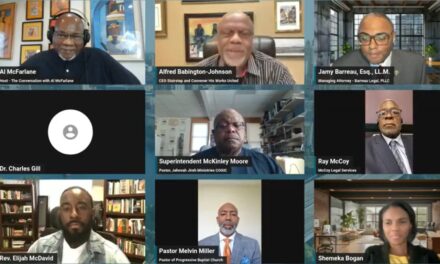
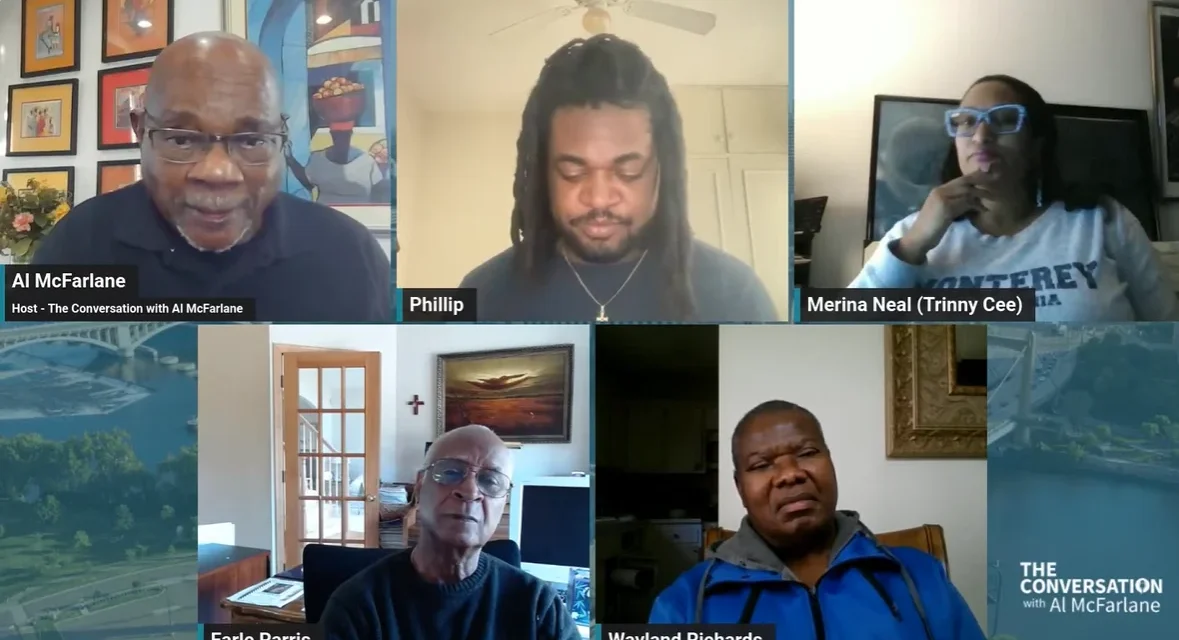
On a recent broadcast of Radio KFAI 90.3 FM’s The Conversation with Al McFarlane, the Tennessee-Twin Cities airwaves became a lifeline linking Minnesota’s Jamaican diaspora with the island in crisis. The trigger: Hurricane Melissa, a storm of record-breaking intensity that made landfall in Jamaica on 28 October 2025. According to the Associated Press, Melissa struck as a Category 5 hurricane with sustained winds reported at 185 mph, making it the strongest storm ever recorded to hit Jamaica.
Veteran community organizer Earle Parris, a leader with the Jamaica Minnesota Organization (JMO), spoke with calm determination during the live broadcast. “When I’m lying in bed and I say my prayers,” he told McFarlane, “I say we’re going to get through this. Jamaica has set such a standard in the world, and I see the whole world coming to help us.”
Parris recalled that JMO was born out of earlier disaster efforts. “Thirty-seven years ago, it was Hurricane Gilbert,” he said. “Thirty-seven years before that was Hurricane Charlie. Out of Gilbert, this organization was started, and we’re still here.” He positioned the current response as part of that legacy.
Now, JMO is once again rallying to coordinate relief with the Caribbean Disaster Relief Fund (Minnesota) and other community partners. “Tomorrow night we’re sorting and shipping barrels,” Parris explained. “We’ve reached out to friends and JMO members and the general population. People are calling in, sending emails, saying, ‘yep, I’m coming, and I’ll bring a friend.’” His invitation was intentional: the crisis demands vehicles of support, not passers-by.
He made a pointed observation: “Some people say they don’t have money, but they have hands. Their humanity is the most valuable thing in the world. Give me an hour. Give me a half-an-hour. That’s what matters.” He reinforced the practical: show up, labor, pack, ship.
Joining the conversation was Wayland Richards of the Organization for Strategic Development in Jamaica (OSDJ). “Strategic is the key word in our name,” he said. “We respond now, but we’re also thinking ten years ahead. What will the needs be when the headlines fade?”
He described an organization with long-term vision: youth and community development, health-care infrastructure, social resilience. Now, with Melissa having destroyed or damaged hospitals, roads and utility structures, that strategic horizon matters. Richards cited, for example, the damage reported at Black River Hospital and the hundreds of thousands left without electricity.
He announced OSDJ’s upcoming gala on November 15 under the theme “Strengthening the Bond Between Minnesota and Jamaica.” Launching a campaign titled “A Million Friends of Jamaica,” they seek one million individuals over the next five years willing to donate a minimum of US $10 annually to fund rebuilding efforts. Two immediate flagship projects: the Davidson Outreach Centre and a new ward at the Bustamante Hospital for Children.
The voices offered something beyond hope: they offered structure, accountability, and a narrative of resurgence. Parris closed with a solemn determination: “It’s going to be a haul, short term and long term, but we’ll come through stronger.” Richards reiterated the need for long-term commitment. “Some homes cannot be rebuilt in a day,” he said, “and Jamaica will recover, but we must stay.”
McFarlane closed the hour with a message that invited action: “Pray for Jamaica. Pray for all those doing the work. And then act.” The distinction is critical: prayer without action is insufficient in the face of this scale of destruction. Jamaica asked for response. Minnesota answered.
Between Kingston’s damaged homes and Minneapolis’s volunteering arms, a bridge of compassion now crosses the Caribbean. The storm may have driven the gap. but this diaspora, anchored in culture, faith and purpose, is forging a path of repair, together.