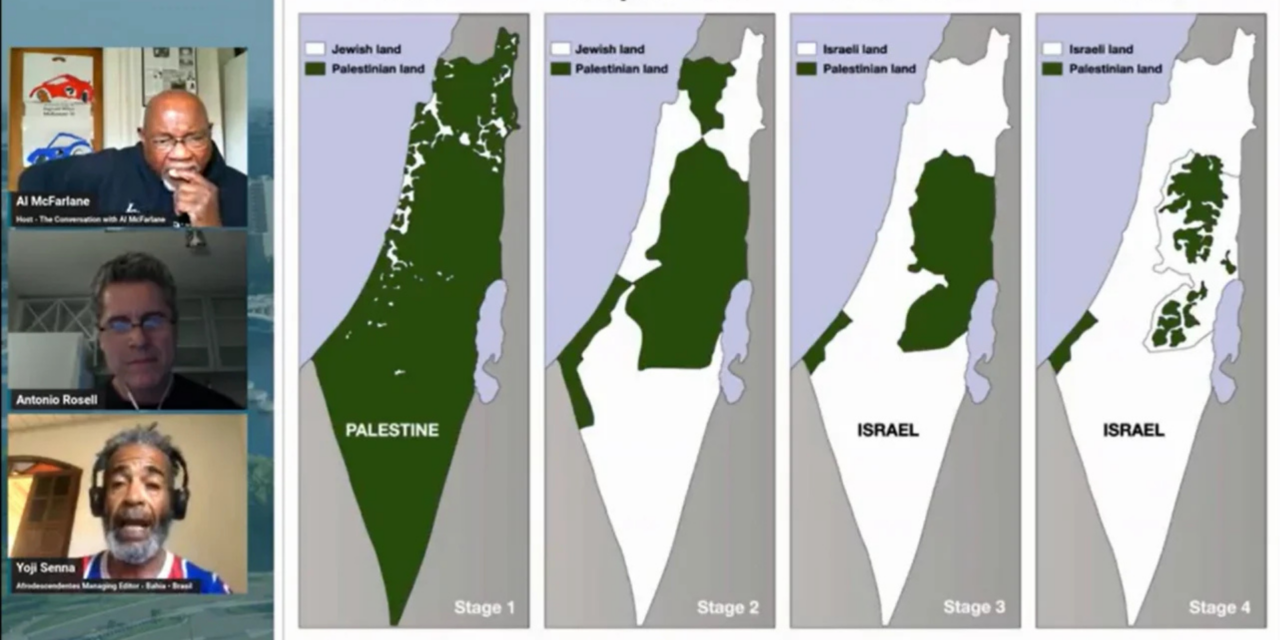
The ongoing conflict in Gaza has sparked global debate and, crucially, appears to be shifting perceptions regarding Israel’s actions. Antonio Rosell, a peace activist based in the Twin Cities, emphasizes the changing tide of opinion as he discusses the conflict’s impact. “This open conflict in Gaza has been taking place now for about seven months,” he notes. “There’s been constant military activity against the territory of Gaza, which affects the millions of people who live there.”
Gaza, roughly the size of St. Paul, Minnesota, has been under blockade for nearly two decades. “After the Hamas actions of October 7th, there’s been a huge attack that has directly killed about 40,000 civilians. The majority of them women and children,” Rosell explains. The devastating consequences of this ongoing violence highlight a critical aspect of the conversation: the role of the United States. “Our nation funds that,” Rosell asserts. “We’ve been funding that for many years and are funding it now. There’s been just even recently, a $26 billion bill sending additional weapons and additional funding for the Israeli military.”
The global response to George Floyd’s murder and the subsequent social media movement has also influenced how people view the Gaza conflict. “Social media helped us to see the tragedy of what Black people are subjected to in the United States,” Rosell says. “In the same way today, because of the availability of social media, we are able to see live, 24 hours a day, seven days a week, tremendously horrible actions against defenseless women, defenseless children, defenseless older people.”
Yoji Senna, joining from Bahia, Brazil, shares his personal reflections on systemic racism and violence. “I left Minneapolis after 32 years,” Senna reveals. “I lived two blocks away from where George Floyd was assassinated by the police.” His departure was driven by a need for safety and a better environment for his son. Senna’s insights bridge the gap between local and global struggles against oppression. “Palestinians and Israelis are equally offenders, are equally racist. But in this case, the disproportionality of the action of Israel is enraging,” he states. He emphasizes the overlooked presence of a significant Black population in Palestine, adding another layer to the narrative of marginalization and violence.
The conversation further explores historical and geopolitical dimensions, adding depth to the shifting perceptions. “Israel is the last bastion of colonialism,” Senna contends. He describes the influx of Ashkenazi Jews displacing not only Arabs but also Sephardic Jews, creating layers of internal discrimination within Israel. This displacement, combined with ongoing violence, paints a complex picture of the conflict.
Rosell highlights the role of South Africa in opposing what the International Court of Justice has described as potential genocide. “South Africa is the most courageous and filing that case in the International Court of Justice,” he says. “They have said they have gone as far as to say that Israel’s actions towards the Palestinians could constitute a genocide.”
In addition to geopolitical analysis, the discussion touches on the evolving public sentiment. “The role of students and activists in highlighting these issues cannot be understated,” Rosell argues. “Students led the way during the anti-apartheid protests 30, 40 years ago, and they are leading the way today in the calls for justice in Gaza.”
The shifting perceptions are evident in the international community’s growing criticism of Israel’s actions. “Our obligation as decent people who believe in God, who love each other, and who want to make a better world is to actually make a difference and change it,” Rosell states. This sentiment reflects a broader call for accountability and a reassessment of longstanding alliances and policies.
As the conversation concludes, the focus shifts to the broader implications of violence and the potential for creating lasting solutions. “The question of violence and how it impacts the trauma. And then what solutions are we able to create,” Rosell muses.
In a world increasingly connected by shared struggles and aspirations, the voices of Rosell, Senna, and McFarlane call for a collective commitment to humanity and justice, transcending borders and embracing the universal quest for dignity and peace.
This article was based on an interview from The Conversation with Al McFarlane.