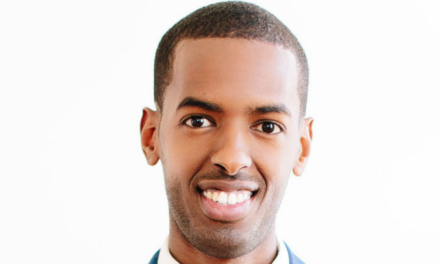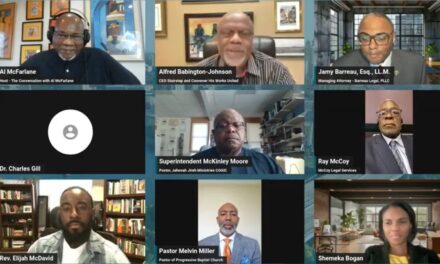

In the vibrant heart of Minneapolis, the impassioned voice of a guest only introduced to the audience as “Brother Omar”, a University of Minnesota student, rings out, championing a cause that intertwines local activism with global ethical concerns. This narrative unfolds on “The Conversation with Al McFarlane,” a program that probes deep into issues of local and global significance. Omar’s activism is fuelled by his concerns about his university’s financial investments, particularly those that may perpetuate global conflicts, like those in Gaza.
Omar’s involvement in student activism is not just a reaction; it is a response to the intricate web of financial investments that universities like his own hold in corporations linked to global conflicts. He brings to light the significant financial stakes involved: “The University of Minnesota, overall, is one of the top 30 universities across the nation for endowments…We don’t know what they’re invested in, and as a public university, they’re not disclosing that and not being transparent about it,” Omar articulates his concerns about the lack of transparency in how these substantial funds are utilized.
Facilitating this critical discussion, Antonio Rosell—an engineer and peace worker—contextualizes the issue within a broader narrative of national and international student protests. Rosell underscores the urgency and depth of the student movements: “Students have put themselves, their safety, their wellbeing, their academic work, on the line and have said to universities, ‘We are going to be here until you divest the billions and billions of dollars.'” He specifically notes that the University of Minnesota alone has investments amounting to about $7 billion in companies that either produce weapons for Israel or are based in Israel.
In Rosell’s remarks during the conversation, he also acknowledges U.S. Representative Ilhan Omar‘s clarity and commitment to certain issues, particularly concerning foreign policy and human rights. Rosell points out that she (Ilhan Omar) is the only member of Minnesota’s congressional delegation who has consistently shown clarity on certain matters, including the conflict in Gaza and the university’s investments. While other representatives have voted in ways that might support ongoing conflicts or questionable investments, Ilhan Omar stands out for her consistent stance on these issues.
The discussion highlights the tension between student activists and university administrations, especially regarding the initial response to student encampments advocating for divestment. Omar criticizes the university’s approach: “At the University of Minnesota, they said how they sent the cops over because we did not follow university policies when it came to the encampments. But truth be told, when has following their rules really made a change, shown out through history.”
As the conversation unfolds, Yoji Senna, adding an international perspective from Brazil, discusses the broader implications of such investments, touching upon the moral contradictions of institutions that promote human rights yet support questionable corporate ethics. Senna’s comments highlight the global resonance of local actions, emphasizing the hypocrisy often present in such institutions: “It’s one more time this hypocrisy of the Western system, that, many times, we even come to question the idea of democracy,” he explains, underscoring the intersection between ethical, educational, and financial decisions on a worldwide scale.
Shaped by his upbringing in Egypt, during the Arab Spring, Omar’s activism today helps him fight for the narrative and the student movement he represents, which he argues calls for a re-evaluation of the ethical responsibilities of academic institutions. This student movement challenges academic institutions to align their substantial financial resources—like the mentioned billions in investments—with the values they profess to uphold. This story is not merely about a local university issue; it represents a broader, global youth movement that is redefining the boundaries of activism and institutional accountability, demanding transparency, and ethical integrity in educational investments.
To view the full video of the conversation between Omar and the host of The Conversation with Al McFarlane, Al McFarlane himself, and his co-hosts in this episode, visit InsightNewsMN on social media platforms, especially YouTube. Also do not forget to subscribe to the channel, as well as like and comment on the video as well as share it with your relevant community on your social media platforms.