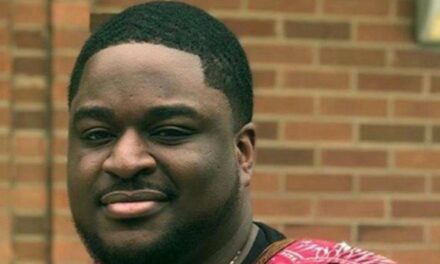
Ward 5 City Council candidate Victor Martinez says hundreds of Northside residents he has talked to rank safety and fear of crime as a top concern. He said many are ready to move out of North Minneapolis.
Insight Editor, Al McFarlane said the quandary is classic: On the one hand, some residents say they are afraid to let their children play outside for fear of stray bullets, and are expressing dissatisfaction with the schools and the business district, suggesting imminent flight of short-and-long term residents; while on the other hand, there are others with money and financing, undaunted by the fear narrative, buying houses in the area.
Incumbent Jeremiah Ellison, who was born and raised in North Minneapolis presented a different narrative, however.
“The burden of violence has always been on the radar,” said Council Member Ellison. That notwithstanding, “Some of the most creative, ingenuous, and gifted artists have come from our neighborhoods.” The North side deserves a lot more that being labeled as the cradle for violence, he said.
“I believe we can handle this crisis, but not the way we’ve done things in the past. The trauma of the victims and the perpetrators must be addressed,” he said.
Ellison is calling for more intervention and prevention programming including mental health services that address homelessness and chemical dependency. He said the city responses to date offer little in prevention and few remedies.
Ellison said, “Major city violence is up all over the country, not just in Minneapolis. The Commercial Property Redevelopment Fund will help encourage local ownership and increase entrepreneurship. I believe we’re heading in the right direction for recovery and revitalization. But when some of the residents are hesitant about calling 911 when faced with an emergency, that’s a problem.”
Andrew Bornhoft, Housing Administrator for Hawthorne Neighborhood Council, said there are limitations when it comes to ‘heading in the right direction’. “There is funding through the Neighborhood Revitalization Program and maybe other pockets of money, but it’s more about structures and not about people. We can’t give money to renters, which is mostly what our neighborhoods are. We can’t do anything to help renovate their existing rental. I suggest building a duplex or a tri-plex where more than one family can benefit from affordable housing. But what has normally been the case is that the NRP moniey will go to white, upper middle class residents and investors, and not the residents who could really use the help. Eventually these funds can do a lot of good, but we’re just not there yet.”
Executive Director of HNC, Diana Hawkins expressed concerns that many residents will soon be facing evictions. “Some don’t have jobs or will have no place to go. Somehow, we’ve got to help them,” she said.
“We can’t be complacent,” says Martinez. “There is an immediacy and I believe flexible funding is available. But unless we control this surge of crime and violence, we will make little progress. What’s happening in our communities just isn’t normal.”
Martinez says the first step is establishing trust between law enforcement and communities of color. With delayed responsiveness to emergency calls, it will take a higher level of effort, partnership, and time for residents to depend on those charged with upholding the law, he said. “No one’s going to come to West Broadway to shop until the city helps clean up the area and provides a collaborative front in combatting spiraling criminal activity. And remember, it’s not all about the police. The EMS will not come to a disturbance unless the police are present, as well.
McFarlane asked candidates what reparations meant to them.
Martinez said he wants to see young people begin to learn their history, some of it being taught by the neighborhood elders and legacy builders right in their own backyard.
Martinez said he believes a lot of the problems in youth violence are rooted in a lack of the right connections and opportunities that provid a sense of identity. “I often ask kids how they feel about the injustices they realize exist in their lives. We’ve got to empower and resource them if we’re going to save generations to come,” he said.
Alicia Gibson, city council candidate for the 10th Ward, proposes ‘Truth and Reconciliation’ commissions, precinct by precinct. As a college student, Gibson briefly studied in South Africa seeking to find out how a brutal police apartheid system was dismantled with the emergence of a multiracial democracy. She said she studied how the country was transformed, and how it prevented a civil war. “Unfortunately,” Gibson said, “We’re not united on what reparations mean and how leadership descriptors have changed since the tragic murder of George Floyd and COVID19. We’ve got to start with something that bears evidentiary proof like housing discrimination and affordable housing access wheras at present, the state provides only a fourth of the housing needs of its residents.”
‘I’m about restorative, environmental, and economic justice; change and support that will stick,” Gibson said. The Neighborhood Revitalization Program and its neighborhood associations system is one of the most progressive in the country. She proposes stronger funding and loan resources targeting the once red-lining districts where people of color could never get a loan.
“A portion of the funding could be turned over to the associations who could then turnaround land and property negotiations quickly before exploiters are added to the equation. We must be willing to do the work and that begins with learning about each other,” said Gibson.
Ward 9 candidate Mickey Moore said those running for voter elected positions must be more responsive to the needs and concerns of those who put them in office. He said, “There’s a disconnect between the neighborhoods and city government. I’m calling for a re-balancing of solutions addressing the root causes of how we’ve gotten to this point of shocking, disparities data reveal in wealth, health care, education, and affordable housing gaps. Healing begins by truth telling. What experience do candidates bring to the office? Have they successfully worked with others in collaborative initiatives?”
Moore said Ward 9 has lost its economic vitality and that area business corridors must be revitalized.
In reference to the subject of reparations, Moore said identifying specific individuals’ financial redress could be overwhelming. “But social reparations where basic institutions are encouraged to re-adjust equitably should be at the heart of a justice revolution. Why is there such a history of generational gaps in education,” he asked.
“Black and Brown people fill at least 2/3 of the prison cells but only make up 1% of supplier contractors for prison operations. We have to stop wishing and dreaming while generations are left behind,” Moore said.