“She’s not Black.”
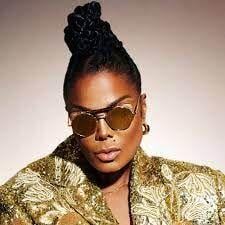
Those words sting. As a mixed Black woman, I understand the weight of such remarks. Janet Jackson, an icon who owes much of her success to the Black community, used her platform in a recent interview with The Guardian to cast doubt on Vice President Kamala Harris’s Blackness, claiming, “I was told that they discovered her father was white.” This isn’t just a personal attack on Harris’ identity—it’s a deliberate attempt to fracture our community for the purpose of causing harm. And worse, it echoes the same harmful rhetoric we’ve seen from outside our community, but this time, the weaponization of identity is coming from within.
This isn’t the first time we’ve seen such attacks on Harris. Recently, Donald Trump made a similarly racist comment, claiming, “I didn’t know she was Black until a number of years ago when she happened to turn Black and now she wants to be known as Black. So, I don’t know, is she Indian or is she Black?” This tactic of questioning Harris’s Blackness is designed to create doubt and division, particularly among Black voters, by casting her as inauthentic.
The troubling aspect of Jackson’s remarks is that they come from within the Black community itself, using a distorted version of the racist principle of hypodescent—the “one-drop rule.” Historically, this rule was used by white supremacists to classify anyone with even a trace of African ancestry as Black. But Jackson’s attack inverts this principle, suggesting that being mixed disqualifies someone from being truly Black. It’s an insidious tactic aimed at disconnecting Harris from her community and casting doubt on her identity.
By Jackson’s narrow definition of Blackness, prominent Black Americans like Tracee Ellis Ross, Halle Berry, Yara Shahidi, Naomi Osaka, Rashida Jones, Meghan Markle, President Obama and many others would be similarly disconnected from our community. The idea that someone’s Blackness could be diminished because of mixed heritage is not only wrong but dangerous. It undermines the contributions of these individuals and countless others who represent the diversity of the Black experience.
This form of identity-based attack is especially harmful because it undermines the unity that the Black community has fought so hard to build. When Jackson and others use their platforms to question Harris’ identity, they’re not just attacking her—they’re attacking the very idea of what it means to be Black in America. It’s a cynical move that uses identity as a tool to divide rather than unite.
Amber Rose, another public figure with ties to the Black community, has echoed similar tactics by promoting false and harmful claims about Haitian immigrants eating pets in Ohio. Her remarks align with xenophobic conspiracy theories, further illustrating how some celebrities are willing to use their platforms to spread disinformation that harms communities of color. These actions betray the very people who once supported them, fueling the same racist narratives that have been used to oppress Black people for centuries.
The question is: why? Why would figures like Janet Jackson or Amber Rose, who have benefited from the support of the Black community, use their platforms to harm it? One answer is self-interest. They have aligned with narratives that serve their personal gain, even if it comes at the expense of the community that uplifted them. This willingness to “sell out” isn’t new, but its resurgence at such a critical time is alarming.
For centuries, our community has faced the challenge of navigating identity under laws like Virginia’s racial integrity laws, which used the one-drop rule to deny people access to power. Today, we see this same principle flipped to question the legitimacy of Blackness from within. The narrative now suggests, “If you’re mixed, you’re not Black.” This toxic inversion of a racist principle is designed to divide and conquer.
As Black Gen Z, we understand the importance of embracing our full identities. The first Gen Z member of the U.S. House of Representatives, Congressman Maxwell Alejandro Frost from Florida, exemplifies this with his diverse heritage, rooted in Puerto Rican, Lebanese, and Haitian ancestry. He is a proud member of the Congressional Black Caucus. A reminder to Janet and all others, being Black is about more than just genetics—it’s about shared experience, community, and the fight for justice.
This continued attack on Kamala Harris’ Blackness is an attack on all of us. It’s an attempt to fracture the unity we’ve built by making us question each other rather than focusing on the real issues facing our communities—voter suppression, police violence, and systemic inequities. We cannot allow anyone, no matter how famous, to use their platforms to divide us. Our strength lies in our solidarity and in embracing the fullness of our identities.
It’s crucial that we call out and stand against these acts of celebrity betrayal. Now is the time for us to stand united, resist these divisive tactics, and refuse to let anyone, even those within our own community, undermine the progress we’ve fought so hard to achieve.